
Testing climate science
 Many actions proposed to address climate change threaten our way of life. But some of the “facts” used to justify these actions are misleading.
This post comes from interviews with Dr Steven Koonin (Appendix A) over the six past months. It addresses claims that there is a climate emergency or climate crisis because of dangerous climate change caused by increased emissions of greenhouse gases from the use of fossil fuels.
The “scientific” claim
In 2021 John Kerry, President Biden’s Special Envoy for Climate said, “Net-zero emissions by 2050 or earlier is the only way that science tells us we can limit this planet’s warming to 1.5 degrees C. Why is that so crucial? Because overwhelming evidence tells us that anything more will have catastrophic implications. We are marching forward in what is tantamount to a mutual suicide pact”.
To test this claim you should look at the actual science in the Intergovernmental Panel for Climate Change (IPCC) assessment reports that summarize the state of our knowledge about the climate, which I suspect that Kerry has not done.
Policy
Policy responses to this issue must strike a balance between:
– the certainties and uncertainties of climate science and the hazards and risks of a changing climate, and
– the growing demand for reliable/affordable/”clean” energy.
These policies also need to consider:
– values and priorities, like environment versus development,
– risk tolerance,
– intergenerational and geographical equities, and
– efficacies/costs of various responses.
The “climate crisis” has scant scientific support
Today’s climate isn’t “broken”. Fears of future catastrophes depend upon extreme emissions scenarios fed into models entirely unsuited to the task. So if we act too rapidly and in an ill-thought out way we will incur a greater threat to human well being than climate change itself.
Weather is not climate! Climate is the long-term average (typically over 30 years) of the properties of weather. The climate varies a lot on its own (that’s natural variability). You can be fooled a lot about year-to-year variability or by variability over decades. Untangling the response to human influences from this natural variability of the climate system is a major challenge. But the media do it a lot. For example, they entirely misrepresent the science when that discuss the rate of ice melt in the Artic or Antarctica over the past decade rather than over longer periods of time. They fail to consider the context.
For example, records of ice melt in Greenland are typically shown beginning about 1987. This ignores the records between 1900 and 1987 (see below). While Greenland is losing ice, the main driver cannot be anthropogenic climate change because there is no steady increase in line with either human CO2 emissions or atmospheric concentrations of CO2. Carbon dioxide emissions and warming may be important, but other factors were clearly more important in the past.

Satellite atmospheric temperature data shows peaks mainly due to El Ninos and other weather oscillations (see below). Whereas the long-term trend is due to a combination of natural variability and human influences. But they can’t resist capitalizing on dramatic weather events to make their point. The peak is unlikely to be due to anthropogenic greenhouse gases because they act over long time periods smoothly. Likewise, heat waves are weather, not human influences.
The IPCC says that it is tough to detect human influences or attribute trends in the records of most weather extremes.
For future trends we rely on models. How sensitive is it to increases in the concentration of carbon dioxide? Climate sensitivity is the response to a doubling in the concentration of carbon dioxide.
We can also look at the past. Since 1900 the globe has warmed by about 1.3 deg C. The IPCC projects about the same amount of warming over the next 100 years. What’s going to happen over the next 100 years as that warming happens? We can look at the past to get some sense of how we might fare. Since 1900 there has been:
– An increase in: population (5 times), average life expectancy (130% longer), literacy fraction (4 times), GDP per capita (6.8 times), and food production (34% greater), and
– A decrease in: extreme poverty (7 times), and extreme weather death rate (50 times).
| How humanity has prospered since 1900 | ||||
| Indicator | Change | Unit | “1900” | “Today” |
| Global temperature | 1.3 warmer | degrees C | -0.5 (1905) | +0.8 (2022) |
| Global population | 5X larger | billions | 1.65 (1900) | 8.0 (2022) |
| Life expectancy | 130% longer | years | 32 (1900) | 72.6 (2019) |
| Literacy fraction | 4X larger | percent | 21.4 (1900) | 86.25 (2016) |
| GDP per capita | 6.8X larger | $2011 | 2241 (1920) | 15,212 (2018) |
| Food production | 34% greater | Kcal/cap/day | 2192 (1900) | 2928 (2018) |
| Extreme poverty | >7X smaller | Percent <$1/day | 70 (1900) | <10 (2015) |
| Extreme weather death rate | 50X smaller | Per million | 241(1920) | 5 (2008) |
This has been the greatest flourishing of human well-being ever, even as the globe warmed by 1.3 deg C. Humanity has prospered like never before. This indicates that humanity is capable of adapting and flourishing as conditions change.
For example, since 1960 the increase in cereal production and cereal yield in the world exceeded the increase in population. Productivity increased with time. And global weather losses as percent of global GDP (1990-2021) show a slight decrease with time. As the world develops, we get more resilient.
What economic effects are expected with warming? These are only a few % decline in the US GDP for temperature increases of a few deg C. It is another 1-2% when “tipping point’s” are included. These are not catastrophic.
So, to think that another 1.3 deg C over the next century is going to significantly derail human flourishing beggars belief. It’s not an existential threat. The notion that the world is going to end unless we stop emitting greenhouse gas is just nonsense.
The notion that the world is going to end unless we stop emitting greenhouse gas is just nonsense.
The telephone game
John Kerry is probably getting the information for his “scientific” claim from the Summary for Policy Makers or a further boiled down version where there is plenty of room for mischief. And as you boil down the good IPCC assessment into the summary, and into more condensed versions, there’s plenty of room for mischief. And that mischief is evident when you compare what comes out at the end of that game of telephone [Chinese whispers] with what the actual science really is.
Quote from the book Unsettled: “We can all agree that the globe has gotten warmer over the last several decades”. In fact, it has got warmer over the last four centuries. This is equally supported by the assessment reports.
Unsettled: “There is no question that our emission of greenhouse gases, in particular carbon dioxide, is exerting a warming influence on the planet”.
Unsettled: “Even though human influences could have serious consequences for the climate, they are small in relation to the climate system as a whole. That sets a very high bar for projecting the consequences of human influences”. This is counter to the headlines during the last hot summer in the US.
Human influences as described in the IPCC are a 1% effect on the heat radiation flow in the atmosphere. That means that your understanding had better be at the 1% level or better if you are going to predict how the climate system is going to respond. So human influences are a 1% effect on a complicated chaotic multi-scale system for which we have poor observations.
 Unsettled: “Most of the disconnect comes from a long game of telephone that starts with the research literature and runs through the assessment reports to the summaries of the assessment reports and then on to the media coverage. There are abundant opportunities to get things wrong.”
The underlying science is expressed in the data and expressed in the research literature. The IPCC takes those and assesses and summarizes them. And in general it does a pretty good job. But nobody who isn’t deeply in the field is going to read all that stuff. So there is a formal process to create a Summary for Policy Makers. This is initially drafted by the governments, not by the scientists. It is then passed by the scientists for comment. Some of them grumble, but in the end it is the governments who have approved the Summary for Policy Makers, line by line. That’s where the first disconnect happens.
I’ll give you an example from the most recent report. The Summary for Policy Makers is talking about incremental deaths from extreme heat. And it says that heat waves have contributed to mortality. And that’s a true statement. But what they forgot to tell you was that the warming of the planet decreased the incidence of extreme cold events. And since nine times as many people around the globe die from extreme cold than from extreme heat, the warming of the planet has actually cut the number of deaths from extreme temperatures by a lot. So the statement was completely factual, but factually incomplete in a way meant to alarm not to inform. So you get John Kerry saying that and the Secretary General of the UN saying we are on a highway to climate hell with our foot on the accelerator. But this is preposterous, even by the IPCC reports. The climate scientists are negligent for not speaking up and saying that’s preposterous.
The statement was completely factual, but factually incomplete in a way meant to alarm not to inform
Computer models
Koonin: “Projections of future climate and weather events rely on models demonstrably unfit for the purpose”. To make a projection of future climate you need to build this big complicated computer model which is really one of the grand computational challenges of all time. And then you have to feed into the model what you think future emissions are going to be. And the IPCC has five different scenarios ranging from high emissions to low emissions. If you take a particular scenario and feed it into the roughly 50 different models that have been developed by groups around the world, you get a range of answers. The range is as big as the change you’re trying to describe itself! In the latest assessment about 40% of the models were deemed to be too sensitive to be of much use – when you increase the emissions of carbon dioxide, the temperature goes up too fast compared to what we’ve seen already. That’s really disheartening. The world’s best modellers, trying as hard as they can, are getting it very wrong at least 40% of the time! These models are not fit for purpose at least at the regional or more detailed global level.
With regard to the increases in computing power over the years. Unsettled: “Having better tools and information to work with should make the models more accurate and more in line with each other. This has not happened. The spread in results among differing models is increasing”. The models become more sophisticated by having smaller grids or a more sophisticated description of what goes on inside the grid boxes. The average size of a box in the current models is 100km (60 miles). And within that 100 km there is a lot that goes on that we can’t describe explicitly in the computer. Because clouds are maybe 5 km big and rain happens here and not there within the grid box. We can’t describe all that in detail. If you increase the grid resolution, the time steps also have to be smaller because things shouldn’t move more than a grid box in one time step. So the processing power goes up as the cube of the grid size. So if you want to go from 100 km the 10 km (that’s a factor of 10) the processing power goes up by a factor of a thousand! And it’s going to be a long time before we get a computer that’s a thousand times more powerful than what we have now.
But will we get there one day?
I’m queasy about that. One good example is weather prediction, which is similar. You feed the current state of the weather into the model, and you can predict what the weather is going to be tomorrow and on the subsequent days ahead. And we’re gotten better at that over the last 20-30 years. So now we see forecasts that go out 10 days. They get worse as you go out. The main reason that has gotten so good is the initial data. We know the state of the atmosphere better right now so we can predict going forward. Climate’s a different problem. It’s driven by the oceans. But our data on the oceans is not very good. To be able to specify the state of the ocean now and then know it 10, 20, 30, or 40 years from now is a much harder and difficult problem. So it’s not obvious to me we’re going to get it right. But it’s worth trying because we will learn a lot that will be helpful in other applications.
Newspaper headlines
The news media said, “Scientists say climate change is making hurricanes worse”. But Unsettled said, “Hurricanes and tornadoes show no changes attributable to human influences”. The media gets their information from reporters who have no or very little scientific training. They have reporters on a climate beat who have to produce stories. The more dramatic the better. If it bleeds it leads. And so you get that kind of stuff. When I say something about hurricanes, I quote from the IPCC reports and they don’t say that at all. Actually the most recent report said it based on a paper which was subsequently corrected.
Media: “Climate change is making record-breaking floods the new normal”. Unsettled: “We don’t know whether floods globally are increasing, decreasing, or doing nothing at all”. The UN needs to be consistent – they should check their press release against the IPCC reports before they say anything.
Media: “Climate change threatens the world’s food supply, United Nations warns”. Unsettled: “Agricultural yields have surged during the past century even as the globe has warmed. And projected price impacts of future human-induced climate changes through 2050 should hardly be noticeable among ordinary market dynamics.” The IPCC said this. I can take current media and write a very effective counter to any climate story. It’s like shooting fish in a barrel! This is endemic to a media that is ill-informed and has an agenda to set. The agenda is to promote alarm and induce governments to decarbonize. I think the primary agenda is to get clicks and views.
The agenda is to promote alarm and induce governments to decarbonize.
There’s an organization called “Covering Climate Now”, which is a non-profit membership organization whose mission is to promote the narrative. They will not allow anything to be broadcast or written that is counter to the narrative. The narrative is that we have already broken the climate and we are heading towards disaster (see Appendix A).
Here’s some headlines relating to the weather in July 2023. “Heat records are broken around the globe as earth warms, fast. From north to south, temperatures are surging as greenhouse gases trap heat in the atmosphere and combine with the effects of El Nino”.
“Heat waves grip 3 continents as climate change warms earth. Across North America, Europe and Asia, hundreds of millions of people endured blistering conditions. The US special envoy for climate called it ‘a threat to all humankind’”.
“July heat waves nearly impossible without climate change, study says. Record temperatures have been fuelled by decades of fossil-fuel emissions.”
“This looks like earth’s warmest month. Hotter ones appear to be in store. July is on track to break all records for any month, scientists say, as the planet enters an extended period of exception warmth.”
Doesn’t this prove that climate science is settled?
That statement together with all those headlines confuse weather and climate. Weather is what happens every day or maybe every season. Climate is a multi-decade average of weather properties. So don’t tell me about what happened this year, but tell me what happened to the average of the last 30 years. And then we can talk climate.
With respect to the unusual heat that we saw in July 2023, we have satellites that are continually monitoring the temperature of the lower atmosphere. And they report the monthly temperature anomaly back to 1979. What you see are month-to-month variations with a long-term trend that’s going up. The linear warming trend since January 1979 is +0.14 C/decade. That’s some combination of natural variability and human influences. And every couple of years you see a sharp spike and that’s El Nino (weather). The temperatures decrease after each spike. In July 2023 there was another spike where the anomaly was as large as we have ever seen, but it was not unprecedented. The real question is why did it spike so much? This has nothing to do with carbon dioxide. The natural variability and human influences are the base on which the spike occurs. The change in CO2 emissions is a slow steady process. It would not cause spikes.  El Nino happens every 4-5 years in the natural climate system. Heat builds up in the equatorial Pacific Ocean to the west and then surges across the Pacific towards South America and changes the currents and the winds. It was discovered in the 19th century and is well understood. And when it happens it influences the weather all over the world. We have been on the opposite of an El Nino, a La Nina, for the past 4 years or so.
But there are other contributions as well. In January 2022 an enormous underwater volcano erupted in Tonga and it put up a lot of water vapor into the upper atmosphere, increasing the upper atmosphere water vapor by about 10%. That’s a warming effect, which may be contributing to why the spike is so high.
What about the extreme heat and smoke from wildfires in New York in July 2023?
We have a very short memory for weather. If you go back in the archives of the newspapers and you can read from even the 19th century descriptions of “yellow-days” on the East Coast when the atmosphere was clouded by smoke from Canadian fires. So look at the historical record first. And if it happened before human influences were significant, you’ve got a much higher bar to clear to say that it’s due to CO2. Furthermore, there’s a lot of variability in the weather. In California, there was two decades of drought and the governor was screaming “new normal”. And look at what happened last year. Record torrential rains. Of course, people forgot the 1861-62 flood when the Central Valley was under up to 9 m (30 ft) of water. So climate is not weather and the weather can really fool you.
Adaption
Unsettled: “Humans have been successfully adapting to changes in climate for millennia. Today society can adapt to climate changes whether they are natural phenomena or the result of human influences.”
The John Kerry approach is to reduce human influences on the climate. It can’t stop climate change because the climate will keep changing even if we reduce emissions.
In August 2022 President Biden said, “The American people won, and the climate deniers lost. And the Inflation Reduction Act (IRA) takes the most aggressive action to combat change ever.” Was that good legislation and useful adaptation?
It’s aimed at reducing emissions. I think there are parts of it that are good, in particular the spur to innovate new technologies. The only way that we’re going to reduce emissions is to develop energy technologies that are no more expensive than fossil fuel technologies but are low emission or zero emission.
Is this a problem that we can solve?
I think it‘s going to be really difficult. There is one existing solution and that is nuclear power. Nuclear fission exists. I have promoted small modular reactors that could be built in a factory and trucked to site. But the “nuclear” word is a political hot potato in some quarters. I think there is a faction of the left wing that sees that as an anathema [nightmare] and not a solution at all. Meanwhile, the Chinese are doing it. So, I like the technology parts of the IRA.
I do not like the subsidies for wind and solar. Wind and solar are intermittent sources of electricity. Solar doesn’t produce at night or when it’s cloudy. And wind does not produce when the wind doesn’t blow. And if you are going to build a grid that’s entirely wind and solar you better have some way of filling in during the times when they’re not producing. If it’s only 8-12 hours you’re trying to fill in, it’s not so hard. You can build batteries and so on. But if you need to fill in a couple of weeks (and we do see such times in Europe, Texas, and California) when the wind is calm and the solar is clouded out, you need something else. That could be nuclear or gas with carbon capture, which needs to be at least a capable as the wind and solar. So you end up running two parallel systems making electricity at least twice as expensive! Wind and solar can be an ornament on the real electrical system, but they can never be the backbone of the system.
Unsettled (Koonin, 2021), quotes a climate scientist Stephen Schneider, “On the one hand, as scientists we are ethically bound to the scientific method. On the other hand, we are not just scientists but human beings as well. We’d like to reduce the risk of disastrous climatic change. That entails getting media coverage. So we have to offer up scary scenarios, make simplified, dramatic statements, and make little mention of any doubts we might have.”
I think this attitude, which is not uncommon, is advisory malpractice and is a usurpation of the right of non-experts to make their own decisions. The biggest problem in trying to reduce emissions is not the 1.5 billion people in the developed world. It’s the 6.5 billion people who don’t have enough energy. And you’re telling them that because of some vague distant threat that we in the developed world are worried about, that they are going to have to pay more for energy or get more less reliable energy sources. They should be able to make their own choices about whether they’re willing to tolerate whatever threat there might be from the climate versus having round-the-clock lighting, having adequate refrigeration, having transportation and so on. Three billion of the 8 billion people on the planet use less electricity every year than the average US refrigerator. We need to fix that existential, immediate and soluble problem first. And then we can talk about some vague climate thing that might happen 50 years from now. But scientists must tell the truth and lay it all out. And we’re not getting that out of the scientific establishment.
Unsettled (Koonin, 2021) has been out for more than two years now. How have your colleagues responded?
Many colleagues who are not climate scientists say thanks for writing the book, it gives me a framework to think about these things and points me to some of the problems that we’re seeing in the popular discussion. I got some rather awful reviews from mainstream climate scientists, which disappointed me not because they found anything wrong in the book. They didn’t. But the quality of the discussion, the ad hominem attacks, the putting words in my mouth, wasn’t so good. “You’re one of us. You know you shouldn’t be saying this.”
I’ve been involved in science advice in other aspects of public policy particularly national defense and I was taught that you tell the whole truth and you let the politicians make the value judgments and the cost effectiveness trade-offs and so on. My sense of that balance is no better than anybody else’s. But the thing that I can bring to the table are the scientific facts.
In a democracy you trust the politicians that are elected to office. The scientific colleagues who say, don’t tell them the truth, we can’t trust them to make the right decision are saying that scientists know better than everybody else. It’s even worse because these are scientists in the developed world and if you ask the scientists in Nigeria and India, they have very different concerns. Their primary concern is getting enough energy.
In a Harris Poll in January 2022, 84% of teenagers in the US agreed that:
“- Climate change will impact everyone in my generation through global political instability.
– If we don’t address climate change today, it will be too late for future generations making some parts of the planet unliveable.”
John Kerry, Al Gore, and Greta Thunberg and many other voices are warning that climate change represents a genuine danger to life on the planet. And now millions of young Americans are scared. Surely this has some role to play in the suicidal ideation and the increasing unhappiness we see today?
There are two immoralities here. One is the treatment of the developing world (see below). The other one is scaring the younger generation. It’s doubly dangerous because it’s mostly in the west and not in China or India. I’ve talked in universities where the audiences tend to be quantitative and factually driven. But even so the minds and the eyes get opened up. I think in the US the problem will eventually solve itself because the route we are headed down is starting to impact people’s daily lives. Electricity is getting more expensive. You won’t be able to buy an internal combustion car in California in 10-15 years. People are going to say, wait a second, as they already are in Europe. And I think there will be a falling to earth of all of this at some point and we will get more sensible.
Your audience now is not a colleague of yours, but a 18-24 old American. Do they need to be scared?
No, absolutely not. I would quote the 1900 to now flourishing as an example. And I would say, you probably believe that Hurricanes are getting worse. And then point them to the IPCC line and say, you were misinformed about that by the media. Don’t you think that there are other things about which you have been misinformed? You can read the book and find out about many of them. And then ask your climate friends, how come it says that in the IPCC report but you’re telling me something else.
Advocacy for overly rapid global decarbonization is immoral
Population projections up to 2100 show most growth in Asia and Africa. Many of the people in the developed world are old while many in the developing world are young. Richer countries use more energy. Energy use increases as undeveloped countries are developed. The energy demand will increase as these people improve their standard of living. Life without energy is no fun. It means cooking and heating with wood and dung. The indoor air pollution from that is terrible. It kills 2 million people per year. Without 24 hour lighting you have to study under extreme conditions. Studying by candlelight is no fun. The inequalities are astounding. The US per capita energy consumption is 30 times that of Nigeria. And 3 billion people in the world use less electricity per year than the average US refrigerator. If you combine population growth with the need for energy as you develop, you get a strong growth in energy consumption, particularly in Asia. This means that there will be increased emissions from the developing world regardless of whatever we do in the OECD countries. Fossil fuels are the most reliable and convenient way for those countries to get the energy that they need. The people in the developing world have bigger and more immediate problems (like survival) than those in the developed world (like climate change). Their problems are also more readily soluble. So when we say that the science compels us to reduce emissions, they ask, “what do you mean ‘us’”? We are seeing from the developed nations that the path that made them developed is being closed for developing nations.
So there is a moral issue for the developed world. What are we going to tell the undeveloped world? No one has a good answer.
Overly rapid national decarbonization will be disruptive, expensive, and will degrade national security.
What about rapid national decarbonization? Shouldn’t the US lead the way and reduce our emissions? Well, its not so simple. Because energy touches everything, everywhere, all the time. Energy systems evolve very slowly only over decades because they need to be reliable and the assets need to last a long time. Power plants, refineries, and motor vehicles etc. Tinker with the energy system at your peril. Attempts to accelerate an energy transition will be extremely disruptive. The cost of energy services will increase and the reliability will decrease. It will change employment and change the flows of funds. Domestic manufacturing costs increase as energy is more expensive. Deployment of immature technologies (like wind power) means they have to be replaced earlier. New supply chains are required, like for exotic materials. And right now China has a monopoly on the processing of these exotic materials. It is estimated that the cost to reach net zero by 2050 in the US will be 5-7%of the GDP each year. That’s $1.5 trillion per year! And pushback enhances political divisions and strife. Consumers have been unhappy about the changes and there have been political shifts. New US mandates are beginning to affect everyday consumers. As the cost of vehicles and electricity goes up, they will ask, “Why are we doing all this?”
Why is climate alarmism so prevalent?
I think it is not a conspiracy but an alignment of interests among different factions. Weather stories (as opposed to climate) are wonderful for getting clicks and views for the news media. H L Mencken said that the purpose of practical politics is to keep the electoral alarmed by a series of mostly imaginary hobgoblins [villians] so that they can be clamoring to be led to safety. And you see the politicians do that not only for climate, but for immigration, for COVID -19, and for “missile gap” during the cold war. Keep the public alarmed. If you have set up a NGO with the purpose of saving the earth and suddenly the science says it’s not such a big deal, you’re not so happy about that. The working level scientists are pretty honest when you talk with them, but by the time that it gets to the Summaries for Policy Makers and then on to the press releases it gets terribly distorted. So there are motivations for everybody to not tell the truth or to tell half truths about this.
Cancel the “climate crisis”
I recommend that we cancel the “climate crisis – it is wrong and counter-productive. But at the same time we need to acknowledge the challenges of reducing human influences on the climate. We need to have better and more transparent representation of the scientific knowns and the technology potential to non-experts. And the public and decision makers need to become more literate about energy and climate. We need better weather observations and understanding of climate. We must not constrain the developing world’s energy supply. If we try to do that China will step in and make sure they get the energy. And that’s not a good thing geopolitically. We need a greater focus on adaptation and resilience. Develop and demonstrate emissions-lite technology that are as cheap as fossil fuels – like fission, grid storage and management, batteries, non-carbon chemical fuels and carbon capture. Formulate “graceful” decarbonization pathways. At present there is totally unjustified subsidies for wind and solar when they cannot be the primary source of electricity in the US.
Science and technology input to policy in general (like for pandemics and Artificial Intelligence). Don’t be afraid to ask dumb questions. They can reveal gaps in our understanding or things that the advisors are not telling you about. Ask about the coverage, bias and uncertainties of the data. Ask about model projections. How do you know that the models are right? What’s the range of models? Do not rely on the media for science and technology input – they get it completely wrong! Seek our diverse perspectives among the scientists and engineers and welcome “bad news”. If everyone tells you the same thing that you want to hear; that’s not very good at all. Look for a diversity of perspective. Paul Simon wrote, “Still a man hears what he wants to hear, and disregards the rest”. Finally, don’t misrepresent the science to justify a decision; make the policy balance explicit. I thought that science always informed policy, what other kind of policy is there? But I often see in climate issues that policy informed science – the description of the science is meant to conform to what policy makers would like to have happen. So let’s have science-informed policy and not policy-informed science.
Some comments on this post are given in Appendix B. And information about reviews of Unsettled (Koonin 2021) is given in Appendix C.
Conclusions
The “climate crisis” has little scientific support. Most of the evidence proposed is weather and not climate. And the data presented is misleading because historical records is often omitted.
Climate alarmism is driven by an agenda to promote alarm and induce governments to decarbonize. It’s not driven by facts.
Humans and vegetation have thrived since 1900 while the earth warmed by about 1.3 deg C. This indicates that humanity is capable of adapting and flourishing as conditions change.
The Summary for Policy Makers, which is written by governments and not scientists, is misleading. And the news media is sensational and unreliable. It exploits that fact that we have a very short memory for weather. Furthermore, it’s immoral to scare the younger generation like that.
The notion that the world is going to end unless we stop emitting greenhouse gas is nonsense. The push for rapid decarbonization will be disruptive, expensive, and will degrade national security. And it’s immoral to hinder the growth of undeveloped countries.
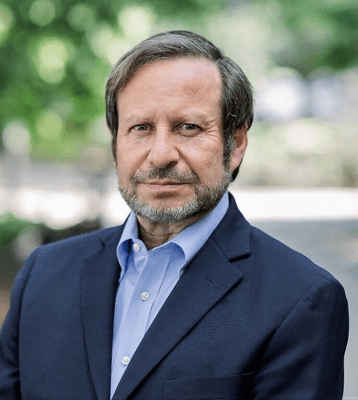 Appendix A: Steven Koonin
Dr. Steven E. Koonin is a leader in science policy in the United States. He served as Undersecretary for Science in the US Department of Energy under President Obama, where he was the lead author of the Department’s Strategic Plan and the inaugural Quadrennial Technology Review (2011). With more than 200 peer-reviewed papers in the fields of physics and astrophysics, scientific computation, energy technology and policy, and climate science, Dr. Koonin was a professor of theoretical physics at Caltech, also serving as Caltech’s Vice President and Provost for almost a decade. He is currently a University Professor at New York University, with appointments in the Stern School of Business, the Tandon School of Engineering, and the Department of Physics. Dr. Koonin’s memberships include US National Academy of Sciences, the American Academy of Arts and Sciences, and the JASON group of scientists who solve technical problems for the US government. Since 2014, he has been a trustee of the Institute for Defense Analyses and chaired the National Academies’ Divisional Committee for Engineering and Physical Sciences from 2014-2019. He is currently an independent governor of the Lawrence Livermore National Laboratory and has served in similar roles for the Los Alamos, Sandia, Brookhaven, and Argonne National Laboratories.
Appendix B: Some Comments on YouTube
- If scientists would refuse to allow the facts to be hidden, they would regain so much respect they have lost. When science was the purview of religious men, and it was long ago, it held itself to a standard of what could be proven and truth. In the hands of those who have no belief in actual right and wrong, just an ideology, and used on people of the same mind, it becomes a hazard.
- I’m disappointed that Dr. Koonin didn’t talk about another core problem with solar, namely the extremely low energy density. It’s a real problem when you can only get a couple hundred watts per square meter. A typical coal power plant may be 1GW. You would only need 5 million square meters of solar panels to be equivalent to one small typical coal fired plant. Does anyone else here see the logistical problem with that?
- Nature, and humans, have always adapted to the environment. Trying to adapt the environment to humans is such a huge sign of hubris it must be in the historical top ten hubris events.
- The climate debate isn’t about climate and certainly isn’t about science. Its a political issue and is about controlling energy production. Controlling energy production is control of economies and control of economies is control of people. One constant in human history is there is always going to be an element that seeks to have total control. Our modern era is no different … Climate change is but one tool being used to achieve this.
- Reply from Covering Climate Now:
“Mr. Koonin’s comments about Covering Climate Now are as factually careless and ideologically driven as his writing about climate science.”
“CCNow has zero tolerance for climate denial. That’s because the scientific consensus — that climate change is man-made, extremely damaging (especially to the poor and generations to come) and bound to get worse unless humanity rapidly phases out oil, gas, and coal — is rock solid.”
Appendix C: Reviews of Unsettled (Koonin, 2021)
Brown A and Osterhoudt J (2023) call the reviews of Unsettled (Koonin 2021), a “shameless attack on a climate change dissenter”.
They state, “We couldn’t find a single negative review of Unsettled that disputed its claims directly or even described them accurately. Many of the reviewers seem to have stopped reading after the first few pages. Others were forced to concede that many of Koonin’s facts were correct but objected that they were used in the service of challenging official dogma. True statements were downplayed as trivial or as things everyone knows, despite the extensive parts of Unsettled that document precisely the opposite: that the facts were widely denied in major media coverage and misrepresentations were cited as the basis for major policy initiatives.”
“Why does it matter that Koonin’s critics don’t want to bother responding to his arguments? Substantive debate is how science advances. If climate science is just an echo chamber, we may make perverse short-term overreactions to the data that have large costs and possibly even negative environmental effects. Many historical policy disasters have been caused by people claiming they shouldn’t have to engage with informed critics.”
“Unsettled is about more than just climate policy—it seeks to free science from the shackles of organized dogma, the sole domain of an anointed elite, who feel justified calling their critics “cranks,” “deniers,” and “disinformation peddlers.” Why engage with a heretic when he can be banished from the church altogether?”
References: Recent interviews with Dr Steven Koonin.
This post comes from the following interviews.
Hot or Not: Steven Koonin Questions Conventional Climate Science and Methodology, Hoover Institution, Interview with Peter Robinson, 15 Aug. 2023.
“The limitations of climate change models”, Hoover Institution, Summer Policy Boot camp, 15 Aug 2023.
Brown A and Osterhoudt J (2023), “The shameless attack on a climate dissenter”, Reason, 13 February 2023.
Koonin S E (2021), Unsettled: What Climate Science Tells Us, What It Doesn’t, and Why It Matters, BebBella Books.
Quotes from this book are labelled “Unsettled:”.
Written, January 2024
Also see: The politics of climate alarmism





 George's Journal
Leave a comment