
1984 in 2024!
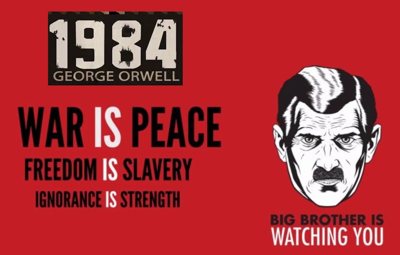 The Australian government is planning to ramp up censorship of its citizens. The novel 1984 (George Orwell, 1949) examines the role of truth and facts within societies and the ways in which they can be manipulated. It centers on the consequences of totalitarianism, mass surveillance, and repressive regimentation of people and behaviors within society (Appendix A).
This blogpost comes from the Australian Christian Lobby (ACL) and Australian Christians (AC).
The Labor Government’s “Communications Legislation Amendment (Combatting Misinformation and Disinformation) Bill 2024“, is a threat to freedom of speech. An ACL briefing on the bill is given in Appendix B and an ACL blogpost is given in Appendix C.
The bill would give the Australian Communications and Media Authority (ACMA) unchecked power to silence views that could be labelled “misinformation”. Under this legislation, biblical perspectives on marriage, life, and sexuality could be labelled as “harmful” and censored.
Who decides what’s true? Who decides what’s harmful? Government and big tech.
Freedom of speech and religious expression are vital to a healthy democracy – we need it. This bill threatens to create a precedent for censorship, silencing those who don’t follow the status quo.
The AC submission calls for the total rejection of this bill (Appendix D). No amendment(s) would make this bill acceptable. If allowed to pass, it would place enormous censorship powers in the hands of government and tech giants, curbing our right to express our faith-based beliefs.
Freedom of speech means freedom to be heard—even when our views challenge prevailing social narratives. Building a healthy marketplace of ideas is vital.
Appendix A: Summary of the novel 1984
“1984” by George Orwell is a dystopian (an imaginary place where there is great suffering or injustice) novel set in a totalitarian state where the government, led by the Party and its figurehead, Big Brother, controls every aspect of life. The story follows Winston Smith, a low-ranking Party member who works at the Ministry of Truth, where his job is to rewrite history to fit the Party’s ever-changing narrative. The Party seeks to maintain absolute power by manipulating reality, erasing dissent, and enforcing complete loyalty through constant surveillance, propaganda, and fear.
Winston secretly despises the Party and begins to question its authority. He starts a forbidden relationship with Julia, a fellow Party member who shares his rebellious views. Together, they dream of overthrowing the Party, but their hope is fragile in a world where independent thought is punished as thoughtcrime. Winston’s rebellion deepens when he seeks out O’Brien, a mysterious figure whom he believes is part of a resistance group called the Brotherhood.
However, Winston’s hopes are shattered when it is revealed that O’Brien is actually a loyal agent of the Party. Winston and Julia are arrested and subjected to brutal interrogation and re-education. In the infamous Room 101, Winston is tortured with his worst fear—rats—until he finally betrays Julia, showing that the Party’s control over individuals extends even to their most private loyalties.
In the end, Winston is broken. He loses his will to resist, and in a final act of submission, he accepts the Party’s dominance, coming to love Big Brother. The novel ends on a bleak note, showing that in Orwell’s vision of totalitarianism, resistance is futile and the Party’s power is absolute.
The key themes are:
- Totalitarianism: The novel explores the dangers of absolute power and the terrifying mechanisms by which a state can suppress free thought and maintain control over its citizens.
- Surveillance: Orwell depicts a society where privacy is non-existent, with the Party constantly watching through telescreens and spies, ensuring that no one can escape its gaze.
- Reality and truth: “1984” examines how those in power can manipulate reality and control truth through propaganda, censorship, and the rewriting of history, leading to the concept of doublethink—the ability to hold contradictory beliefs simultaneously.
- Language and thought: The Party’s control extends to language itself, with Newspeak, a reduced language designed to eliminate rebellious thoughts. By limiting the words people can use, the Party controls what they are able to think.
Orwell’s “1984” is a chilling portrayal of a future where freedom and individuality are crushed under the weight of an all-powerful government, a warning about the perils of unchecked authoritarianism.
Appendix B: ACL briefing
What the bill does
- Requires Digital Platform Providers (DPPs) to develop a misinformation code, setting out how they will reduce the risk of misinformation and disinformation. If the measures are not adequate, ACMA will create misinformation standards.
Problem: If the DPP’s misinformation code goes too far, ACMA cannot require the DPP to pull back. If the DPP misinformation code does not go far enough, ACMA sets the standard anyway.
- The bill provides powers to ACMA to require DPPs to provide them with personal information, as it relates to posts containing misinformation or disinformation. The government justifies this reduction in privacy rights as achieving a legitimate aim.
Problem: This is government surveillance at a level never seen before in Australia. This enables the collection of any post containing personal information and personal opinions that the DPP believes is misinformation.
- Civil penalties up to 5% of annual turnover, can be applied if the DPPs do not adequately abide by the standards.
Problem: There is no penalty for over-censorship, but a massive fine for failing to comply with the misinformation standard. DPPs are likely to over-censor to avoid paying an exorbitant penalty. Australians will have no visibility of what is suppressed and therefore no way of challenging over censorship.
The definitions give way to extreme censorship
The definitions of ‘misinformation’ and ‘serious harm’ (the distinction between mis- and disinformation turns only on the question of intentionality, so both definitions are problematic) are broad, vague, and susceptible to subjective interpretation. As a result, the precise scope of what might be screened out as contributing to “serious harm” is impossible to establish. These powers might be used to censor a wide range of politically contentious content.
The controversial aspects of the “misinformation” and “serious harm” definitions include:
Misinformation
Content is misinformation if;
(a) the content contains information that is reasonably verifiable as false, misleading or deceptive; and
(b) the provision of the content on the digital service is reasonably likely to cause or contribute to serious harm;
Problem 1: ‘reasonably verifiable’ – The bill does not provide for an independent review of what is reasonably verifiable as false. Who decides what is false? On what basis? What if they are wrong?
Problem 2: ‘misleading or deceptive’ – This is a subjective assessment and opens the way for censorship powers to be abused.
Problem 3: ‘reasonably likely to … contribute to serious harm’ – This is an impossibly low threshold, full of vague, subjective terms. Something need not be demonstrably causing serious harm (where “serious harm” is tethered to a firm, objective definition). Instead, it will be sufficient that, according to the judgement of a DPP or ACMA, material is “reasonably likely” to “contribute to” serious harm. Such broad terms could potentially capture any political opinion with which the government disagrees.
Serious harm
When interpreting the intent of legislation, Courts will rely on the Explanatory Memorandum (EM), which reinforces the message that “serious harm” is intended to have a broad application.
Serious harm is defined as follows:
– harm to the operation or integrity of a Commonwealth, State, Territory or local government electoral or referendum process
Problem: This extends to ‘misleading’ people about the behavior of politicians, which provides DPPs the power, under the watchful eye of ACMA to remove political content.
– harm to public health in Australia
Problem: Various reports in Australia claim that puberty blockers are safe for children, yet evidence is emerging causing many countries to ban their use. Will calling out the harm of puberty blockers be considered harmful to transgender children? Or will calling out the harm of the abortion pill be seen to harm public health?
– vilification of a group in Australian society distinguished by race, religion, sex, sexual orientation, gender identity, intersex status, disability, nationality or national or ethnic origin, or vilification of an individual because of a belief that the individual is a member of such a group
Problem: ‘Vilification’ is not defined and open to interpretation. The interpretation will most likely be at the lower threshold of ‘causing offence’. Social media platforms already censor traditional views of marriage and gender, and this will only further entrench their powers of censorship.
– intentionally inflicted physical injury to an individual in Australia
Problem: In the “Impact Analysis” that accompanies this new bill, physical injury is defined as ‘spreading false information that attempts to undermine and reverse the rights of women and LGBTIQ+ people – by implying that these rights are coming at the expense of other groups’. How is this intentional physical injury?
– imminent harm to the Australian economy
Problem: Once again, this will allow social media platforms to determine what the public should and should not see when it comes to public matters of importance.
A religious exemption does not fix the problem
The bill provides exemptions for some types of expression including:
(a) dissemination of content that would reasonably be regarded as parody or satire;
(b) dissemination of professional news content;
(c) reasonable dissemination of content for any academic, artistic, scientific or religious purpose. Carving out narrow and subjectively-defined exemptions to otherwise sweeping powers of prohibition reverses the principle that all speech should free unless it meets the legal definitions of “hate speech” or “defamation”, for example. This is a violation of the right to freedom of expression of all Australians. Regarding the ‘religious purpose’, the bill proposes that all religious teaching in Australia must now demonstrate to a judge’s satisfaction that it meets a broad and ill-defined ‘reasonableness’ test. This is obviously unacceptable.
Appendix C: Michelle Pearson’s (CEO of ACL) blogpost
“We will only discover our error and grow in moral maturity if we allow those who do not share our moral sensibilities the freedom to make their case” (Paul D Miller paraphrasing J S Mill).
Freedom of speech is an integral part of a free society. We learn and grow through disagreements and debate. We test our ideas and receive feedback and even criticism. Social media can be a hostile place for the sharing of ideas. However, agitation of ideas and opposition is the nature of our freedom and democracy.
Democracy is the greatest political system in the world. Our two-party system holds the other to account and is free to critique the other openly. This freedom helps to minimize the risk of corruption and abuse of power. And so, threats to democracy should be taken seriously.
The government believes that misinformation is a threat to democracy, that is it ‘poses a major challenge to the proper functioning of societies across the world.’ But upon balance—what is the greater threat to democracy? Censorship or the free flow of information and opinions?
The Communication Legislation Amendment (Combatting Misinformation and Disinformation) Bill 2024) (the bill) undermines democracy significantly. It is highly subjective, breaches rights to privacy and freedom of expression, and sets the ACMA up as the arbiters of truth. In the government’s words, this is justified as “reasonable” to protect Australians from serious harm. However, what the government deems as “reasonable” is at odds with the everyday Australian.
The bill threatens our freedom of expression, supposedly protected by our international human rights obligations. The Explanatory Memorandum (EM) admits that the measures in the bill could feasibly incentivize digital communications platform providers (social media) to take an overly cautious approach, which they admit could have a ‘chilling effect’ and that the measures in the bill could burden freedom of expression. These measures include threatening the social media companies with fines up to 5% of their annual turnover for non-compliance. Of course, there is no fine for over-censorship.
The Australian Christian Lobby’s online campaigns against puberty blocking medication and transgender surgery on minors could be deemed misinformation. Politicians have already labelled the real cases of babies surviving abortions and being left to die as misinformation.
Your ability to freely post regarding your Christian beliefs on gender and sexuality, or anything controversial that relates to politics, the economy, or public health could be deemed misinformation.
The bill includes a religious exemption; however, this is unclear. Who does it apply to? Do all Christians need to post a Bible passage along with their opinion to be captured by this exemption? I doubt that this exemption would provide much protection.
Privacy is another major concern. The EM points out the government’s obligations to protect privacy, stating; “The UN High Commissioner for Human Rights has considered that any form of systematic monitoring and analysis of public online discourse is a form of surveillance, and thus, interferes with the right to privacy. This includes the collection and analysis of social media posts, even on publicly accessible communications platforms.”
Yet the bill provides powers to the ACMA to require social media companies to provide them with personal information, as it relates to posts containing misinformation or disinformation. The government justifies this reduction in our privacy rights as achieving a legitimate aim. To be able to locate all posts that should be deemed misinformation, social media companies will have to create systematic monitoring and analysis of online discourse. In other words, ‘surveillance’.
The premise of this bill is ‘misinformation’ itself. Its passing will change the landscape of our social media interactions, and instead of achieving the government’s intent of creating more trust on online platforms, it will do the opposite. We must stand for freedom of speech and rights to privacy—which in our democratic nation has served us well for hundreds of years.
Appendix D: AC submission on the bill
Executive summary
The Communications Legislation Amendment (Combatting Misinformation and Disinformation) Bill 2024, like its 2023 predecessor, remains a dangerous proposal. I should also express concern, given the importance of this issue, that organizations were given such short notice to complete a comprehensive submission.
Australian Christians strongly opposes this bill, as it would grant the ACMA excessive power to silence large portions of the Australian population, particularly those who hold social views often maligned as “misinformation” by political actors, commentators, community leaders, and media figures.
As a Christian political party with pro-life and pro-family values, and a fundamental belief in religious freedom we stand against laws that restrict the free expression of religious beliefs and speech. It is essential that religious organizations, schools, and individuals retain the right to freely exercise their beliefs without fear of censorship.
- Who defines “truth”?
The bill assumes that the government, or its agents, can define a singular, verifiable “truth” on complex social and theological issues. This premise directly conflicts with the Christian worldview, which recognizes that truth can be revealed through divine revelation and religious conviction. What may be labelled as “misinformation” from a secular perspective may reflect centuries-old, deeply held Christian beliefs.
Subjective definitions such as “reasonably likely to cause or contribute to serious harm” are vague and dangerous. What constitutes “serious harm,” and who defines “truth”? These terms allow for a broad, subjective interpretation, threatening to punish Christians for adhering to core biblical principles, such as marriage between a man and a woman, the sanctity of life, or the belief in two genders.
- Freedom of speech and religious expression
Freedom of speech is a cornerstone of Australian values and is enshrined in Article 19 of the Universal Declaration of Human Rights. The Department of Home Affairs also places freedom of speech at the forefront of the values that define Australia. However, this bill risks violating these international commitments by silencing Christian perspectives that dissent from the prevailing secular orthodoxy. In the digital public square, traditional Christian values risk being pushed aside and censored.
The bill’s broad scope is alarming and creates an environment where individuals and religious organizations fear expressing their beliefs, thus undermining the foundational right to speak freely, particularly on contentious issues like marriage, gender, and family.
- Government overreach and censorship
The power the bill grants ACMA to regulate speech online creates a precedent of government overreach. Past experiences, such as the government’s monitoring of COVID-19 content, demonstrate that legitimate, factually correct posts were censored for diverging from official narratives. This misuse of authority is deeply troubling and shows how easily truth can be suppressed under the guise of “combatting” misinformation. Additionally, the bill’s exemption for government-authorized content and professional news content is especially concerning. This creates an uneven playing field, where dissenting views—particularly those of faith-based organizations—are marginalized while government narratives are shielded from scrutiny. This undermines the very principle of free and open debate that defines democracy.
- Outsourcing censorship to big tech
The Bill’s reliance on tech companies to enforce its provisions places censorship in the hands of corporations with their own biases and commercial interests. This system has proven to be opaque and unaccountable – as seen with the removal of legitimate religious and conservative content in recent years. Tech companies, driven by algorithms designed to maximize engagement, are not suited to act as neutral arbiters of truth. Entrusting tech companies with the power to police online speech only further removes the ability for ordinary Australians to challenge the government or media narratives, leaving faith-based perspectives especially vulnerable to suppression.
- Who defines misinformation?
The vagueness of terms like “misinformation” and “disinformation” allows for subjective and politically motivated interpretations. What is labelled as misinformation today may be recognized as truth in the future. The evolving nature of public discourse—such as shifting views on gender, marriage, and family values—means that silencing voices now risks long-term harm to social progress and the discovery of truth. Throughout history, deeply held beliefs, once considered “wrong,” have been vindicated over time. The censorship imposed by this bill would hinder debate and the ability for individuals to express different views, even if those views are initially unpopular.
- Freedom of speech means freedom to be wrong
One of the core premises of free speech is the ability to express ideas, even those that may be wrong. By imposing censorship on ideas that contradict the government’s stance, the bill stifles creativity, progress, and the free exchange of ideas. Australians must be free to voice dissent, debate the prevailing wisdom, and speak out against ideas they disagree with. The government’s role is not to determine which ideas are “right” but to ensure that all ideas can be debated freely. The freedom to be wrong is as essential as the freedom to be right.
- Government accountability?
Perhaps the most troubling aspect of the bill is the lack of accountability. Exemptions for government content, combined with the broad powers granted to ACMA, create an environment where the government can silence dissent without consequence. Transparency and accountability are critical to maintaining public trust, and this bill offers neither. Freedom of speech belongs to all Australians, not just to those who align with the government’s views.
- A call to reject not revise
Given the far-reaching threats to religious freedom and free speech posed by this bill, we call for its rejection in full. The bill’s flaws cannot be addressed through revision; instead, the government should promote media literacy, critical thinking, and empowerment without resorting to censorship.
- In conclusion
The Communications Legislation Amendment (Combatting Misinformation and Disinformation) Bill 2024 undermines fundamental freedoms, including freedom of speech and religious expression. We strongly urge the committee to reject the bill in its entirety and focus on policies that uphold the open exchange of ideas, freedom of belief, and the democratic principles that define Australian society.
Acknowledgement
This blogpost comes from the Australian Christian Lobby (ACL) and Australian Christians (AC).





 George's Journal
When we read the book in high school it seemed impossible that the world would go that far. We certainly had hints of it back then, but who knew that Orwell was writing prophetically of decades to come far beyond the time he assigned it? It’s a good thing that we love and serve the only true ruler and King, Jesus Christ. May his will be done. No matter what rulers on earth do, we have an eternal hope! Praise God!
LikeLiked by 1 person
October 10, 2024 at 4:40 am
Thanks for the comment Laura.
LikeLike
October 10, 2024 at 6:15 am