
Dealing with problems in the church at Corinth
 Imagine a high-performance sports team. They’ve got incredible talent—star players with amazing skills, speed, strength, and strategy. But when they hit the field, something’s terribly wrong. The players are arguing over who gets the spotlight, fighting about playing styles, some are living reckless lives off the field that’s dragging the whole team down, and others are showing up in mismatched uniforms, ignoring the coach’s playbook entirely. They’re talented, but they’re fractured—divided, dysfunctional, and far from winning. That’s a picture of the problems in the church in Corinth.
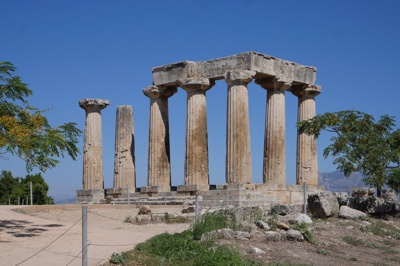
In Roman times Corinth (the capital of Achaia) was a city of wealth, luxury and immorality. It was a busy commercial and industrial centre on an east-west trade route and on the Mediterranean Sea. In AD 50, Paul visited Corinth after Athens on his second missionary journey (Acts 18:1-18). He stayed with Aquila and Priscilla who were fellow Jews who had fled from persecution in Rome. He planted a church and stayed 18 months preaching and teaching before moving to Ephesus.
The church established by Paul in a pagan city went through difficult times. So, in AD 55 Paul wrote a letter (1 Corinthians) dealing with the problems in the church. There was a lack of unity. And the immorality of the society was affecting the church. So, he concentrated on unity and purity. There was also a problem accepting the resurrection of the body.
In Chapter 13 he addressed the necessity of exercising spiritual gifts in love. The Corinthians must have been using their gifts in a selfish manner. Paul said that love was greater than faith and hope.
Then Apollos continued with preaching and teaching in Corinth (Acts 18:24-28) and Paul sent Timothy to Corinth (1 Cor. 4:17; 16:10-11).
In another letter (2 Corinthians), Paul taught on other topics including Christian generosity in the context of a collection for poor believers in Jerusalem. He said that God is the greatest example of giving for His “indescribable gift” of Jesus Christ (2 Cor. 9:15).
Lessons for us
From the events associated with Corinth in the Bible, we can learn these lessons.
Persecution led to the spread of Christianity across the Roman Empire (Acts 18:1-2). God used something that was bad to produce something that was good!
Aquilia and Priscilla worked together at home with hospitality (1 Cor. 18:2-3) and Bible teaching (1 Cor. 18:24-26). This is an example of a husband and wife working together as a team.
God established a church in a pagan city although Paul felt weak and fearful when he came there (Acts 18:9-10; 1 Cor. 2:3). This shows that God works to build his church despite our feelings of weakness. When we are weak, He is strong.
Christians are influenced by their cultural environment – there was immorality and litigation in the church at Corinth. But Paul corrected them when he insisted that this cease.
And God used the problems in the church at Corinth to give guidance to all churches through the letters that Paul wrote, which were included in the Bible.
Written, December 2025





 George's Journal
Leave a comment