
Questions and answers about Genesis – Part 2
 The Bible gives a selective history of the earth from its creation to its demise. Many question this. Did you know that there are answers to your questions? Here’s the answers to some questions that were asked recently.
This post is based on questions and answers after a presentation by Dr Tas Walker of Creation Ministries International (CMI).
1. Is there any fossil evidence of humans and dinosaurs living together? And if the dinosaurs were carnivorous, were the humans likely to be eaten by the dinosaurs?
As dinosaurs and humans didn’t live in the same areas, it is unlikely that they would be buried in the same strata in the flood. For example, crocodiles and humans don’t live in the same areas. Crocodiles are amphibious animals that live in the estuaries of rivers, in the oceans and on the nearby land. They would be overwhelmed first by the flood and humans may have been able to escape to higher land.
Humans live with many carnivorous animals today like lions, tigers and crocodiles. They are able to control and dominate these animals and have them in zoos. A dinosaur is just another big animal which humans would be able to control.
2. In the beginning all the animals were vegetarian. But later some of the animals were carnivorous. When did that change occur? And when did parasites begin?
Biological changes occurred as a consequence of the fall into sin described in Genesis 3. Thorns and thistles were introduced as part of God’s curse on the world. So, some plants grew thorns. By the way, Jesus wore a crown of thorns when He took the curse of our sin upon Himself.
Some animals changed their behavior. For example, although they are not carnivorous, when food is scare some animals will eat other animals.
And downhill genetic changes occurred. In each generation there is an increase in the number of mutations in the genome. Parasitic behavior can be caused by a loss of genetic information which means that they can’t survive on their own. So, they have to be a parasite to something else.
There are a lot of bacteria and viruses which are very helpful for us. They have a lot of good functions as a part of God’s creation. But it’s been corrupted since the fall. So many bacteria and viruses have become harmful although originally they had a good purpose.
3. What happened to aquatic and marine life during the flood? What about fresh and salt water?
The flood affected the whole world. The aquatic and marine life were not on the ark. Many of them died during the flood and we find fish fossils and whale fossils. But a lot of them survived. Some fish can adapt to different salinity and some areas of the earth were fresh water and others were salt water.
4. When climate is reconstructed over millions of years using proxies, how accurate are the dates and the proxies? Is it like remote sensing without any real calibration on the x and y axis? Yet such paleoclimate reconstructions are guiding the response to climate change!
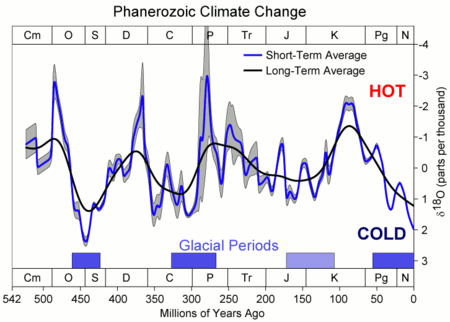 Paleoclimatology is the study of past climates. Since it is not possible to go back in time to see what climates were like, scientists use imprints created during past climate, known as proxies, to interpret paleoclimate. Organisms, such as diatoms, forams, and coral serve as useful climate proxies. Other proxies include ice cores, tree rings, and sediment cores (which include diatoms, foraminifera, microbiota, pollen, and charcoal within the sediment and the sediment itself).
Paleoclimate reconstructions are influenced by their assumptions. They assume uniformitarianism – that things happened in the past the same as they happen in the present. We know that there is a glacial period in the present so they assume it must have happened in the past. The dates can be corrected using the geology transformation tool. So, between about 540 million years ago and about 50 million years ago the waters of Noah’s flood were rising. And after the flood there was an ice age of about 700 years. During the flood the waters were raging and there were volcanoes. We don’t know if the temperature proxies are accurate under these conditions. If the temperatures are accurate, maybe the temperature changes were due to volcanic eruptions which heated the water. We certainly know that the water was hot near the end of the flood, which is why there was an ice age. It’s all based on the assumptions of the uniformitarian worldview, and we can look at it from another way through the geology transformation tool.
Furthermore, uniformitarians don’t know that the flood caused the ice age. Without that, they haven’t got a clue as to how it occurred. So, they don’t know very much about the previous climate of the earth.
5. Where would you say that Neanderthal comes into this. Are they a different species to humans and not made in the image of God? And could the Neanderthals have lived before the flood and had lifetimes of hundreds of years?
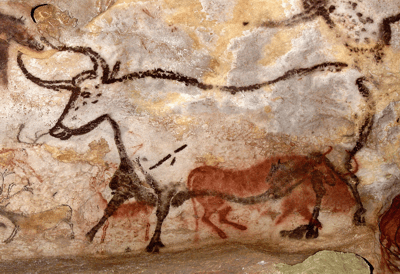 All the people on earth now are descendants of Noah and his family who survived the flood because they were on the ark. The others drowned. So, Neanderthals were descendants of Noah and his family. They were human beings. But they were depicted as being primitive, brutish and fierce. As people found out more about them, they discovered that the Neanderthals were a variety of people. They were the first settlers of Europe and they intermarried with later settlers of Europe. They buried their dead, used fire, made jewellery and musical instruments, and they created cave paintings.
The Neanderthals were not pre-flood because everything preflood perished in the flood. The Neanderthal fossils are usually found in caves. And caves formed at the end of the flood when the floodwaters drained. So, people and animals found in caves are post-flood. So, Neanderthals descended from Noah and his family and dispersed and settled in caves. They had some unusual skeletal features, which may have been due to a vitamin D deficiency associated with a lack of exposure to sunlight.
6. What about Behemoth and Leviathan in the book of Job?
 The book of Job is written as though these creatures existed at that time. Job was familiar with them, and God points them out. The description of Behemoth fits with a sauropod dinosaur that walks on four legs (like an elephant) and has a big tail (like a cedar) and ate grass like an ox.
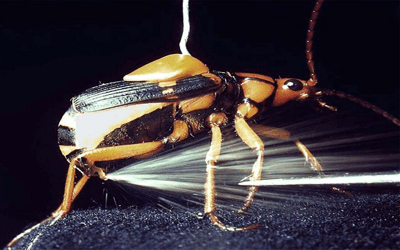
And Leviathan is described as being in a river and breathing fire. It sounds like a large crocodile. Animals can breathe fire. For example, the bombardier beetle has chambers on its backside and it can shoot out hot gas and stream to scare away predators.
7. Where did all the water come from for the flood?
In the 1970s there was an idea that there was a canopy of water around the earth, somewhat like the canopy around the planet Venus. It was postulated that during Noah’s flood this canopy collapsed and precipitated the rainfall. Investigations have shown that such a canopy couldn’t hold enough water to support rainfall for 40 days. And if you had a lot of water up there it would produce a lot of atmospheric pressure on the earth and produce hot temperatures. So, this theory is less popular today.
Instead, the idea now is there were volcanic eruptions that heated the water causing hurricanes (hyper canes) and this caused the rainfall that occurred during the flood. Of course, there was also water from “the fountains of the great deep” (Gen. 7:11ESV), which may have been oceanic and/or subterranean sources of water.
8. Have they found remnants of the ark on Mount Ararat?
No, they haven’t really found evidence of Noah’s ark. Maybe Noah’s family dismantled the ark after the flood and used it for building materials.
9. Does the Bible support the theory of continental drift?
This topic is not mentioned specifically in the Bible. But it does mention the breaking up of the fountains of the deep. And many creation geologists have looked at the evidence and believe that it is strong and believe that the continents did break up. To get the water over the earth there has to be movements in the crust of the earth. So, the pre-flood oceans had to be pushed up and the preflood continents had to be pushed down. And that could cause the breaking up of the crust. And at the end of the flood that had to be reversed, the ocean basins of today went down.
You often hear them talking about the breaking of the continent Gondwana. The crust would be moving and the oceans sinking and the continents lifting and the waters of Noah’s flood running off the continents to the oceans.
10. We know from the Bible that before the flood people lived for hundreds of years and afterwards the lifespan dropped to about 70 years. What was the cause of this?
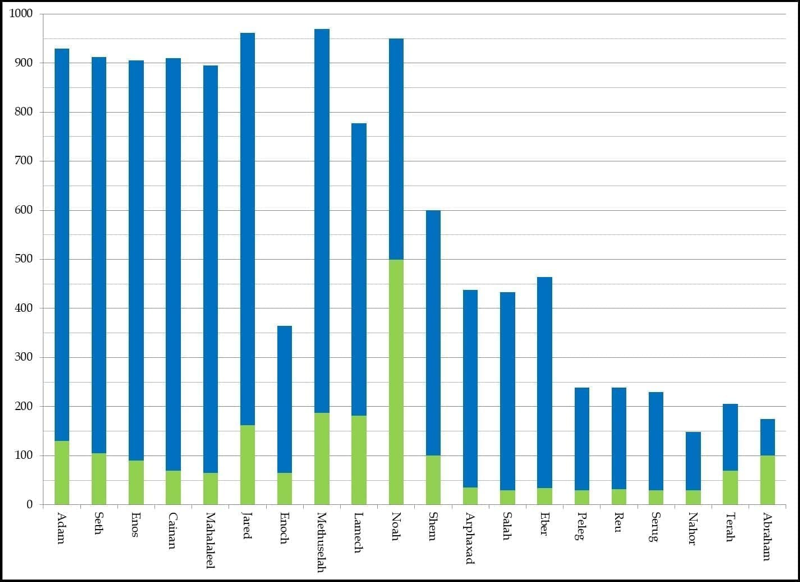 The human lifespan before the flood was often 900-1000 years. Originally this was thought to be caused by an environmental change, but now it is thought to be caused by a genetic change. Cell replication stops at a certain stage in life, and this is determined by telomeres which count the number of replications that have occurred. In most animals, telomeres are required for cell division. With each cell replication, the telomeres get shorter and shorter until they’re so short that your cells can no longer divide. When cells no longer divide, tissues age.
Also, see the book titled “Genetic entropy” about the mutations that keep increasing in number in human DNA and which is driving humanity towards extinction (barring divine intervention). It limits the antiquity of humanity.
Acknowledgement
This post is based on questions and answers after presentations on “Dinosaurs and the Bible” and “Global evidence of Noah’s flood” by Dr Tas Walker of Creation Ministries International (CMI).
Written, January 2024
Also see: Questions and answers about Genesis





 George's Journal
Leave a comment