
Dinosaurs in the Bible?
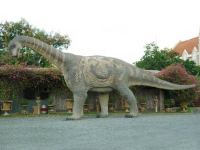 Dinosaurs capture the imagination of both young and old. They are big, fast, powerful, and sometimes deadly. These mysteries of the ancient world have entertained us all the way from the old Flint-stones cartoon series (currently being revived as a movie), to Barney, the current children’s TV favorite, to Jurassic Park, the block buster movie of a few years ago. But don’t let the current dinosaur-mania, and the idea of evolution that seems to undergird it, either undermine your faith in the God of the Bible or brainwash your children.
What are dinosaurs?
The word “dinosaur’ was coined in 1841 by Sir Richard Owen, who studied the bones of the Iguanadon and the Megalosaurus. He named this new order of animal the “dinosaur” which means “terrible, huge lizard.” The bones studied were fossils of creatures that lived in the past. A fossil is formed when minerals replace parts of the body and turn it into rock. Dinosaurs were amazing creatures. When did they live? What happened to them?
Any facts that we have concerning dinosaurs are gathered from fossil remains found in sedimentary rocks. When we consider fossils, we are dealing with evidence of past events, much like students of ancient history or forensic science do. We seek likely explanations of the past, which can be tested, but not proven conclusively. We need a witness, just like in a court case. And we have one, God, who was there in the beginning! He is the witness who knows everything, is reliable and has given us the Bible. In the book of Job, He asks, “Where were you when I laid the earth’s foundations?” (Job 38:4 NIV).
Dinosaurs in Genesis
The King James Version of the Bible was translated in 1611, over 200 years before the word “dinosaur” was coined. For this reason, it does not occur specifically in the Bible, and the influence of evolution probably stopped translators from using it in more modern translations today. There are five events recorded in the Bible that have affected every person on the planet: the Creation, the Fall, the Flood, the tower of Babel, and the life of Jesus Christ. Three of these shed light on the subject of dinosaurs.
The Creation: Dinosaurs were created on the sixth day with all the other land animals. Adam was also created then, so they lived together. This wasn’t a problem, as they were all plant eaters. Adam and Eve “ruled” over them and Adam named them. God saw that it was “very good” – the Garden of Eden was paradise on earth for both man and dinosaurs! (Gen. 1:25-30; 2:19,20).
The Fall: Adam and Eve’s rebellion against God resulted in a different world. After their sin, several things came in: suffering, conflict, decay and death. Romans 5:12 says, “Just as sin entered the world through one man, and death through sin, in this way death came to all men, because all sinned.” Death affected all creation. Romans 8:21-22 says that all creation is waiting to be “liberated from its bondage to decay … We know that the whole of creation has been groaning as in the pains of childbirth up to the present time.”
The Flood: The earth was full of violence: “The Lord saw how great man’s wickedness had become.” He was grieved, and decided to “wipe … from the face of the earth – men and animals, and creatures that move along the ground” (Gen. 6:6-7). This statement includes dinosaurs, as does Genesis 6:19-21: “Bring into the ark … two of every kind … of animal and of every kind of creature that moves along the ground … to be kept alive.”
Then Genesis 7:11 says that “all springs of the great deep burst forth and the floodgates of heaven were opened.” This would have led to erosion and the transport of sediments. It was a worldwide flood, not just a regional one. The ark was needed to save Noah’s family and the animals that were in the ark with him. Except for those in the ark, God destroyed the whole world as punishment for man’s sin and the evil that resulted from it. The flood was a catastrophe involving tremendous amounts of water and upheavals of the earth.
What would we expect to find after the flood? Billions of dead things buried in rock layers, laid down by water, all over the earth. And what do we find? Billions of dead things, buried in rock layers, laid down by water, all over the earth! Sedimentary rock – such as sandstone (from sand), shale (from mud and clay), and conglomerate (a mixture of both) – covers three quarters of the earth. Fossils required a quick burial – resulting from something such as a catastrophic flood – in mud or sand that turned into rock. These fossil graveyards are everywhere. They provide us with fossil fuels such as oil – which supplies our world’s entire petro-chemical industry, and coal – a fossil fuel used worldwide for heat, the production of electricity and many industrial uses.
Dinosaurs in Job
Except for Genesis 1-11, Job is the oldest book in the Bible. Its main character probably lived about 2,000 BC – after the flood, but before large cities were built again. The book shows that Job’s faith was very strong, despite the suffering he went through. In Chapters 38-42, Job is made to realize the vastness of God’s power as revealed in His creation of the physical and biological world. This realization made Job feel insignificant enough to say, “I know that you can do anything, and that no one can stop you” (Job 42:2). We don’t control the universe – God does. The climax of God’s response to Job is a description of the two largest creatures He had created – the behemoth and the leviathan.
The behemoth (Job 40:15-24) was the greatest of land animals. It ate plants; it was strong, powerful, unbothered by raging rivers, and beyond being captured. The leviathan (Job 41), another gigantic beast, lived in the water. It was a creature without fear; it terrified the mighty; it couldn’t be subdued; and the mere sight of it was overpowering. It had fearsome teeth, a flaming mouth and smoking nostrils. The leviathan is referred to as a dragon in the King James Version and a sea monster in the New International Version (Isa. 27:1).
Some say these creatures are mythical. But if they are, also referred to in the same passage are a lion, horse, ostrich and eagle, which are not mythical. Some say they are just other words for present day animals such as the hippopotamus, the elephant and the crocodile. If that’s the case, did the Jews have special words for the first two, but not the third? Or are they the now extinct Brachiosaurus and the Plesiosaurus dinosaurs?
Dinosaurs surely would have shown God’s power in creation! But then, any creature with life is amazing and demonstrates God’s creative power — even the smallest of things, such as the DNA molecule which carries the genetic code. The dinosaur probably became extinct after the flood, because of the much harsher, drier climate and the ice age; because of less vegetation; and possibly because of the impact of humans who continue to cause other animals to become extinct.
Dinosaurs in evolution
Evolutionary ideas about dinosaurs began at the beginning of the last century with Hutton (1795) and Lyell (1830), who taught that “the present is the key to the past.” They attempted to explain the past by present processes alone. So fossils were interpreted in terms of geologic ages, which are based on theoretical “index fossils” and an “evolutionary tree.” They say that dinosaurs lived from 200-70 million years ago inthe Triassic, Jurassic and Cretaceous Ages. The so-called evolutionary tree presents the idea that all life has evolved by natural processes of development alone over millions of years – from molecules to man.
This idea of an evolutionary tree is held by most scientists. It is presented as a fact, not as a theory, which it is, since it can’t be proven. It is taught in schools, universities, museums and the media. Thus everyone is indoctrinated. But the Bible says they are wrong. And 2 Peter-3:3-7 says the exact opposite of what evolutionists teach: “In the last days scoffers will come … But they deliberately forget that long ago by God’s word … the earth was formed … By water also the world … was deluged and destroyed … The present heavens and earth are reserved for fire.”
The scoffers don’t believe that God created the world. They see no need for a Creator God, so there is no authority (Jud. 21:25). They say there are no moral absolutes, no sin, and, therefore, no need for a Savior! They do not believe that God destroyed the whole world by water. They do not believe that God will judge the world by fire. With no authority and no sin, there is no judgment or accountability – past, present or future.
Evolution attacks the very foundation of the Christian faith. It says that suffering and death existed from the beginning, before Adam and Eve ever sinned. But God is not the source of suffering and death, and He would never refer to a creation based on evolutionary theories as “good.” God’s purpose was the creation and redemption (or rescue) of mankind, not millions of years of evolution! 1 Timothy 6:20-21 says such “opposing ideas of what is falsely called knowledge” cause some to “have wandered from the faith.” Don’t let this happen to you!
You decide
Dinosaurs were massive examples of God’s creation, but now they are dead and gone from the face of the earth, and we see them only as fossils. As such, they are merely symbols of God’s judgment of sin. The real examples of God’s judgment on the sin and wickedness of mankind are: the destruction caused by the global flood (be reminded of this every time you see sedimentary rock layers); the burning sulfur rained on Sodom and Gomorrah as God’s judgment on evil (verified by fossil remains); the coming tribulation period; and the coming final judgment and destruction by fire (both prophesied in the Bible).
Romans 6:23 is God’s provision for us: “For the wages of sin is death, but the gift of God is eternal life in Christ Jesus our Lord.” Don’t let dinosaurmania and the idea of evolution either undermine your faith in the God of the Bible or brainwash your children. Remember that Jurassic Park is just a fictitious, money-making movie with a comment on genetic engineering. The Bible tells the real story about the creation, existence and extinction of dinosaurs.
Published, December 1995
Also see: Year of the dragon
Authority questions
Share this:

Four Great Rescues
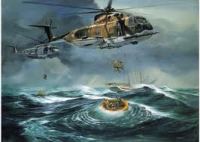 Rescues that save and protect people from harm and danger are God’s idea
Stories about the rescue of refugees from war-torn countries and people from earthquakes and severe accidents appear often in the news media. Last September, the rescue of thousands of people from the terrorists’ destruction of New York’s Twin Towers made news around the world. In this article we will look at four great rescues, three from the past and one yet to come: the boat that saved Noah’s family; the exodus from Egypt; the cross of Christ; and Christ’s second coming. These major rescues are key historical events that bring salvation to humanity. The typical sequence of events for these rescues is: a promise given, the people’s faith, God’s action enabling the rescue, and the thanksgiving afterward.
The Boat
When God told Noah that, because of the wickedness of humanity, He was sending a global flood that would destroy everything that breathed, He promised that Noah’s family would be kept safe in a boat (Gen. 6:18). Before this major disaster occurred God had a rescue plan in mind.
God took the initiative, but also relied on Noah making a significant contribution to the rescue. He gave specific instructions on how to make the boat, including its dimensions and materials used. God designed the boat and Noah supervised its construction. Noah was also told what provisions to store for the first recorded voyage, when to enter the boat, and when to leave it (Gen. 6:14-16,21; 7:1; 8:16).
Because Noah did everything God told him to do, the boat carried its occupants safely through the disaster to re-populate the earth (Gen. 6:22; 7:5). It was a place of refuge for the eight people who were rescued because they believed the warning and trusted God’s promise (1 Pet. 3:20).
After they left the boat, Noah thanked God by offering sacrifices. God responded by blessing Noah’s family and by using a rainbow to signify His promise that there would be no more global floods (Gen. 8:20; 9:8-17).
The Exodus
“Exodus” is a Greek word meaning “departure.” Israel’s escape from four centuries of slavery in Egypt is another example of a great rescue by God. Many years before, Joseph had faith to speak about God’s promise to take the children of Israel from Egypt to the Promised Land (Gen. 50:24-25; Heb. 11:22). Later, God announced that He would free them from slavery in Egypt, redeem them with mighty power and great acts of judgment and bring them into the Promised Land (Ex. 6:6-8).
Moses “led them out of Egypt” after God used ten plagues to force Pharaoh to let them go (Acts 7:36 NIV). Very detailed instructions were given for the final plague, when each Jewish household had to kill a lamb and smear its blood on the door frame of the house. That night they were to eat a special meal that included lamb’s meat and unleavened bread in preparation for a long journey. They were to stay inside their houses until morning. The Israelites did as they were told, and at midnight the Lord killed all the firstborn sons of the Egyptians and the firstborn of their livestock. But the Jews were protected by the blood on their doorways.
Pharaoh finally relented after the tragedy of the Passover, and the Jews were told to leave Egypt as quickly as possible (Ex. 12:31-33). When the Egyptians came in pursuit, the Israelites were afraid; but Moses said, “Don’t be afraid. Just stand where you are and watch the Lord rescue you. The Egyptians that you see today will never be seen again. The Lord Himself will fight for you. You won’t have to lift a finger” (Ex. 14:13-14 nlt). Then God miraculously helped them cross the Red Sea while drowning the Egyptian army (Ex. 13:17-14:31).
God also performed other miracles to help two million Israelites get to Canaan: He guided them through the desert by pillars of cloud and fire, provided food and water in the desert, and victory over their enemies (Ex. 12:37; 13:21; 15:22-17:7; Num. 11:31; 20:2-11; 21:1-3, 21-35).
During their journey the people complained about their hardships (Num. 11:1-6). God told them to send spies to explore Canaan, but they reported that the inhabitants were too powerful, and the people complained again and said they wanted to return to Egypt! As a result of their rebellion, God caused them to wander for another 38 years in the desert. When they tried to enter the Promised Land in their own strength, they were defeated.
The Exodus from Egypt was God’s idea and happened under His power. Concerned about the suffering of His people in Egypt, God acted to rescue them and bring them to Canaan (Ex. 2:24-25; 3:7-10). He said, “I am the Lord your God, who brought you out of Egypt. You shall acknowledge no God but Me, no Savior except Me” (Hos. 13:4). God raised up Moses to bring His people out of Egypt and told him what to do and say (Ex. 3:14-22; 7:20). Moses obeyed God’s instructions and was the mediator and intercessor between God and the people. He was a vital part of God’s plan. The people had to obey and trust God in order to escape from Egypt.
After they crossed the Red Sea, the people sang a song of thanksgiving (Ex. 15:1-21). It began, “I will sing to the Lord, for He is highly exalted. The horse and its rider He has hurled into the sea. The Lord is my strength and my song; He has become my salvation. He is my God, and I will praise Him, my father’s God, and I will exalt Him” (Ex. 15:1-2).
The Exodus from Egypt was the greatest example of deliverance for Israel and undergirded their knowledge of God as the Savior, even though it was later forgotten (Ps. 106:21).
The Cross
After the fall of humanity into sin, God promised that the Messiah would triumph over Satan (Gen. 3:15). There are many promises in the Old Testament about the Messiah. Christ’s mission was to “save His people from their sins” (Mt. 1:21). The angel told the shepherds, “I bring you good news of great joy that will be for all the people. Today … a Savior has been born to you; He is Christ the Lord” (Lk. 2:10-11). So Jesus saves people from great danger and brings them to a position of safety.
The Bible records that Jesus was executed on a cross. His death and resurrection are the central events of the Christian faith. “He was delivered over to death for our sins and was raised to life for our justification” (Rom. 4:25). This was God’s greatest rescue in history: “For He has rescued us from the dominion of darkness and brought us into the kingdom of the Son He loves, in whom we have redemption, the forgiveness of sins” (Col. 1:13-14).
Christ’s death and resurrection are God’s provision for us. When the flood came, the boat God provided for Noah’s family was the only means of being rescued; those outside perished. Similarly, personal acceptance of Christ’s work is the only way of being rescued from God’s coming judgment (1 Th. 1:10; 1 Pet. 3:18-21). His death and resurrection are also like Moses who rescued the children of Israel from slavery in Egypt.
In this case the rescue was planned by God and carried out by Christ “who gave Himself for our sins to rescue us from the present evil age” (Gal. 1:4). “The Father has sent His Son to be the Savior of the world” (1 Jn. 4:14). The Bible also says that God has saved us, not because of anything we have done but because of His grace (2 Tim. 1:9). Only Jesus has the power to save people from the lake of fire. His name is the only one that can save anyone (Acts 4:12). God loved us so much that He gave His only Son so that everyone who believes in Him will not perish but have eternal life (Jn. 3:16).
In this case the rescue also depends on an act of faith: “If you confess with your mouth, ‘Jesus is Lord,’ and believe in your heart that God raised Him from the dead, you will be saved. For it is with your heart that you believe and are justified, and it is with your mouth that you confess and are saved” (Rom. 10: 9-10). The thanksgiving song that believers will sing throughout eternity is, “Worthy is the Lamb who was slain” (Rev. 5:12).
The Second Coming
Christ’s second coming has two main parts, the Rapture and the Appearing. The Rapture is the next major scene in God’s rescue plan, marking the end of the Church age and the beginning of the Tribulation period. Like the Church, the Rapture was a mystery unknown in Old Testament times, but revealed in the New Testament (1 Cor. 15:51).
By the Rapture Christ rescues believers from the coming period of judgment called the Tribulation, and by the cross He rescues them from the eternal punishment of their sins (1 Th. 1:10).
When Jesus spoke about heaven He promised, “I am going there to prepare a place for you. And if I go and prepare a place for you, I will come back and take you to be with Me that you also may be where I am” (Jn. 14:2-3). The Rapture will be a miraculous event when Christ will raise the dead and transform the living. Christian faith ensures participation in this event. Afterward there will be much thanksgiving at the marriage feast of the Lamb. This will be a great celebration for all believers: “Let us rejoice and be glad and give Him glory! For the wedding of the Lamb has come, and His bride has made herself ready” (Rev. 19:7).
The other phase of the second coming is the appearing of the Lord; it ends the tribulation. After Jesus ascended to heaven from the Mount of Olives two angels asked, “Men of Galilee, why do you stand here looking into the sky? This same Jesus, who has been taken from you into heaven, will come back in the same way you have seen Him go into heaven” (Acts 1: 11).
The Appearing, when the Lord comes to the earth in great power and judgment, will be an awesome event (2 Th. 1:6-10). In this life, faith ensures participation in this event, as one of those with the Lord when He establishes His kingdom on earth. Those rescued out of the Tribulation, who pass alive into the Millennium, sing the song of Moses and the song of the Lamb, the latter celebrating the final rescue from Satan (Rev. 15:2-3).
A Great Lifesaver
Rescues that save and protect people from harm and danger are God’s idea. He used a boat to save Noah’s family from the flood, and Moses to lead the Israelites out of slavery and into the Promised Land. He sent Jesus on a rescue mission to die on the cross to save us from the lake of fire. He has promised to come again to take believers to heaven and return to the earth later to rescue those who trust in Him during the Tribulation. These examples make one thing clear: God has great power to save His people.
Peter reminds us that unbelievers will be punished, but God’s people will be rescued. If God rescued Noah’s family, then we are promised that “the Lord knows how to rescue godly people from trials and to hold the unrighteous for punishment until the day of judgment” (2 Pet. 2:4-9).
Our Response
As God rescued Noah’s family and the children of Israel, He will also rescue those who trust in Him. God has done His part to rescue us from our due punishment, and to restore us back to Him. What about you?
Are you in the boat or out in the flood? Will you be safe or sorry? There are only two alternatives. God doesn’t want anyone to perish, but the choice is ours. Those who trust in Christ’s victory on the cross have been rescued from the power of Satan, their sins are forgiven and they are safely on their way to heaven (Col. 1:13-14). Those outside are destined to the lake of fire. Trust Him and He will rescue you for eternity.
As a Christian, are you following the pillars of cloud and fire towards the Promised Land or wandering around in the desert because of your sins (1 Cor. 10:1-13)? Are you on the right road or lost on a side road? We need God’s saving power day by day.
He wants to help us every day and He has given us the pattern which is the same as for the major rescues: God’s promises, plus our faith, followed by our thanksgiving: “So then, just as you received Christ Jesus as Lord, continue to live in Him, rooted and built up in Him, strengthened in the faith as you were taught, and overflowing with thankfulness” (Col. 2:6-7). Our faith should be continually increasing as faithfulness is one of the fruits of the Spirit (2 Cor. 10:15; Gal. 5:22). We are exhorted to “live by faith” (Rom. 1:17; 2 Cor. 5:7).
He has given us many promises in the Bible and if we trust Him in these, like those saved in the great rescues of the Bible, we will see His power in our lives. We can trust in Christ’s victory to rescue us from the power of sin and Satan (1 Jn. 1:9).
Share this:

The Consequences Of Four Major Disasters
 Living in a world shaped by tragedy and heading for destruction
Disasters such as wars, famines and freak weather events can change the course of our lives. Let’s look at four major disasters, two from the past and two from the future, that bring great tragedy to humanity and the physical world.
The typical sequence of events for a disaster begins with a warning that may include a choice, followed by a cause which initiates the disaster, and a consequence which follows the disaster. The consequence can be immediate, or it can extend into the long-term future. Major disasters can have lifetime consequences that extend to the after-life.
1. The Fall Of Humanity
After God created Adam and Eve, He gave them a warning: “You are free to eat from any tree in the garden; but you must not eat from the tree of the knowledge of good and evil, for when you eat of it you will surely die” (Gen. 2:16-17 NIV). So Adam and Eve had a choice: either to follow God or to make their own rules and live without considering God. It was a test of obedience that we all face from time to time. In their case the penalty for disobedience was spiritual and physical death.
The cause of the first disaster on earth was Adam and Eve’s choice to disobey God. They failed the test and were the first people to sin. After this they hid from God among the trees in the Garden of Eden (Gen. 3:8); they felt shame, fear and guilt and were separated from God. Later they were banished from the Garden (Gen. 3:23-24).
We all experience some consequences of their action; when they sinned, sin entered the entire human race and decay and death spread to everyone (Rom. 5:12; 6:23). It drastically changed everything in the world: the ground was not so productive and thorns and weeds came into existence (Gen. 3:18); people had to work hard and struggle to earn a living (Gen. 3:17, 19); “the whole creation has been groaning as in the pains of childbirth right up to the present time” (Rom. 8:22); there is pain, suffering, illness, tragedy and tears (Rev. 21:4); and humanity is destined to be separated from God, which is spiritual death.
The fall of humanity into sin was the predominant disaster and it has led to the other three disasters. It has affected us all, as we all inherit a rebellious sinful nature, being naturally rebellious and sinful from birth.
2. The Global Flood
Nine generations after Adam and Eve, the wickedness on earth was so great that God was actually sorry he had made people. He used Noah to warn them to change their ways. Noah preached for up to 120 years warning them of God’s judgment if they did not repent (Gen. 6:3; 1 Pet. 3:18-20; 2 Pet. 2:5). The next great disaster was caused by people rejecting Noah’s preaching and continuing in their sinful ways (Gen. 6:5).
God allowed all the underground waters to gush up everywhere, and torrential rain fell for 40 days and 40 nights (Gen. 7:11-12). Flood water covered the earth for 150 days. “Every living thing that moved on the earth perished – birds, livestock, wild animals, all the creatures that swarm over the earth, and all mankind … Only Noah was left, and those with him in the boat” (Gen. 7:20-24).
A global flood destroyed the landscape; living creatures and all land vertebrates died, except those on the boat (Gen. 7:22; 2 Pet. 3:6). It probably also destroyed any evidence of earlier civilization. The landscape was totally changed with the uplift of new mountain ranges and the formation of the continents and oceans as they are today. There was a new start to civilization on earth. As a result of this catastrophe there are huge sedimentary layers across the earth; fossil graveyards have been found and we use fossil fuels for transport and for generating electric power. All this should remind us of the worldwide flood of Noah’s time.
The Bible teaches that the ungodly will be judged by God. The next two disasters concern two aspects of these judgments – namely, events on earth culminating in its destruction, and the eternal state. They are both consequences of rejecting God’s revelation to mankind.
3. The Day Of The Lord
The phrase “day of the Lord” appears in 22 Bible verses, and it refers to any time that God acts in judgment (2 Pet. 3:10). In the New Testament, it means God’s judgment at the end times. It is “a cruel day, with wrath and fierce anger – to make the land desolate and destroy the sinners within it” (Isa. 13:9). It is “a time of doom for the nations” (Ezek. 30:3), when “the sun will be turned to darkness and the moon to blood” (Joel 2:31).
This coming “day of the Lord” is comprised of two main events – the tribulation, and the end of the world as we know it. The tribulation is a seven year period when God will judge unbelievers living on earth (1 Th. 5:2-3; 2 Th. 2:1-12), ending when He returns in judgment at His appearing in power and glory (Mt. 24:27,30; 2 Th. 1:7-10). Paul warned his generation that the “day of the Lord” was an event yet to come (2 Th. 2:2).
The Bible also teaches that the universe will be destroyed and re-created (2 Pet. 3:7,10,12-13). Everything will be destroyed, and the earth will be renewed and purified through a judgment by fire. Einstein discovered that matter (m) is stored-up energy (E = mc2, c being the speed of light) that can be released in nuclear reactions when matter is converted into vast amounts of energy. There is plenty of energy for a great disaster today, just as there was plenty of water in the early earth.
Of course there are scoffers who laugh at the warning of God’s imminent judgment (2 Pet. 3:3). They say, “You Christians have been threatening us with a terrible judgment upon the world. You tell us that God is going to intervene, punish the wicked and destroy the earth. It’s just nonsense! We have nothing to fear. We can live as we please. There is no evidence God has intervened in history. Why should we believe He ever will?”
But they ignore the biblical and geological evidence of the big flood, and the ancient traditions about it from many nations around the world. As in Noah’s time, people are being warned today of God’s judgment and told about the possibility of being rescued through the good news of salvation through Jesus Christ. Why the delay in God’s judgment? He is being patient because He does not want anyone to perish, and is giving people more time to repent (2 Pet. 3:9). So far He has waited thousands of years, giving everyone more opportunity to be rescued from the coming two disasters.
The cause of the “day of the Lord” is unbelief and refusal to accept God’s provision for mankind. Those who reject the good news of salvation will be left behind after the Rapture – when Christ comes to take the believers away to heaven as He promised, delivering them from the extreme distress of the tribulation (Dan. 12:1; 2 Pet. 2:9; Rev. 3:10).
This day will come upon the unsaved as a thief, by surprise and causing loss (Mk. 13:32; 1 Th. 5:2-3; Rev. 16:15). Because they will not be prepared or ready, they will experience extreme suffering that is “unequalled from the beginning of the world until now – and never to be equalled again. If those days had not been cut short, none would survive” (Mt. 24:21-22). The terrible consequences for those living at that time are described in the seals, trumpets and bowls of Revelation 6-19. It will be a time of great fear and terror when people will panic and wish they could die rather than face God’s judgment (Rev. 6:15-17). Christ spoke about this time in Matthew 24-25, which culminates in the battle of Armageddon where Christ defeats all His enemies on earth (Rev. 16:14-21).
4. The Lake Of Fire
The Bible says that a “day of judgment” is coming when God will judge the world in justice (2 Pet. 2:9; Acts 17:31). The “lake of fire” is a term to describe the place of everlasting punishment after the final judgment. Jesus also described it with the Greek word “Gehenna,” which was a valley near Jerusalem where a fire was kept burning at the city’s garbage dump (Mk. 9:43; Lk. 12:5).
As in Noah’s time, those who reject the warning of God’s judgment are destined to experience much suffering and pain (Mt. 22:8-13). There are two reasons why: first, they have rejected the true God as revealed in the creation and in their conscience (Rom. 1:18-2:16); secondly, they have rejected the good news of salvation through Jesus Christ (2 Th. 1:8).
The consequence is judgment at the great white throne and being sentenced to be “tormented day and night for ever and ever” in the “eternal fire” (Mt. 25:41; Rev. 20:10-15). This “eternal punishment” is called the “second death” (Mt. 25:46; Rev. 2:11; 20:14) where there will be trouble and distress due to God’s wrath and anger (Rom. 2:8-9). The agony is described graphically by the rich man in Luke 16:22-28. The eternal torment and separation from God (2 Th. 1:9) is like an eternal death. There is no possibility of rescue or escape. It is the ultimate disaster that never ends.
The Key To Understanding Our World
Knowing of these four disasters helps us understand the future of our world. We have all been impacted by the Fall (of humanity), which teaches that we are all sinners. Our biggest problem today is that people are generally not aware of sin; the word seems to have been removed from their vocabulary. This is a result of unbelief in the Fall (into sin) as a real, historical event that has drastically altered the earth’s history.
The Fall should remind us that we are not gods or masters of our destiny. If we live as though we are, then our destiny is the lake of fire. Those not aware of the Fall are not aware of their dangerous situation; like the people of Noah’s time, they are on the road to disaster. The Fall was also the ultimate cause of pain, suffering and death. God allows us to experience the consequences of our choices so we will have more time to turn to Him and avoid the lake of fire.
The global flood should remind us that God judges sin, regardless of what humanity may think – remember, the scoffers perished in the disaster. We also see from the Fall and the flood that our choices can have lasting consequences (Gal. 6:7-8).
The day of the Lord and the lake of fire, the two disasters yet to occur, remind us that we are accountable to God. They show that disasters are on the horizon. Are you prepared for them? Those who trust in God will be rescued from them.
Our Response
Unbelievers are scoffers who haven’t realized they are in danger. Don’t be like those who perished in the great flood. If we trust in God’s provision we can avoid the coming disasters and be prepared for the future – for life after death.
What should be our response as believers when thinking about the disasters facing the world or when facing personal disasters? According to the Bible we should:
- Be clear-minded, alert, prepared, self-controlled, not alarmed, and we should warn others (Mt. 24:6,44; 1 Th. 5:6-8; 1 Pet. 4:7)
- Live by faith and obey God (Gen. 6:22; Heb. 11:7)
- Be holy, pure, godly and at peace (Gen. 6:9; 2 Pet. 3:11,14)
- Encourage one another (Heb. 10:25)
- Look forward to a new heaven and a new earth (2 Pet. 3:13)
C. S. Lewis wrote: “God will invade our world … When that happens, it is the end of the world. When the Author walks on the stage the play is over… It will be too late then to choose your side … That will not be the time for choosing: it will be the time when we discover which side we really have chosen, whether we realized it or not. Today is our chance to choose the right side. God is holding back to give us the chance. It will not last forever. We must take it or leave it.”





 George's Journal
RECENT COMMENTS