
Does God approve of polygamy? David, who wrote most of the psalms, had eight wives
 In Old Testament times some wealthy and powerful men indulged in polygamy, having wives and concubines. Because of the bride price, few could afford more than two wives. Concubines were secondary wives who were often servants with fewer privileges than a wife. They could also be prisoners of war claimed by the victor.
God’s plan for marriage was taught by Moses, Jesus and Paul. The first marriage was described as, “For this reason a man will leave his father and mother and be united to his wife, and they will become one flesh” (Gen. 2:24-25). This was the marriage of one man and one woman, Adam and Eve. The principle of the man leaving his parents to be united to his wife was re-stated by Jesus and Paul (Mt. 19:4-6; Eph. 5:31). Also, each elder in the local church must be “the husband of but one wife”, which implies being faithful to their wife (1 Tim. 3:2; Ti. 1:6).
But people don’t always follow God’s instructions. The first mention of polygamy in the Bible involves Lamech who claimed to avenge himself eleven times more often than Cain (Gen. 4:19, 24). The Bible says that Cain belonged to Satan (1 Jn. 3:12). So, Lamech was a violent and evil man.
After he left Hebron, the Bible says that “David took more concubines and wives in Jerusalem, and more sons and daughters were born to him” (2 Sam. 5:13). As David had eight wives, he probably followed in the way of other military leaders of his time (2 Sam. 3:2-5; 12:24). Bathsheba became his eighth wife via adultery and murder, which was certainly not God’s will. In fact, God had commanded that the king “must not take many wives, or his heart will be led astray” (Dt. 17:17). The most extreme example of polygamy in the Bible is king Solomon who “had seven hundred wives of royal birth and three hundred concubines, and his wives led him astray” (1 Ki. 11:3). His wives turned him to idolatry.
According to the bible, polygamy was practiced by: Lamech, Abraham, Esau, Jacob, Ashur, Gideon, Elkanah, David, Solomon, Rehoboam, Abijah, Jehoram, Joash, Ahab, Jehoiachin, Belshazzar, and Hosea. It was associated with trouble, jealousy and strife. In David’s case there was strife between the children of different wives involving incest, murder and treason.
There are two other passages in the Bible that may involve polygamy. Firstly, it was sought by women as a solution to being widows and childless after war had decimated the male population (Is. 3:25; 4:1). Secondly, as a provision for a childless widow (Dt. 25:5-6). If a man died and left his widow without a son, there was a danger that his name might perish and his property pass out of the family. Therefore, a brother of the dead man was supposed to marry the widow. The best example is Ruth and Boaz (Ruth 4:5,10). Here the nearest relative was to repurchase some land that Naomi’s husband had owned (Lev. 25:23-25) and marry the widow and support the family. In Ruth’s case the nearest relative refused these duties, but Boaz was willing to do it.
Jesus said that Moses permitted divorce because their hearts were hard, “but it was not this way from the beginning” (Mt. 19:7-9). Likewise, it seems that God permitted polygamy in Old Testament times, but it was not His original intention for marriage.
Polygamy degrades a wife from being a unique “helper”, as Eve was for Adam, (Gen. 2:18,20) to being one of many mistresses. So having more than one wife is one part of David’s life that we shouldn’t imitate.
Written, November 2004
Share this:

The Bible teaches us to submit to various authorities. But what if an authority makes a law that requires us to disobey God?
 Although Christians are citizens of heaven (Phil. 3:20), they must also submit themselves to all forms and levels of human government (Tit. 3:1). God established human government after the flood; and Genesis 9:6 introduces the concept of governmental authority when it speaks of capital punishment. Governments help maintain law and order, keep the peace and avoid anarchy. Our attitude to authority is an important part of our Christian life.
Everyone must submit to the governing authorities because they are established by God and viewed as His servants (Rom. 13:1-7). The governing authorities are set in place by the permissive choice of God and their power is from God (Jn. 19:11; Rom. 9:17). Their weapons are a sign of their authority. So when people disobey a human ruler, they indirectly disobey God.
It’s good to be law-abiding citizens, because if we don’t submit to authority we will have a bad conscience. We are to pay our taxes to those in authority and never join in rebellion against the government or seek its overthrow by violence.
Paul quoted Exodus 22:28 when he said, “Do not speak evil about the ruler of your people” (Acts 23:5 NIV). He also said that we should pray for “all those in authority, that we may live peaceful and quiet lives in all godliness and holiness” (1 Tim. 2:1-2). It should be noted that the governing authorities were probably pagans when these passages of the Bible were written.
Here are three examples from Scripture of those who respected authorities in difficult circumstances.
- David honored wicked King Saul and called him the Lord’s anointed (1 Sam. 24:6) even though he sought to kill David.
- When the Pharisees tried to trap Jesus, He said to them, “Give to Caesar what is Caesar’s, and to God what is God’s” (Mt. 22:21).
- Nero (a godless brutal ruler) was the Roman emperor when Peter wrote “Submit yourselves for the Lord’s sake to every authority instituted among men: whether to the king, as the supreme authority, or to governors, who are sent by him to punish those who do wrong and to commend those who do right” (1 Pet. 2:13-14).
Christians should obey God, but not place the authorities above God (Jn. 14:21-24; 15:10; Eph. 5:24; Heb. 5:9; 12:9; Jas. 4:7). A Christian is not required to obey if an authority orders him to sin, to disobey God or to compromise his loyalty to Jesus Christ. When the apostles were commanded not to preach they replied “We must obey God rather than men” (Acts 4:18-20; 5:27-29).
Here are two examples from Scripture of those who disobeyed authorities instead of disowning God.
- When King Nebuchadnezzar of Babylon commanded that everyone should bow down to an idol, three Jews – Shadrach, Meshach and Abednego – chose to follow God’s command instead (Dan. 3; Ex. 20:3-5). Because of their faithfulness, God protected them from the fiery furnace and they were promoted in Babylon.
- When King Darius issued a decree saying that anyone who prayed to a god other than the king would be thrown into the lions’ den (Dan. 6), Daniel kept praying to his God “just as he had done before” (Dan. 6:10). When he was punished by being thrown into the lion’s den, God protected him, and he even prospered.
Scripture shows us that we should obey all authority, unless that authority requires us to disobey God, who is the highest authority.
Published, February 2010
Share this:

Psalm 103 – Even Greater Praise!
 Although the Psalms were written about 3,000 years ago, we still benefit from meditating on them today. In Psalm 103 “praise the LORD” appears six times in its 22 verses. And David gives us five reasons to praise Him (Ps. 103:2-5 NIV).
- Praise the LORD – who forgives all our sins.
- Praise the LORD – who heals all our diseases.
- Praise the LORD – who redeems our life from the pit.
- Praise the LORD – who crowns us with love and compassion.
- Praise the LORD – who satisfies our desires with good things.
The result of being forgiven, healed, redeemed, crowned and satisfied is that our strength is “renewed like the eagle’s” (Ps. 103:5). The eagle is a symbol of strength.
The prophet Isaiah described it this way: “Those who hope in the LORD will renew their strength. They will soar on wings like eagles; they will run and not grow weary, they will walk and not be faint” (Isa. 40:31).
What a great promise for those who trust in the Lord! Each day God empowers believers to live for Him: “Though outwardly we are wasting away, yet inwardly we are being renewed day by day” (2 Cor. 4:16).
God’s love for His people, like the expanse of the universe, is so vast that it cannot be measured: “For as high as the heavens are above the earth, so great is His love for those who fear Him” (Ps. 103:11). Furthermore, it lasts forever, “from everlasting to everlasting” (Ps. 103:17).
This love is demonstrated by the fact that our sins have been forgiven and totally removed, never to be seen again: “As far as the east is from the west, so far has He removed our sins from us” (Ps. 103:12).
Micah expressed a similar thought, writing that the God of pardon, forgiveness, mercy and compassion “will tread our sins underfoot and hurl all our iniquities into the depths of the sea” (Mic. 7:18-19).
As our lifetime is brief compared to God’s everlasting love (Ps. 103:15-17), let’s remember again and again the good things God has done for us. Don’t take them for granted and don’t forget them (Ps. 103:2).
Remembering will lead us to praise and thank Him, and this is the right response for a forever forgiven people. That’s why David praised the Lord, and why we can join “His angels” and “all His heavenly hosts” in praising the Lord (Ps. 103:20-21).
David didn’t know how God would take our sins away through Jesus. But we do! And shouldn’t this lead us to even greater praise and thanksgiving?
Published, September 2009
Share this:

The Good Shepherd Is Always Near
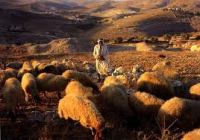 This New Year, remember …
Sheep were important animals for the ancient peoples. They provided food to eat, milk to drink, wool for making cloth, and hides and bones for many other uses. Adam’s son Abel kept flocks of sheep for these purposes, and also used them in sacrifices as well (Gen. 4:2-4).
Ancient Shepherds
Shepherds were employed to take care of the flock by leading them to grass and water, and by protecting them from wild animals. They also cared for weak, sick and injured animals and made sure that all the sheep had sufficient rest. We can learn much about the role of the shepherd by reading Psalm 23, Ezekiel 34 and John 10.
A good shepherd enjoyed a close relationship with his flock. The sheep recognized his voice and he knew each of them by name. Because of this, they willingly followed the shepherd as he moved about. There was no need to force the sheep or have dogs muster them as modern graziers often do. Also, flocks would have been smaller in Bible times than they are in many countries today. In those days, a flock of 100 sheep would have been considered large (Mt. 18:12).
To protect the flock at night against predators, the shepherd either provided a safe enclosure, or stayed out in the fields to guard them (Lk. 2:8). He was required to defend the sheep against attacks from wild animals. Remember, David had to kill a lion and a bear when he was a shepherd (1 Sam. 17:34-37).
Sheep tend to follow one another, and, therefore are easily lead astray. That is why sheep without a shepherd eventually become scattered around the countryside and are seen as being helpless (Mt. 9:36; 26:31). Shepherds counted their sheep regularly and searched for any that were lost or had strayed away. When they found them, they brought them back to the flock. So, in Bible times there was a caring relationship between a shepherd and his small flock.
David, The Shepherd
David, who was born in 1040 BC and eventually became king of Israel, was such a shepherd (1 Sam. 17:15). The experience of caring for his father’s sheep enabled him to develop an appreciation for an important attribute of God.
David became popular after he killed Goliath, the Philistine giant. As David’s military victories and his popularity increased, King Saul became jealous. This jealousy developed into hatred, and Saul pursued David to kill him. During this period David lived as a fugitive, seeking refuge in various places and moving around constantly to avoid Saul and his men (1 Sam. 18-30). He feared for his life.
David’s feelings at this time are recorded in many of the Psalms (Ps.18, 54, 56, 57, 59, 142). He cried out to God for help in times of danger, distress and desperate need. He described God as his shield, refuge, stronghold, fortress, rock and his salvation. He found that God gave help, deliverance, victory, safety, security, protection, sustenance, strength, guidance, direction, peace, hope and love. He claimed this about God: “You, O God, are my fortress, my loving God … You will go before me” (Ps. 59:9-10).
David’s Shepherd
The roles that David saw in God are similar to those of a shepherd, which David knew from his youth. This thought is expanded in Psalm 23, which begins with this metaphor: “The Lord is my Shepherd.”
David realized that God provided all his needs (Ps. 23:1), including rest, refreshment and restoration (vv. 2-3). He should not be afraid or worried because God guided and guarded his life (vv. 3-4). In fact, God was always available to help in all circumstances. He wrote, “You are with me.” Similarly, his ancestor Jacob, who had also been a shepherd, acknowledged “the God who has been my shepherd all my life” (Gen. 48:15).
 Our Shepherd
This illustration is repeated in the New Testament where Christ said, “I am the Good Shepherd” (Jn. 10:11). Here Christians are likened to being Christ’s sheep. This means that the Lord knows all about us (vv. 3, 14, 27), guides us (v. 4), feeds us (v. 9), protects and preserves us (v. 28), lays down His life for us (vv. 11, 15), gives us life in all its fullness (v. 10), and gives us eternal life that cannot be taken away (vv. 28-29).
Like David, believers can say “the Lord is my Shepherd.” We should know that He is always present to help us no matter what the circumstances are, because “we are the people of His pasture, the flock under His care” (Ps. 95:7).
Jesus told His followers “I am with you always” (Mt. 28:20). He told Paul, who was facing much opposition in Corinth, “Do not be afraid … For I am with you, and no one is going to attack and harm you” (Acts 18:9-10). Then, in turn, Paul reminded the believers in Corinth, “Do you not realize that Christ Jesus is in you?” (2 Cor. 13:5).
The Lord has promised that He will never leave us nor desert us: “I will not leave you as orphans; I will come to you” (Jn. 14:18). We become more aware of His nearness as we surrender to God and resist Satan (Jas. 4:7-8). In fact, nothing can separate us from the love of Christ (Rom. 8:35-39). Like the Good Shepherd that He is, He promised, “Never will I leave you; never will I forsake you” (Heb. 13:5).
In times of turmoil and trouble it is good to know that our Lord is near and that He cares for us. We do not need to ask Him to be with us, He already is. He is our Shepherd.
Also see:
– New Testament Shepherds
– Old Testament shepherds
– The Good Shepherd
Share this:

Prayer And Praise In Times Of Trouble
 God’s servants depend on God
It has been said that “life was never meant to be easy.” And I believe we can all testify to this. We all face trials, troubles and difficulties from time to time. To help us through them, the Bible contains many examples of how God’s servants responded to their troubles. Let’s consider just two of them, one from the Old Testament and one from the New.
David’s Troubles
In the Old Testament, King Saul was jealous of David’s military victories and his popularity. Jealousy developed into hatred, and Saul pursued David to kill him. During this period before he became king, David lived as a fugitive, seeking refuge in various places and moving around to avoid Saul and his men (1 Sam. 18-30). He feared for his life.
Saul tried to kill him at least three times with a spear, and then he attempted to have him killed in a battle with the Philistines. After these attempts failed, Saul “remained his enemy for the rest of his days” (1 Sam. 18:29 NIV).
Saul then asked his son Jonathan and all his attendants to kill David, and even sent men to his house to kill him, but David escaped. David told Jonathan, “there is only a step between me and death” and Jonathan knew for certain that “his father intended to kill David” (1 Sam. 20:3,33).
David kept moving from place to place, as Saul and 3,000 men searched for him. He fled to Nob and then to Gath; he hid in the cave of Adullam and then in Moab, Judah and in the desert. Finally, he settled among the Philistines in Gath.
David’s Response
David prayed for guidance and God answered and protected him. He consulted with men of God such as Samuel, Ahimelech and the prophet Gad. He “found strength in the Lord” in difficult circumstances (1 Sam. 30:6).
 David’s experiences as he fled from Saul are described in Psalms 7, 18, 34, 52, 54, 56, 57, 59 and 142. These are characterized by both earnest prayers for God’s help and songs of praise recognizing God’s goodness. Consider these examples.
After pleading “save and deliver me from all who pursue me,” David said, “I will sing praise to the name of the Lord Most High.” In distress he cried for help; when he was rescued he praised God (Ps. 7:1,17;
18:6,49).
David was always ready to praise the Lord, and sought to be delivered from his fears (Ps. 34:1,4). After criticizing a traitor, he said he would praise God forever (Ps. 52:2,9). After seeking God’s mercy, he praised God’s promises (Ps. 56:1,10).
David prayed for protection in times of danger, and was ready to sing hymns of praise for God’s love and loyalty (Ps. 57:1,9-10). He asked to be protected from his enemies, yet he sang of God’s strength and love (Ps. 59:1,16). When he laid all his worries and troubles before the Lord, he looked forward to being able to praise God for His goodness (Ps. 142:2,7).
Paul’s Troubles
As a Jewish leader in the New Testament, Paul persecuted the early Church by punishing its members, trying to get them to give up their faith, putting them in prison and even supporting their execution (Acts 26:9-11).
After his conversion to Christianity, Paul faced all sorts of persecution: expulsion from Pisidian Antioch; ill-treatment and stoning in Iconium; stoning and being left for dead in Lystra; arrest, flogging and imprisonment in Philippi; a riot in Thessalonica; abuse in Corinth; being publicly maligned in Ephesus; plotted against in Greece; and being arrested, flogged, struck in the face, and having more than forty men plot to kill him in Jerusalem (Acts 13-23).
Paul said of his hardships and sufferings, that he had “been in prison more frequently, been flogged more severely, and been exposed to death again and again. Five times I received from the Jews the forty lashes minus one. Three times I was beaten with rods, once I was stoned, three times I was shipwrecked, I spent a night and a day in the open sea, I have been constantly on the move. I have been in danger from rivers … from bandits … from my own countrymen … from Gentiles … in the city … in the country … at sea and … from false brothers. I have labored and toiled and have often gone without sleep; I have known hunger and thirst and have often gone without food; I have been cold and naked” (2 Cor. 11:23-27).
His sufferings in Asia were so horrible and unbearable that death seemed certain (2 Cor. 1:8-9). He also experienced a “thorn in the flesh” that tormented him (2 Cor. 12:7-9).
Paul’s Response
Paul persevered with the mission to which God called him despite his hardships. For example, when he faced opposition from the Jews in Corinth he protested to them and moved on to preach to the Gentiles (Acts 18:6-8). Like David, under God’s guidance he was courageous and was able to escape many threatening situations.
Paul’s response to difficulties is illustrated by his time in jail at Philippi. Having been severely flogged, placed in the inner cell and fastened in stocks, Paul and Silas were “praying and singing hymns to God” in the middle of the night (Acts 16:25). So, like David, prayer and songs of praise characterized his life. This would have included prayers for those who persecuted him (Mt. 5:44; Rom. 12:14).
Our Response
Although we may not face life-threatening situations as often as David and Paul did, we can learn from their experiences. We will all face hardship, trials, troubles and difficulties while serving God in this sinful world. On such occasions it is important to realize our dependence on God and express it through prayer and praise.
In difficult times and at critical moments in life we should bring our needs to God in prayer. Then as we realize God’s power, love and goodness this should lead to praise and thanksgiving. Only those who see the big picture, God at work even in our trying times, can suffer gladly (Rom. 5:3).
Also see: Responding to personal problems
Responding to external problems
Why pray in trials and difficult times?





 George's Journal
RECENT COMMENTS