
A great victory

 The first cricket test against England finished recently after just two days of play! England batted first and scored 172 runs, which seemed too low. But then Australia only scored 132 runs, giving England a lead of 40 runs on the first innings. In the second innings, England was 1 for 65 (105 runs ahead, with 9 wickets in hand). They would have been feeling confident of winning the game. But then the Australian bowlers took 5 wickets for 23 runs and England scored only 164 in the second innings. This meant that Australia needed to score 205 runs to win, which was higher than all the previous innings. So the English would have still been confident of winning, especially after their fast bowlers had terrorised the Australian batters in the first innings and Khawaja (the Australian opening batter) was injured. So the barmy army of English supporters was in full swing while things were going England’s way. What happened next? Australia was rescued by Travis Head who hit 123 runs off 83 balls! It was an amazing effort. He was a hero and won the game for Australia. And the barmy army were silent. (more…)
Share this:

Archaeological evidence of the exodus

 After the original creation and the resurrection, the exodus and the miracles surrounding it are the greatest miracles God performed. Indeed, before the incarnation of Jesus, God regularly identified himself as the God who brought the Israelites out of Egypt (Ex. 20:2; 29:46; Ps. 81:10; Jer. 11:4). (more…)
Share this:

Another test series

 The recent test cricket series between England and India finished in a 2—2 draw. And the next England versus Australia test series begins on 21 November 2025. A test cricket series involves up to five cricket matches, with each match lasting up to five days. Did you know that Israel went through many more tests on their exodus from Egypt in about 1450 BC? How would they respond to the challenges on their journey? Would they trust and obey God who was leading them? Or would they rebel against God and go their own way? (more…)
Share this:

Four lessons from the life of Joseph
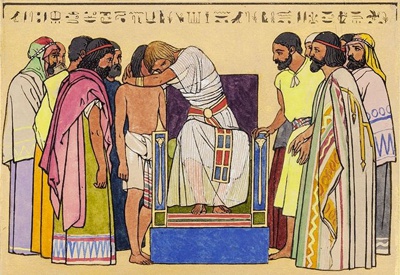 I spent last week at a holiday camp for children aged 8-12 years. During this time the children learnt about four lessons from the life of Joseph, who lived about 3,700 years ago (~1680 BC). They also learnt some verses from the Bible (see Appendix). (more…)
Share this:

Is the Torah fact or fiction?

 Were the ancient Israelites ever really slaves in Egypt? Did the Exodus really happen? Was the Torah (see Appendix) written by Moses in the mid second millennium BC, or by Jews about 1,000 years later? Is it fact or fiction?
In this post, the content of the Torah is examined to see how it matches with the existing archaeological record to help throw light on its origin. When was the Torah written? (more…)
Share this:

God’s power, justice and mercy in Egypt

 Last Sunday Tim Tszyu beat Joey Spencer in a super welterweight boxing match at Newcastle in Australia.
Thousands of New South Wales doctors went on strike last week in a dispute with the state government over pay and staffing levels. The doctors’ union is seeking a pay increase of up to 30%.
And in the Australian Federal election on 3 May we have Albanese versus Dutton.
Confrontation happens everywhere. Today we are looking at a confrontation that happened in Egypt about 3,470 years ago. (more…)
Share this:

Comprehensive outline of the book of Exodus
 The second book of the Old Testament, Exodus, was written by Moses. The information in chapter 1:1-2:10 may have come from his parents or his sister, or some other source.
I like having titles on the paragraphs or sections of my Bible. This helps to indicate the context of a particular passage of scripture. A comprehensive outline (section headings) of the book of Exodus is given below. (more…)
Share this:

Prophecies about Jesus: called out of Egypt

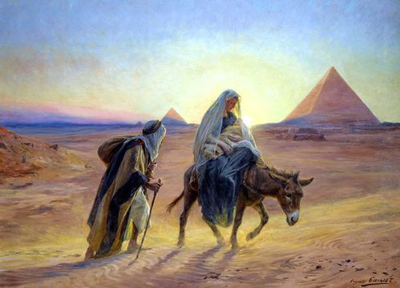 Let’s look at another pattern prophecy about Jesus. This is called a “type” or a “typology” where a pattern of events in the Old Testament is repeated in the New Testament. The fulfilment is a similar but greater pattern of events. (more…)
Share this:

Moses’ hills and valleys
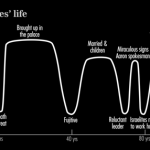
 After about 200 hundred years in Egypt, the Israelites multiplied so greatly that the Egyptians felt threatened and put slave masters over them and used them as laborers. Pharaoh issued an order that every Hebrew boy that was born was to be drowned in the river Nile. It was a dangerous time for Moses to be born. Moses lived in the 15th century BC. There is an account of his life from Exodus 2 to Deuteronomy 34 of the Bible. The hills and valleys in the first 80 years of his life are shown in the graph. (more…)
Share this:

Joseph’s hills and valleys
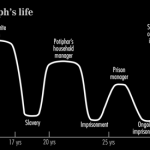
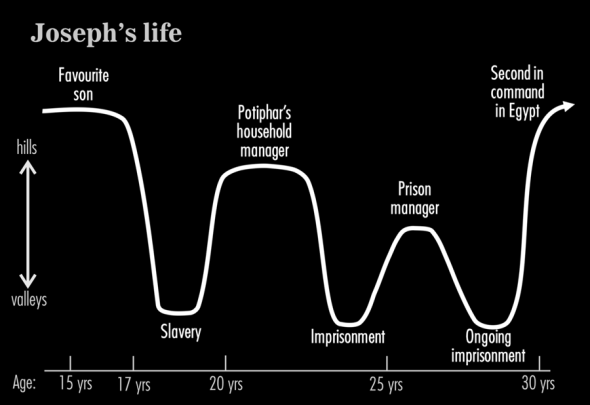 Joseph was born about 3,900 years ago. There is an account of his life in Genesis 30-50 of the Bible. The hills and valleys in the first 30 years of his life are shown in the graph, which goes up for hills and down for valleys. (more…)
Share this:

Dramatic rescues

 In September 2010, 33 miners were rescued after being trapped in a copper mine in Copiapó, Chile for 68 days. In October 1987, an 18-month-old baby girl was rescued after being trapped at the bottom of a well for 58 hours. In 1956, 1,663 crew members and passengers were rescued from the Andrea Doria ocean liner when it capsized and sank after colliding with another ship. In January 1945, 510 prisoners of war were released in a daring raid on the Japanese Cabanatuan prison camp in the Philippines. And in November 1907, Jesús García drove a train away from Nacozari in Mexico because it had caught fire and contained dynamite. He died when the train exploded but he saved the Mexican village. But there are greater rescues than these.
Share this:

The safety and dangers of Egypt
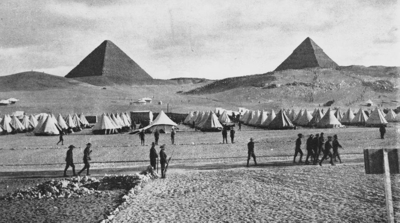 All families have stories to tell, regardless of their culture or their circumstances. When parents share family stories, their children benefit in many ways. They demonstrate better understanding of other people’s thoughts and emotions. And they more often have higher self-esteem, more robust identities, better coping skills, and lower rates of depression and anxiety.
In Psalm 78 the Israelites are reminded of lessons from their history so they could to tell the next generation about what God had done. The main historical event recalled is the exodus from Egypt (Ps. 78:13-13; 42-53).
Egypt reminds me of two great characters in the Old Testament. Joseph and Moses both rescued God’s people. Joseph rescued them from a famine and Moses rescued them from slavery. Joseph led them into Egypt and Moses led them out of Egypt.
The events in Egypt described in the Bible range from the safety of a refuge to the tyranny of slavery.
A refuge from danger
Famine was one of the dangers in the ancient world. Both Abraham and Jacob’s family (the Israelites) travelled to Egypt to avoid a famine (Gen. 12:10 – 13:1; 46:1-7). Although Abraham’s visit was short, the other visit was for about 400 years. The longer visit was enabled by Joseph who rose to a position equivalent to that of Governor or Prime Minister.
There are some similarities between the life of Joseph and the life of Jesus. They were both rejected and betrayed. But their suffering saved many (Gen. 50:20; Jn. 3:16). And they were about 30 years of age when Joseph was put in charge of Egypt and when Jesus began His ministry (Gen. 41:46; Lk. 3:23).
Others fled to Egypt to escape danger. Jeroboam fled to Egypt because Solomon wanted to kill him (1 Ki 11:40 – 12:2; 2 Chron. 10:2). After the invasion of Jerusalem by the Babylonians in 586 BC, some Jews fled to Egypt (2 Ki. 25:25-26; Jer. 41:16-18) and later a group of Jews forced Jeremiah to go with them to Egypt (Jer. 43:6-7). And Joseph, Mary and Jesus fled to Egypt because Herod was killing all male Jewish infants. Joseph was divinely directed to take Mary and Joseph to Egypt to escape the wrath of Herod (Mt. 2:13-20).
On these occasions Egypt was a safe refuge that people could run to for protection.
Oppressive slavery
Joseph was sold into slavery in Egypt. But he rose to be second to the king and his family thrived in Egypt. Later they were subject to slavery when a new Pharaoh cruelly used them for slave labor. They were only delivered from this under the leadership of Moses after the miraculous ten plagues. The Bible says, “the Lord at one time delivered His people out of Egypt” (Jude 1:5NIV).
There are some similarities between the life of Moses and the life of Jesus. They both narrowly escaped being killed by a king who was murdering baby boys. They both performed miracles. They both led God’s people out of captivity, being from slavery to Egypt in the case of Moses and from slavery to sin in the case of Jesus. They both mediated a covenant between God and humanity. And the Bible says that Jesus is a prophet like Moses (Acts 3:22; 7:37).
The exodus was a great victory of the God of the Israelites over the gods of Egypt, which was to be remembered in the annual Passover Festival. After the exodus, Egypt came to represent all that is opposed to God. After the decline of Egypt, Assyria and Babylon become the main distant enemies of the Israelites.
On this occasion Egypt was an oppressive place of punishment that people wanted to run away from. But during the journey from Egypt to Canaan the Israelites were tempted to return to Egypt.
An idolatrous nation
The Egyptians worshipped many gods (polytheism). And their Pharaohs were considered to be divine. Whereas the Israelites worshipped the true God and they were forbidden to marry idolatrous and immoral foreigners because they would cause them to be unfaithful to God (Dt. 7:1-4; 1 Ki. 11:1-13; Ezra 9:1-2, 10-12, 14).
When Moses was on Mount Sinai during the exodus, the Israelites built a golden calf idol (Ex. 32). So they disobeyed God and worshipped Egyptian gods instead.
Later when Israel was settled in the promised land, King Solomon married an Egyptian princess and many other foreign women who turned him to idolatry. Because of this disobedience, God caused the nation to be divided into two kingdoms (1 Ki. 11:9-13).
And when Jeroboam returned from Egypt to establish the northern kingdom of Israel, he set up calf images in Dan and Bethel (1 Ki. 12:26-33). These may have been Egyptian gods (or those of the Canaanites). Jeroboam’s sin was idolatry (1 Ki. 14:9). And subsequent kings of Israel followed his wicked example. Finally, God allowed the kingdom of Israel to be invaded by the Assyrians because of their idolatry (2 Ki. 17:7-23).
Likewise, many of the kings of Judah also worshiped idols. And finally, God allowed the kingdom of Judah to be invaded by the Babylonians because of their idolatry (Jer. 44:1-6). When some of these Jews fled to Egypt they were warned of disaster because of their idolatry (Jer. 44:1-30).
So Egypt was one of the nations that influenced the Israelites to worship idols instead of the true God. This idolatry led to the downfall of the Jewish nation when they were driven from their lands just as they had driven the Canaanites from their lands 770-900 years earlier.
Lessons for us
What can we learn from the role of Egypt in the history of the Israelites? They lived under the old covenant of Moses, whereas Christians live under the new covenant of Jesus.
First, God cares for His people. As He cared physically for the Israelites, so He cares spiritually for those who trust in Him through Jesus today. Their salvation is assured.
Second, God is powerful. As miracles accompanied the Israelites deliverance from Egypt (ten plagues; crossing the Red Sea), so miracles accompanied Christ’s act of salvation (Christ’s resurrection) and will accompany Christians deliverance from the presence of sin (their resurrection).
Third, God’s people needed to obey Him in order to benefit from His care and power. Obedience leads to blessing. To be delivered from Egypt the Israelites needed to obey God’s instructions given by Moses. Likewise, to be delivered from sin, we need to accept God’s gift of salvation through Jesus. Have you done this?
Fourth, disobedience and idolatry (following something or someone else than the true God) leads to God’s judgment. God wants His people to be faithful. Are idols keeping you from living for Jesus?
What can we tell the next generation about what God has done for us? That’s the best kind of family stories to tell.
Appendix: Egypt
Egypt is mentioned in the Bible more times than any other place outside Canaan/Israel (in 673 verses of the ESV). Egypt and Israel shared a border in antiquity as they do today. And Goshen in Egypt is about 400km (250 miles) from Jerusalem. Egypt (Mitsrayim in Hebrew, Strongs #4714) is named after the grandson of Noah (son of Ham) who settled there after the global flood (Gen. 10:6).
Israel is located between the Nile river (to the southwest) and the Euphrates river (to the north east). Nations thrived in these fertile river valleys and they were great powers in the ancient world. And it’s not surprising that the inhabitants of Israel were influenced by superpowers such as the Egyptians, Assyrians and Babylonians.
Written, December 2017
Also see other articles on places in the Bible:
Bethlehem, God’s solution to our crises
Gehenna – Where’s hell?
Where’s Zion?
Babylon, center of humanism and materialism
Lessons from Sodom
Massacres and miracles in Jericho
Rebellion and deception at Samaria
Nineveh experienced God’s mercy and justice
Worshipping God and idols at Bethel
Many battles at Megiddo





 George's Journal
RECENT COMMENTS