
Elijah’s hills and valleys
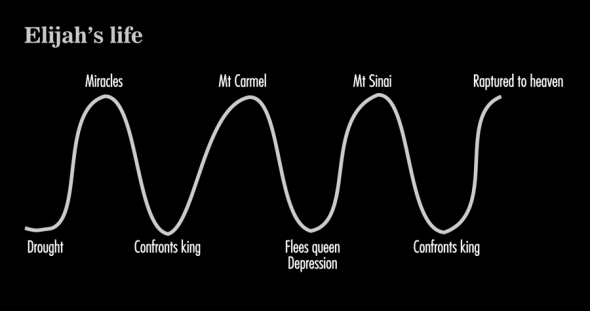 Elijah was a prophet to Israel from 900 BC to 849 BC. There is an account of his life in 1 Kings 17 to 2 Kings 2 of the Bible. The hills and valleys in his life are shown in the graph. (more…)
Share this:

David’s hills and valleys
 David lived in the Middle East about 3,000 years ago. There is an account of his life in 1 Samuel 16 to 1 Kings 2 and in 1 Chronicles 11-29 of the Bible. And David wrote many of the Psalms. The hills and valleys in his life are shown in the graph. (more…)
Share this:

Moses’ hills and valleys
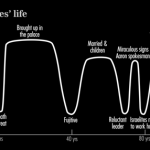
 After about 200 hundred years in Egypt, the Israelites multiplied so greatly that the Egyptians felt threatened and put slave masters over them and used them as laborers. Pharaoh issued an order that every Hebrew boy that was born was to be drowned in the river Nile. It was a dangerous time for Moses to be born. Moses lived in the 15th century BC. There is an account of his life from Exodus 2 to Deuteronomy 34 of the Bible. The hills and valleys in the first 80 years of his life are shown in the graph. (more…)
Share this:

Joseph’s hills and valleys
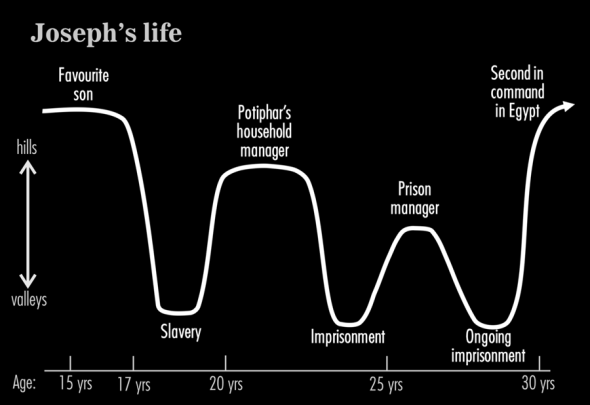 Joseph was born about 3,900 years ago. There is an account of his life in Genesis 30-50 of the Bible. The hills and valleys in the first 30 years of his life are shown in the graph, which goes up for hills and down for valleys. (more…)
Share this:

Godliness and wickedness at Beersheba

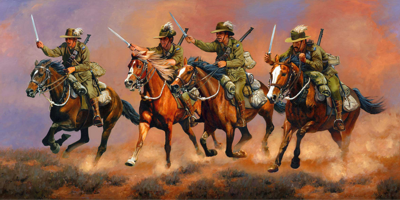 The city of Beersheba in Palestine was captured by the British-led Australian Light Horse in the Battle of Beersheba during World War I (Appendix A). It was the last successful cavalry charge in military history. Approximately 800 Australian soldiers with only horses and bayonets, charged the Turkish trenches, overran them and captured the wells. (more…)
Share this:

Log rafts, geology and migration

 One of New South Wales’ main inland rivers is being choked with woody logs and other floating debris after unprecedented flooding. Several large rafts made of wood and other debris are blocking parts of the Macquarie River in the state’s west. Logjams like these are a natural phenomena on rivers, often after flooding. Willow logs are creating many of the blockages as willows float and then bind together to form rafts bridging from one bank of the river to the other. The longest raft is about 130-metres long, with thick vegetation growing on it since it has been there for months. (more…)
Share this:

Good times and bad times at Shechem

 What can we learn from history? The Bible says that it was written for our instruction (Rom. 15:4; 1 Tim. 3:16). It gives us examples to follow and examples to avoid (1 Cor. 10:6, 11). And it can give us confidence from God.
The city of Shechem was in a valley between Mount Ebal and Mount Gerizim in central Israel, 55 km (35 miles) north of Jerusalem and 11 km (7 miles) southeast of Samaria. It was strategically located on the main road through the central hill country of Palestine “(the way of the Patriarchs”, or “the Ridge route”). But it had no natural defenses and required extensive fortification. Shechem was a very ancient commercial center due to its position in the middle of vital trade routes through the region. (more…)
Share this:

Jesus put Nazareth on the map

 Raised by a single mother in a New York City housing project, Ursula Burns worked hard at school. After graduating from high school, she earned a master’s degree in mechanical engineering. She worked as an intern at printing company Xerox, before being hired permanently. She rose through the ranks to become CEO in 2007-2016, earning the distinction of being the first black woman to lead a Fortune 500 company. So her background didn’t limit her career.
A change in status
Nazareth was a small farming village between the sea of Galilee and the Mediterranean Sea. In about AD 30 when Nathanael was told that Jesus was from Nazareth he asked, “Can anything good come from there” (Jn. 1:46NIV). But why did Nathanael say this? Was Nazareth insignificant, isolated, remote and outside the mainstream of Jewish life? Were most of the people poor? Or was his skepticism, scorn and derision inter-town rivalry – Nathanael was from Cana (6km north of Nazareth)? (more…)
Share this:

The benefits of Christianity

 The media generally presents a negative picture of Christianity. But what does history tell us?
Despite its humble origins, Christianity has made more changes on earth for good than any other movement or force in history. To get an overview of some of the positive contributions it has made through the centuries, here are a few highlights (Kennedy and Newcombe, 1994): (more…)
Share this:

Biblical geology

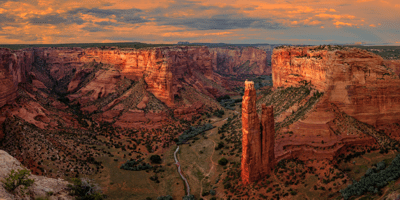 This post comes from a book by Oard and Carter (2021).
Biblical geology is much more sophisticated than skeptics both inside and outside of Christianity assert. Over 60 years of research, often published in technical journals as well as popular books and magazines, have produced an impressive body of evidence. Sloppy examination of creation science, and their biases, often cause secular scientists, old-earth creationists, and theistic evolutionists to grossly misrepresent the nature of the debate and the quality of evidence supporting the historic Christian view. (more…)
Share this:

The Bible is for our time, but not about our time

 This post comes from Michael Bird, a theologian who lives in Melbourne, Australia.
The Bible is for us. It is the principal source for how to believe and behave as disciples of Jesus Christ. The Bible exists for us to have a God-centered view of creation, to understand God’s providence in history, to hear God’s promises, to know God’s words of warning and encouragement, to have the words of Jesus, to hear the apostles’ testimony about Jesus, and to look ahead to the kingdom in all its future fullness. The private and public reading of the Bible is for us in the sense that it is for our training, our edification, our transformation, and our encouragement. The Bible is for us since the Bible enables God to speak to people across the tide of history, through our manifold cultures and languages, and in a way that truly transcends human differences. Whether you are a second-century Christian in Rome, a fifth-century Arab Christian in the city of Tikrit, or a twenty-first-century believer in Zimbabwe, the Bible is God’s word for you, for them, and for us today. The Bible is for us, yesterday, today, and until the end of the age. (more…)
Share this:

Tyre reminds us that God keeps His promises

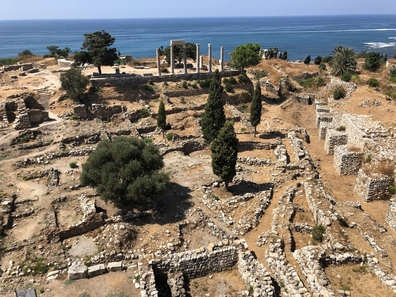 Tyre was an island 800m (0.5 miles) off the coast north of Israel with two harbors, which was part of Phoenicia, an ancient civilization of the eastern Mediterranean, primarily located in modern Lebanon. It was noted for its wealth, pleasant environment and security (Ezek. 27:3-25; Hos. 9:13). Tyre was wealthy because it was a great trading center (Isa. 23:8; Ezek. 27:12-14; 28:4-5). In Semitic languages, the name of the city means “rock” after the rocky formation on which the city was originally built. (more…)
Share this:

John Lennox against the tide

 Salmon swim upstream to mate and lay their eggs in small rivers and shallow waters that protect them from predators and strong currents. In this post we look at someone swimming upstream against the tides of atheism.
This post is based on the documentary movie “Against the tide” by Pensmore Films, in which the actor Kevin Sorbo interviews Professor John Lennox to test belief in God. It looks at the existence of God in the age of science. Does the Christian faith stand up in our age of science and reason? In the movie John Lennox defends Christianity against the tide of atheism in academia. His statements are in italics. (more…)
Share this:

John Lennox against the tide in history

 This post is based on the documentary movie “Against the tide” by Pensmore Films, in which the actor Kevin Sorbo interviews Professor John Lennox to test belief in God. In the previous posts we looked at God and the cosmos, and God and biology, and God and consciousness and suffering. Now we look at God and history. In this post the tide of atheism in academia is represented by statements by Peter Atkins, Richard Dawkins, Sam Harris, Christopher Hitchens, Michael Shermer and Peter Singer. (more…)
Share this:

Extrabiblical evidence of 83 people in the Bible

 Did you know that ancient history and archaeology have confirmed the existence of 83 people mentioned in the Bible? In articles in the Biblical Archaeology Review, Purdue University scholar Lawrence Mykytiuk presented documentary evidence of this (see References).
These include Israelite kings and Mesopotamian monarchs as well as lesser-known figures. Their names appear in inscriptions written during the period described by the Bible and in most instances during or quite close to the lifetime of the person identified. (more…)
Share this:

Extrabiblical evidence of six Jews in the New Testament

Did you know that ancient history and archaeology has confirmed the existence of many people mentioned in the Bible? In an article in the Biblical Archaeology Review, Purdue University scholar Lawrence Mykytiuk presented documentary evidence of six New Testament religious figures1.
We have already documented the extrabiblical evidence for Jesus of Nazareth. Six other religious figures were mentioned in the writings of the Jewish historian Flavius Josephus.
To make a firm identification, one must interpret ancient writings outside the Bible by other such writings, not the Bible, and then make sure that: (1) sources are genuine, not forged or unreliable; (2) the time-and-place setting of the person in the ancient writing matches the setting of the person in the Bible; and (3) marks of an individual, such as name, father’s name, title, or work location, distinguish two different people from each other and avoid the impression they are one and the same.
This post has been sourced from the Biblical Archaeology Society.
 Gamaliel the Elder
We’ll begin with the grandson of the great Jewish leader Hillel the Elder: Gamaliel the Elder, who makes a dramatic New Testament appearance in Acts 5:33-40. At that point in time, around 30 (or possibly 33) C.E., Jesus had already been crucified and, according to his followers, resurrected and ascended. After the Festival of Firstfruits, or Weeks (also called Pentecost), Peter had preached in Jerusalem, and large numbers of Jews had believed in Jesus. This result had aroused the opposition of priests and Sadducees, groups with whom Jesus had earlier come into conflict. They made Peter and John appear before the whole Jerusalem Sanhedrin, the full assembly of the elders of Israel. There they ordered these two not to proclaim or teach their message, but Peter and the other apostles repeatedly disobeyed the high priest’s orders. (The apostles were Jewish followers of Jesus, normally 12 in number, chosen and sent to spread his message.) Even when put in jail, the apostles escaped and resumed teaching in the Temple. (more…)
Share this:

What is the meaning of the seven Jewish festivals?
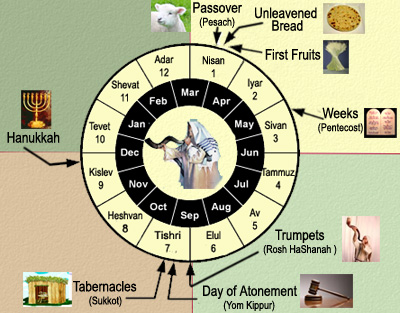 The phrase “Hindsight is 20/20” refers to the fact that it is easier to analyze and evaluate events after they have already happened, rather than beforehand or when you’re in the middle of them. Hindsight refers to looking back or reflecting on things in the past, and 20/20 refers to perfect vision. So when we look back on situations in the past, we see things clearly that were not clear to us at the time. The phrase has been applied to the COVID-19 pandemic. And it is applied to the Jewish Festivals in this post. (more…)
Share this:

Outsiders became insiders at Damascus

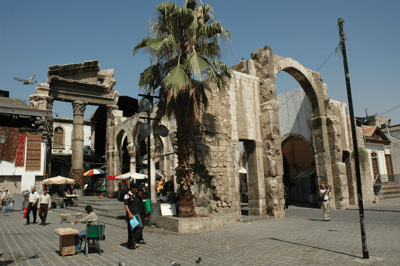 In antiquity, Damascus (in Syria) was a great center for trade. The city’s location along a river at the crossroads of two major international highways (the Via Maris and the King’s Highway) ensured its prosperity and importance.
Although Damascus is close to the desert, ample supplies of water from two rivers allow the region to support vineyards and abundant crops of fruits, grains, nuts, cotton, wool, silk, and olives. The Abana River (known today as the Barada) is the primary water source for Damascus. It flows from the northwest mountains through a deep ravine into the city. The Pharpar River (now el-A waj) runs on the outskirts of Damascus, supplying the gardens and orchards. Together these rivers irrigate about 1040 square km (400 square miles) of land. (more…)
Share this:

A time line for the book of Acts

The book of Acts in the Bible describes the first 30 years of the church. It’s an historical narrative that was written by Luke who was a companion of Paul (Col. 4:10-14; 2 Tim. 4:11; Phile. 24). He wrote it to educate Christians about the early church.
The main point of Acts is that God’s witnesses spread the gospel message and established churches.
A time line of major events in Acts (concentrating on Acts 1-12) is given below. And it is followed by a summary of the book (also concentrating on Acts 1-12).

Share this:

Many battles at Megiddo
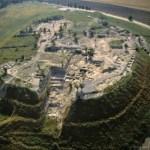
 During the Bronze Age, Megiddo was an important Canaanite city-state and during the Iron Age, a royal city in the kingdom of Israel. The city was located about 26 km (15 miles) east of the Mediterranean Ocean and about 40 km (25 miles) southwest of the Sea of Galilee.
The ancient city of Megiddo had a strategic location. It was at the intersection of two main roads and near a pass (Wadi Ara) through the Carmel mountain range. It was on the main route (the Via Maris) between Mesopotamia (present-day Iraq) and Egypt. (more…)
Share this:

Converting ancient secular dates to biblical dates
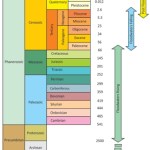
There are two main explanations of the earth’s geological history. One (Biblical) is based on recorded history in the Bible and the other (Uniformitarian) is based on assuming that the present (processes today) is the key to the past (ancient processes) and on the hypothetical geologic time scale. The biblical explanation allows for catastrophic events (such as the flood of Noah), whereas the Uniformitarian explanation minimizes the role of catastrophic events (because it has a preference for gradual events). The biblical explanation mainly involves rapid processes over short periods of time, whereas the Uniformitarian explanation mainly involves slow processes over long periods of time. (more…)
Share this:

Une nouvelle chronologie biblique


Comment lire la Bible dans l’ordre chronologique
Le gouvernement chinois a l’intention de réécrire la Bible pour «refléter les valeurs socialistes». Cette ordonnance a été proposée en novembre 2019, lors d’une réunion tenue par le Comité des affaires ethniques et religieuses du Comité national de la Conférence consultative politique du peuple chinois, qui supervise les questions ethniques et religieuses en Chine. Les nouvelles éditions de textes religieux ne doivent pas aller à l’encontre des croyances du Parti communiste. Toute partie jugée erronée ou contestée par les censeurs sera réécrite pour correspondre aux valeurs communistes. Ils affirment que cela empêchera les «pensées extrêmes» et les «idées hérétiques» d’éroder le pays. Dans cet article, nous examinons le contenu de ce livre «hérétique». (more…)
Share this:

The telephone game

 More orally transmitted Aboriginal stories
A message can become unreliable if it passes through many intermediate speakers between the original speaker and the final listener. This is demonstrated in the telephone (Chinese whispers) game in which one person whispers a message to the ear of the next person through a line of people until the last player announces the message to the entire group. What usually happens is that the statement announced by the last player differs significantly from that of the first player. Obviously, if a message (or story) has been retold by many people, some of it can change if people forget parts of what they are told. (more…)
Share this:

A new Bible timeline


How to read the Bible in chronological order
The Chinese government intends to rewrite the Bible to ‘reflect socialist values’. This order was proposed in November, 2019, during a meeting held by the Committee for Ethnic and Religious Affairs of the National Committee of the Chinese People’s Political Consultative Conference, which oversees ethnic and religious matters in China. New editions of religious texts must not go against the beliefs of the Communist Party. Any parts deemed wrong or challenging by the censors will be rewritten to match communist values. They claim that this will prevent ‘extreme thoughts’ and ‘heretical ideas’ from eroding the country. In this post we look at the contents of this ‘heretical’ book.
The Bible describes events that occurred over a period of about 5,000 years. But the 66 books in the Bible are arranged according to categories like history, poetry, prophecy, gospel (good news about Jesus Christ) and letters. (more…)





 George's Journal
RECENT COMMENTS