
Two great miracles

 In Psalm 77, the writer “cried out to God for help” (v.1NIV). He was in distress (v.2) and couldn’t sleep (v.4). He could only think about his troubles. And he doubted God’s mercy and kindness (v.7-9).
But then he looked back at what God had done for Israel in the exodus from slavery in Egypt (v.10-20). And he wrote, (more…)
Share this:

The greatest miracles of all
This blog is based on articles by Frank Turek and Duane Caldwell.
Many people find it difficult to believe that miracles are possible, particularly when they are influenced by materialism.
Number one – creation
The creation of the universe out of nothing is the greatest miracle of all. Space, time and matter had a beginning out of nothing. Nature had a beginning. (more…)
Share this:

Evidence for the God of Christianity

 According to a 2023 survey, about half of Americans believe in God, the lowest number in history. And globally (omitting China and Russia), an average of 40% say they believe in God “as described in holy scriptures”. (more…)
Share this:

Prophecies about Jesus: He is eternal

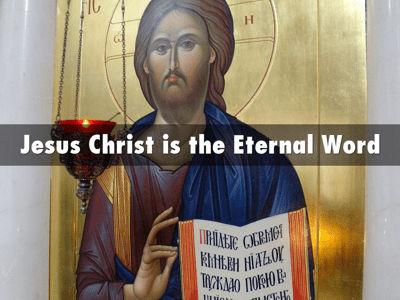 When I was in high school there were two views of the origin of the universe – The steady state theory (that the universe was eternal and was continually creating new matter) and the big bang theory (that the universe had a beginning). Since then, the steady state theory has been discarded. But it was attractive to scientists because it removed the need for a creator God because the universe was eternal. Now there is a need for a creator to kick off the universe. And the Bible says that it is the creator who is eternal. (more…)
Share this:

Who is the one true God?

Paul in Athens
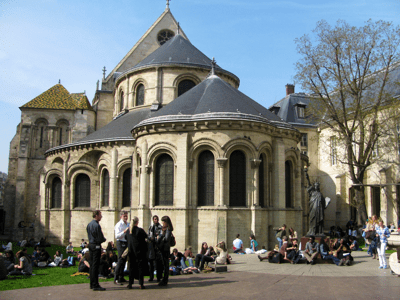 My wife and I visited our son and his family in France last year. Although many French people are nominally Roman Catholic, it is largely an ungodly nation. There are old Roman Catholic churches in most towns, but attendance is low. We went to the Museum of Arts and Crafts (Musee des Arts et Metiers) in Paris. This is a science and technology museum showing the history of tools and machines developed by scientists and engineers dating from the 1500s to the present. Part of this museum is housed in an old church built in the mid-11th century (church of Saint Martin des Champs). The main church building houses old cars and flying machines and a long pendulum hangs from the dome (demonstrating the rotation of the earth). When atheism replaces Christianity, some church buildings become museums. (more…)
Share this:

Comprehensive outline of the book of Genesis

 The first book of the Old Testament, Genesis, was compiled from eleven older documents by Moses (Appendix A).
I like having titles on the paragraphs or sections of my Bible. This helps to indicate the context of a particular passage of scripture. A comprehensive outline (section headings) of the book of Genesis is given below. (more…)
Share this:

The Creator who entered His creation

 Our children and grandchildren spent many hours playing with Lego. They used their imagination and creativity to build many things. In Genesis we are told that in the beginning of time God created the universe and all that is in it. This was greater than creating with Lego – He didn’t just assemble ready-made components, He made the atoms and molecules of all the components. And He made living creatures, which do a lot more then Lego technic or Lego robots. Living creatures make their own decisions and don’t just follow a computer code. And they can communicate with each other. (more…)
Share this:

Revealed through creation

 This post comes from Lisa M Samra of Our Daily Bread.
In the 1901 hymn “This Is My Father’s World” (Appendix), pastor and poet Maltbie Babcock wrote of the delight he felt on his frequent outdoor walks, where he was captivated by breathtaking panoramic vistas. Writing of his fascination with the skies, seas, and creatures, he described sensing God’s presence and concluded, “He speaks to me everywhere”.
Although creation doesn’t have an audible voice, as His handiwork it’s one important way we learn about the One who “made the heavens and the earth and the sea and everything in them” (Acts 14:15). In creation we see evidence of God’s glory (Ps. 19:1), as well as aspects of who God is, such as His “eternal power and divine nature” (Rom. 1:20). (more…)
Share this:

The Trinity is unique to Christianity

This post comes from Dr Tom Murphy who lives in Sydney, Australia.
What feature most differentiates Christianity from any other religion? What makes it special? Is it the crucifixion? The resurrection? The belief that Jesus was divine? Or something else?

Share this:

The dangers of theistic evolution

 The foundations of a building can move and crack due to expansive soils such as clay, poor soil compaction, plumbing leaks, poor drainage, or tree roots. Did you know that the theory of biological evolution destroys the foundation of the Christian gospel?
This post is based on a presentation by Dr Mark Harwood of Creation Ministries International (CMI). (more…)
Share this:

What about climate change?


Roy Morgan’s 2019 survey found that Australians regard environmental concerns as the major problem facing the world. This included climate change, water conservation, pollution, rubbish, famine, and cutting down rainforests. And economic concerns came next.
What does the Bible say about the natural environment? Should Christians care for the environment, or doesn’t it matter?
Biblical worldview
This post looks at the natural environment from an understanding based on the Bible, which is God’s message to us. This leads to different understandings compared to if we reject what the Bible says. It’s a theistic viewpoint, not an atheistic one. The Bible says that the universe was formed miraculously by God’s command (Ps. 33:6-9). People can look at the same world, but their interpretation depends on their worldview. It’s like wearing glasses. For example, clear glasses give a brighter view than sunglasses. (more…)
Share this:

Conversation on God

Here is a conversation on God that is an extract from the comments after a blogpost. Check the post for the complete discussion that took place over a period of two months.
George 1 October
The new objection relates to the “proof of God” and the “divinity of Jesus”. These are big topics. I didn’t claim to prove the existence of God from the Bible. Instead, I would say that God is the most logical explanation of the existence and complex nature of the universe, the existence and complex nature of life, and the existence of the human conscience (innate sense of right and wrong). So, I agree that the Bible “is of itself not proof of God” – there’s lots of other evidence. However, the best evidence of the nature of Jesus is the historical record in the Bible. To investigate the “divinity of Jesus” one should study the most reliable ancient text about Him. Of course, one’s conclusion will depend on whether they have an open mind or not.
George 9 October
You say, “I would once again say that citing the Bible as proof of god amounts to nothing more than hearsay”. I didn’t claim to prove the existence of God from the Bible. Instead, I would say that the existence of God is the most logical explanation of the existence and complex nature of the universe, the existence and complex nature of life, and the existence of the human conscience (innate sense of right and wrong). So, there’s lots of other evidence available.
Commentator 9 October
Hi George I am curious if there is lots of other evidence that is not in the bible could you please point me in the right direction to find it?
 George’s reply 19 October
You asked, “if there is lots of other evidence (of the existence of God) that is not in the bible could you please point me in the right direction to find it?”. The other evidence of the existence of God that I mentioned was: the existence and complex nature of the universe, the existence and complex nature of life, and the existence of the human conscience (innate sense of right and wrong). Look up any articles on the source or origin of these and see if they answer the question or not and see how many miracles they require. (more…)
Share this:

Jesus and marriage

 Thousands rallied at Sydney Town Hall to campaign for same-sex marriage. And there are new laws against hate speech during Australia’s same-sex marriage postal survey. The survey, which is being mailed out now, asks the question: “Should the law be changed to allow same-sex couples to marry?” The current marriage law says that marriage is between a man and a woman. But what did Jesus say about marriage? To investigate this topic, we will look at the books of Matthew to John in the New Testament.
I have previously written a blogpost on what the Bible says about gender and marriage, which shows that the early church taught that marriage is between one man and one woman. We will see that Jesus taught this truth as well.
Husband and wife
The Greek noun translated “man” (aner Strongs #435) means a male human being or a husband or a group of people, with the preference being indicated by the context. According to the ESV, it is translated “husband” or “husbands” in 8 verses in Matthew to John.
The Greek noun translated woman (gune #1135) means a female human being or a wife, with the preference being indicated by the context. According to the ESV, it is translated “wife” or “wife’s” in 37 verses and “wives” in one verse in Matthew to John.
Is heterosexual marriage a command, a model or a report?
The contents of the Bible can be divided into commands, models to follow and reports of events. A command is mandatory (not optional) and prescriptive (not descriptive). A model to follow is a practice that is described that is worth following today. Whereas, a report is a description of events (like in the news media) that is not necessarily worth following today. For this post, all the verses in the ESV that included any of the words, “husband”, “wife”, or “marriage” were examined.
Heterosexual marriage commanded
When Jesus was asked about divorce He replied, “at the beginning of creation God ‘made them (people) male and female.’ ‘For this reason a man will leave his father and mother and be united to his wife, and the two will become one flesh.’ So they are no longer two, but one flesh. Therefore what God has joined together (in marriage), let no one separate (in divorce)” (Mt. 19:4-6; Mk. 10:6-9NIV). Jesus goes back to the time before sin came into the world to show God’s original intention for marriage. Then He says that humanity was created in two genders: male and female (Gen. 1:27). That should be obvious to us. When a baby is born, it’s announced as being either a boy or a girl. There’s no gender ambiguity at birth! Our gender is determined by our genome and we can’t change that. Then the two genders are given as the reason (“For this reason”) why marriage is between a man and a woman. It’s easy to understand. In this way, marriage is linked to God’s creation. “United” means that there is a strong bond between husband and wife. “One flesh” means sharing all of life together, like a body that doesn’t separate until death. God designed husband and wife to complement each other. Jesus recognizes that the first marriage was between Adam (a man) and Eve (a woman). It wasn’t between Adam and Steve or between Madam and Eve! The pattern of marriage was established in the Garden of Eden, “That is why a man leaves his father and mother and is united to his wife, and they become one flesh” (Gen. 2:24). So according to the Bible, marriage is the union of a man and a woman. Jesus quotes this verse and adds that because God has joined the couple together in marriage, it’s meant to be a lifelong union (“let no one separate”). Jesus showed that God’s original intention for marriage still applied in a sinful world. In fact, it applies until we go to heaven (Mt. 22:29-30; Mk. 12:24-25; Lk. 20:34-36). So, Jesus answers the question on divorce in the context of marriage being heterosexual.
This is Jesus’ definition of marriage. And same-sex marriage isn’t included. Jesus never discussed same-sex marriage because the way he defined marriage already excluded it! So the term “same-sex marriage” is a contradiction, an oxymoron.
Adam and Eve were commanded to “be fruitful and increase in number” (Gen. 1:28). This means that one of the important functions of the first marriage was to produce and nurture children. This is the example of marriage that Jesus tells those in the first century AD to follow. Of course, it only makes sense in the case of heterosexual marriage. There was no way to produce children from homosexual relationships.
Whenever Jesus taught about adultery (Lk. 16:18) and divorce (Mt. 5:31-32; 19:3-9; Mk. 10:2-12; Lk. 16:18), He assumed that marriage is between a man and a woman.
But what about models of marriage in the gospels that aren’t commands?

Heterosexual marriage modelled
There are other verses that indicate that the pattern of marriage in the time of Jesus was monogamous and heterosexual and that Jesus approved of this pattern for marriage.
Zechariah and his wife Elizabeth were the parents of John the Baptist (Lk. 1:5-24). And Jesus’ family had a father and mother, Joseph and Mary (Mt. 1:20, 24). One of the woman near the cross was Mary the wife of Clopas (Jn. 19:25). And when Jesus listed a man’s family He included a wife and children (Mt. 19:29; Lk. 14:26; 18:29).
In the parable of the unmerciful servant, Jesus said that the servant had a wife and children (Mt. 18:25). In the parable of the ten virgins, the women were waiting to celebrate a wedding banquet. As a bridegroom is mentioned, the marriage was between a man and a woman (Mt. 25:1-10).
Jesus performed a miracle (turned water into wine) at a wedding feast in Cana (Jn. 2:1-11). As He attended the feast with His mother and disciples, Jesus clearly approved of marriage. Also, because the marriage involved a bridegroom (v.9), it was between a man and a woman. Jesus also used weddings in His parables and metaphors (Mt. 9:15; 22:1-12; 25:1-10; Mk. 2:19-20; Lk. 5:34; 12:36; 14:8). And John the Baptist used a bride, bridegroom and best-man in an illustration (Jn.3:29).
But what about when marriage is reported in the gospels and it isn’t necessarily an example to follow?
Heterosexual marriage reported
The prophetess Anna became a widow after seven years of marriage to her husband (Lk. 2:36). And when Jesus spoke with the Samaritan woman, they both assumed that a woman like her usually had a husband (Jn. 4:16-18).
When they asked Jesus about divorce, the Jewish religious leaders assumed that marriage was between a man and a woman (Mt. 19:3; Mk. 10:2). And the Sadducees asked Jesus a hypothetical question which involved a woman marrying seven brothers in turn under the levirate marriage law (Mt. 22:23-28; Mk. 12:18-23; Lk. 20:27-33). Although this looked like serial monogamy, in each case the woman was widowed before she remarried.
John the Baptist denounced the marriage of Herodias to Herod Antipas, after she had been married to Herod Philip (Mt.14:3; Mk. 6:17-18; Lk. 3:19). Pilate was married (Mt. 27:19). And Chuza, the manager of Herod’s household, was married to Joanna (Lk. 8:3).
These verses indicate that the most common pattern of marriage when Jesus was alive was monogamous and heterosexual, where a man was married to a woman.
Other types of marriage?
I am not aware of any other verses between Matthew and John in the Bible that are related to marriage. So, the Bible doesn’t teach any other pattern for marriage besides a man and a woman. This means that homosexual marriage is a human invention, whereas heterosexual marriage is God-ordained.
Discussion
Clearly, all the marriages referred to above involved the union of one man and one woman. It involved both genders (heterosexual marriage), and not only a single gender (homosexual marriage).
How do we know what Jesus thought of same-sex marriage (or homosexuality) when it’s not mentioned specifically in the gospels? We can find out from the Old Testament because it describes the principles and practices of Judaism. Jesus was a faithful Jew who lived under the Old Testament law. He obeyed the law of Moses (Jn. 8:29,55) and He didn’t sin in any way (Heb. 4:15; 1 Pt. 2:22). So, He would have followed the laws of Moses about unlawful sexual relations, such as:
“Do not have sexual relations with a man as one does with a woman; that is detestable” (Lev. 18:22).
“If a man has sexual relations with a man as one does with a woman, both of them have done what is detestable” (Lev. 20:13).
So Jesus would have prohibited any homosexual sexual activity as it was against the laws of Moses for sexual relationships.
Conclusion
We have seen that according to Jesus, marriage is a lifelong union between one man and one woman. Consequently, the term “same-sex marriage” is an oxymoron.
Written, September 2017
Also see: Gender and marriage
Same-sex marriage
Marriage equality
Share this:

God: Fill the earth and subdue it
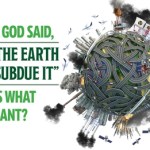
 The earth is in trouble. Forests are disappearing. Rates of extinction for animals and plants are 1,000 times greater than before the industrial revolution. Every minute a garbage truck’s worth of plastic slips into the world’s oceans. By 2050 the amount of plastic by weight floating at various depths will equal the total amount of all fish (World Economic Forum report).
Recently, scientists have started calling our age the Anthropocene era – the first point in history in which humans have become the major environmental influence on the planet. Sadly, so much of our impact on the world is destructive of other forms of life.
Are we pleasing God? When God told us in Genesis – back in the first chapter of the first book of the Bible, that we were to: “Be fruitful and increase in number; fill the earth and subdue it. Rule over the fish in the sea and the birds in the sky and over every living creature that moves on the ground”. … did God want us to care for creatures other than ourselves? Did He want us to care for plants and ecosystems? Or should we just focus on increasing the human population?
The answer to these questions is found in the same chapter of Genesis. As God looked at each part of His creation He declared it to be good (Gen. 1:4, 10, 12, 18, 21, 25) and very good (Gen. 1:31). Which means creation is not just good because it helps humans survive and thrive. It is also good in and of itself – having both instrumental and intrinsic goodness. And because we humans have been given the task of ruling creation it’s our responsibility to safeguard this intrinsic goodness. Which is terribly difficult. But then, making hard decisions is the lot of all rulers. As we balance competing interests, sacrifices will be inevitable.
Some may say that, since God promises ‘a new heaven and a new earth’ when Jesus returns, we shouldn’t be too bothered about this world. After all, isn’t it going to pass away? Yet that would be ignoring both God’s command and basic common sense. You see, since we have no timetable for Jesus’s return we must plan for both the short and long term. Indeed, our wait for Jesus could be a long time. Are we really happy to leave a toxic and treeless planet for our children’s children?
If you’ve only just realized the extent of your responsibility to God’s creation then please take action where you can. It’s your duty.
Bible Verse: Genesis 1:28 “Be fruitful and increase in number; fill the earth and subdue it. Rule over the fish in the sea and the birds in the sky and over every living creature that moves on the ground”.
Prayer: Dear God, please help me to be a wise ruler of your creation every day as I wait for Jesus to return.
Images and text © Outreach Media 2017
Posted, July 2017
Share this:

Snakes and Ladders

Sin is our greatest problem
 Our world can be a dangerous place. But sometimes we are unaware and oblivious of the dangers. Using a smart phone can be dangerous if we are not aware of what’s happening around us. After a woman died recently in Sydney when she was run over by a bus, police issued a warning about people using their phones when walking.
Not only are there physical dangers, but there are spiritual dangers. Are we aware of the spiritual dangers we face? Like ignoring the God who made the universe by living as though there is no God? Or are we oblivious of these like someone using a phone when crossing a street? Today in a survey of the first 11 chapters of the Bible we will see that sin against God is our greatest problem, and the source of all our problems.
Context
This passage was compiled and written by Moses 700–2,500 years after the events occurred. Some of this information was passed down from his ancestors and some was revealed to him directly by God. Note that most of this time is covered by two generations – the lifetimes of Adam and Noah cover about 1,900 years. When he wrote it, Moses was “carried along by the Holy Spirit” (2 Pt. 1:21NIV). “Moses was educated in all the wisdom of the Egyptians”, so he could write and keep records (Acts 7:22).
 The Israelites had been slaves in Egypt where people worshiped many pagan gods (Polytheism). In order to understand their situation and their world, they needed to know about the earlier history of the world. This helps us understand our world as well.
Genesis covers the origins of the universe, the earth, humanity, marriage, sin, languages, the nations, and the Israelites as God’s chosen people. The first eleven chapters summarize the highlights of world history up to the time of Abraham. This history includes four crises.
A crisis in the first generation
Chapters 1-2 describe the creation of the universe, the earth, the plants and animals, and Adam and Eve, the first man and woman. God spoke and it happened over a period of six days. They were given one restriction: “you must not eat from the tree of the knowledge of good and evil, for when you eat from it you will certainly die” (Gen. 2:17).
The first crisis occurs when Adam and Eve are tempted by Satan to disobey God (Gen. 3:1-5). What will they do: follow God or Satan? This is a unique situation, because they lived in a perfect world and didn’t have a sinful nature. It was an external temptation. After they chose to disobey God and eat from the tree of the knowledge of good and evil, they are banished from the Garden of Eden. This first sin affected the whole creation including child birth, relationships between husband and wife, work and agriculture. Life was now a struggle with conflict, suffering, disease, decay, spiritual death and physical death. They went from a life in paradise to a life of problems. Their problems were a consequence of their sin. Sin was their greatest problem and the source of all their problems.
The Bible teaches that we have all inherited this sinful tendency – “everyone has sinned, we all fall short of God’s glorious standard” (Rom. 3:23NLT). Everyone is guilty; we are all self-centred, and so we were all affected.
However, in the list of God’s punishments there is a promise. He said to Satan “I will put enmity between you and the woman (Eve), and between your offspring and hers; he (Eve’s offspring) will crush your head, and you will strike his heel” (Gen. 3:15NIV). So there is a hint of good news amidst the bad news. A suggestion of an end to the conflict between people and Satan, when Satan is crushed.
 It’s a bit like the old game of “Snakes and Ladders” (“Chutes and Ladders in the US”) where you roll a dice to get a number and move that many spaces along the board. When you land on the head of a snake you slide backwards, and when you land on the bottom of a ladder you jump ahead. The consequences of Adam and Eve’s sin hindered their life and moved them away from God, like the snakes hinder a player of snakes and ladders. The sin sequence is: temptation, followed by sin, and spiritual death. But the promise of victory over Satan is like a ladder to help them and move them towards God.
Adam blamed Eve and Eve blamed Satan the snake (Gen. 3:12-13). Like Adam and Eve, we often blame our problems on others or our circumstances. Do we realise that our sin is our greatest problem? Do we ignore God by living as though He doesn’t exist?
A crisis in the second generation
Cain and Able were Adam and Eve’s first two sons. Cain becomes jealous of Abel. The second crisis occurs when this develops into hatred and he is tempted to kill Abel. What will he do; follow God or his anger? His parents would have told him what happened after they disobeyed God. But he murders Abel and is banished to be a nomad and “went out from the Lord’s presence” (Gen. 4:1-16). Cain’s problems were a consequence of his sin. This incident would have devastated Adam and Eve. The first boy to grow from infancy to maturity was a murderer! Their greatest problem as a family was caused by Cain’s sin.
But once again, it’s not all bad news. Because Cain was worried about his safety, “the Lord put a mark on Cain so that no one who found him would kill him” (Gen. 4:15). This is a promise of God’s protection. We can see a pattern developing here. God punishes sin, but provides some relief in the form of a promise.
Also, it is an example of the conflict between Satan’s offspring and Eve’s godly offspring (Gen. 3:15). In this case Cain was Satan’s agent who killed Abel, who is commended for his faith in God (Heb. 11:4; 1 Jn. 3:12). But God replaced Abel with Seth and the godly line of descendants was re-established (Gen. 4:25-26).
So in the history of humanity, Cain is like a snake in the game of snakes and ladders and Seth is like a ladder. Cain’s descendants moved away from God and lived as thought He wasn’t there, while Seth’s descendants moved towards God and followed Him. Who are we like; Cain or Seth (Jude 11)? Cain ignored God, but Seth followed God.
According to the Bible, The fool says …, “There is no God”. They are corrupt, their deeds are vile; there is no one who does good” (Ps. 14:1). If we live as though there is no God, then we become god. We claim to know everything everywhere – otherwise God could exist somewhere, but we could be ignorant of Him. The Bible says this is foolish and leads to sinful behavior.
A crisis in the 10th generation
During the 1,600 years after the first crisis, the earth’s population grew, being comprised of cities and societies. We have seen the crises and problems in the early history of our earth for individuals and for a family. Now we will look at society as a whole.
Wickedness increased with time. It became a part of their normal way of life. They were oblivious to its danger. In the days of Noah, society was characterized by violence and corruption (Gen. 6:1-7). “The Lord saw how great the wickedness of the human race had become on the earth, and that every inclination of the thoughts of the human heart was only evil all the time” (Gen. 6:5). It is a crisis where a society of people turns away from God and go their own way. They reject the message of Noah, the “preacher of righteousness” (2 Pt. 2:5). He warned people to turn to God or face God’s judgment. So they had a choice to make.
God’s judgement on their sin was to destroy the original creation with a global flood. The death of these people was a consequence of their sin. Their greatest problem as a society was caused by their sin.
But once again, it’s not all bad news. Noah’s godly family was protected on the ark (Gen. 7:1 – 8:19) and given a promise that the earth would never be destroyed again by a flood (Gen. 8:21 – 9:17). Here we see that God punishes sin, but some are rescued.
Noah’s family is like a ladder in the game of snakes and ladders. They followed God. The rest of the people are like a snake. They moved away from God and lived as thought He wasn’t there. Who are we like; Noah’s family or the rest? The rest ignored God, but Noah’s family followed God. Their choice determined their destiny.
A crisis in the 15th generation
In God’s covenant with Noah, He commanded the people to “Be fruitful and increase in number and fill the earth” (Gen. 9:1). They obeyed the first part but not the second. They increased in number and built the city of Babel, but resisted being scattered across the earth (Gen. 11:1-4). They proudly built a tower as a monument to celebrate their achievements. This is another crisis where a society of people turns away from God and go their own way.
God’s judgement on their sin was to cause the people to start using different languages (Gen. 11:7-9). Now because they couldn’t understand each other, they scattered across the earth into different nations that spoke different languages. This would have been a tough time. They lost technology and homes that were in the city, becoming nomads and settling in new areas. Some probably lived in caves at this time. The scattering of these people was a consequence of their sin. Their greatest problem as a society was caused by their sin.
Once again we see that God punishes sin, but where is the promise? It’s like a game of snakes and ladders without the ladders. The promise is given to Abraham in the next section of the book of Genesis.
Are we alert or oblivious?
What can we learn from these four crises in early history involving Adam, Cain, the flood and Babel?
At each crisis the people had a choice, but the choice wasn’t unlimited. Because we are finite, we are only free to make decisions within God’s limits and boundaries. God is the only one without boundaries – He is infinite. He gave us a free will and choice, but within certain boundaries. God sets the standard for human behaviour. It is a sin to cross those boundaries.
At each crisis the people had a choice to follow God or Satan. And their choice determined what their life was like afterwards. Likewise, our choices have physical and spiritual consequences. They determine our destiny in many ways.
 But in each crisis people acted as though God wasn’t there; they ignored the possibility that they would be punished for disobeying God. They were unaware and oblivious of this danger. It’s like they were asleep or unconscious or there’s a malfunction of the brain and nervous system. My nephew is in a hospital brain injury unit. He can see and hear and is starting to speak a little, but he can’t respond with the rest of his body. If there is danger, he can’t react to it. For our safety, let’s be alert and aware of spiritual dangers instead of being oblivious. The dangerous sin sequence is: temptation, followed by sin, spiritual death, physical death, and eternal death in hell. It’s the snake to hell that Satan promotes. It’s the choice of those oblivious to temptation. Here death is the door to hell.
God made us with a conscience, an inborn sense of right and wrong (Rom. 2:15). It’s like an alarm to remind us when something is wrong. It worked for Adam and Eve when they felt guilty and hid from God after they sinned. Then they confessed their sin. Is your conscience working or broken?
Our greatest danger is spiritual death, which leads to eternal punishment in hell. This is the consequence of our sin if we don’t accept God’s promise of eternal life with Him in heaven (Jn. 3:16). That life is possible because Jesus took the punishment that we deserve when He died on the cross. It is ours if we confess our sin and repent by turning around to follow God. Have you done that?
 This salvation is like the promises that we found in the passage. It is an example of God’s grace and mercy and like the ladders in snakes and ladders, which move us closer to God. The salvation sequence is: Conviction of our sinfulness – our conscience alarms, followed by confession, and repentance, followed by God’s forgiveness, spiritual life, physical death, and eternal life in heaven. It’s the ladder to heaven that Jesus Christ provides. It’s the choice of those alert to temptation. Here death is the door to heaven.
According to the Bible, there are no other chances to follow God after we die. We only live once, and die once. We only have one life to follow Jesus and then the opportunity will end. There is no reincarnation. Also, the way of salvation is not through good works, or superior knowledge, or acts of worship or devotion. We can’t get to heaven by being good. It’s not through what we do, but accepting what Jesus has already done for us.
But sin has consequences for Christians as well. We can also be oblivious and live as though God isn’t there. This destroys our fellowship with God. It can be restored if we confess our sin and repent by turning around to follow God once again (1 Jn. 1:9). This pattern is like snakes and ladders, with sin being a snake that moves us away from God and restoration a ladder that moves us towards God. The sequence is: Temptation, followed by sin, loss of fellowship with God, conviction of our sinfulness – our conscience alarms, confession, repentance, followed by God’s forgiveness, and the restoration of fellowship with God. It’s the snake and ladder of daily Christian living. It’s the choice of those oblivious to temptation, but whose conscience alarms later.
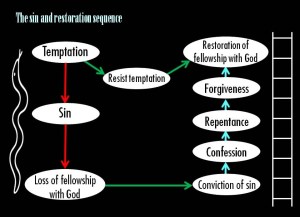 Of course it is better if our conscience alarms at the stage of temptation than that at the stage of conviction. So temptation is a critical stage. A healthy alert conscience short circuits the cycle and saves a lot of anguish.
Christians still experience the conflict between Satan and humanity (Gen. 3:15). When we pray it’s good to include spiritual concerns like temptation, sin, conviction, confession, repentance, and salvation, not just physical concerns.
Because we are all sinful, there will be crises in our life. There will be choices to make. In this respect, life is different to the game of snakes and ladders: it’s about choice, not chance. When facing a crisis, we need to realise that sin is our greatest problem. The first step in dealing with a problem or an addiction is to acknowledge that we have a problem. Then we can deal with the sin and get right with God.
Some say Genesis chapters 1-11 is just a story to illustrate that God made the world. It really took billions of years, not six days. It’s not real history. It’s a different genre. Adam and Eve didn’t exist, there was no global flood. The genealogies aren’t true. It’s an ancient myth. But such a viewpoint undermines the whole Bible. This part of Genesis is quoted extensively by both Jesus and Paul. Adam and Noah are both mentioned 8 times in the New Testament. They were real people.
Conclusion
So let’s remember these lessons from the early chapters of Genesis. Let’s be alert and aware of our sinfulness and not oblivious like someone using a smart phone when crossing a street. We ignore it at our peril because God punishes sinners. But it’s not all bad news, the good news is that God promised to help sinners like us and the rest of the Bible describes how He did it.
Let’s be like Noah’s family and make good choices and follow the God who made the universe, instead of living like He isn’t there. Realizing that sin is our greatest problem and Jesus is God’s solution.
Written, February 2014
Share this:

Big history or little history?

 A pantheistic creation story
“Big History” is a modern origins story that is being developed online for school students and is supported by Bill Gates, one of the world’s richest men. The objective is to develop a framework for learning about anything and everything that includes a deeper awareness of our past. It claims to tell a story that our children need to know. But what will they learn?
History of the universe
“Big History” is based on eight “threshold moments” when the universe increased in complexity:
- Origin of the universe billions of years ago as explained by the big bang theory.
- Stars light up from the remnants of the exploding gases.
- New chemical elements form when stars die and create new types of atoms.
- Rocky planets such as the earth and the solar system form around stars.
- Molecules combine to form single celled living organisms that evolve into multi-celled organisms.
- Human beings appear as a consequence of evolutionary processes.
- After the last ice age about 10,000 years ago, humans develop agriculture.
- The modern revolution, characterized by the use of fossil fuels and global communication.
Although “Big History” is based on humanity’s current scientific and historical understanding, the following questions come to mind.
Big assumptions
Although Big History states these as facts, it assumes that:
- The origin and development of the universe can be explained by the laws of science.
- The early universe was simple.
- The universe has become more complex with time.
Once these are assumed, the rest follows as a consequence. So the course is teaching that these assumptions are facts. Instead they are scientifically unprovable.
As history trumps science when dealing with the past, the Bible surpasses science with regard to the origin of the universe and the nature of the early universe. In particular, the assumption of the uniformity of scientific laws isn’t valid past the creation of the universe about 6,000 years ago. So history shows the first two assumptions are false.
The assumption that “The universe has become more complex with time”, goes against common sense and the law of cause and effect. How can an inanimate object gain increasing complexity and increasing information by using the laws of science alone and not outside intelligence? How can an animal or plant gain increasing complexity and increasing information by using the laws of science alone and not outside intelligence?
Big miracles
This secular origins story is based on miracles than can’t be explained by science. Yet it claims to be scientific!
Before the beginning of time it assumes there was nothing – no time, mass, energy or space. After the beginning of time a tiny particle smaller than an atom appears that contains everything in today’s universe. This means that something appears from nothing, which is not allowed in the laws of physics! In a science where there is no place for miracles, this is certainly a miracle. How was all the mass and energy within the universe created out of absolutely nothing using only the physical forces within the universe? How could the universe create itself?
According to Big History, the universe can create complexity and information. This happens as a series of stages, each of which produces something utterly new. Each of these threshold moments is a miracle as the increase in complexity and information cannot be explained by the laws of science. How could the universe increase complexity and information by itself?
How does the universe create complexity despite the second law of thermodynamics, which says that “The general tendency of the universe is to move from order and structure to lack of order and lack of structure”? This is never explained. There is just a statement that it can create complexity, but with great difficulty! So the universe builds itself, which is pantheism. The universe is god. So intelligence and intent is attributed to inanimate objects or concepts, such as “Life interjects” and “DNA learns”.
It is interesting to note that the example of increasing complexity used in Big History was our modern society and not a biological example such as the DNA molecule or the human mind.
Circular reasoning
Big History is guilty of circular reasoning. It states assumptions and ideas as facts. Its key findings are based on its assumptions and presuppositions. For example, it reveals how complexity slowly evolved. But this is also an assumption.
Big history is speculative. It says, “We can imagine the early universe breaking up into billions of clouds”.
Big history is a product of the secular paradigm or worldview that has rejected the God of the Bible.
Conclusion
Big History is certainly ambitious. It has big assumptions, big miracles, big extrapolation and big imagination. Although it claims to be big on history, it actually includes little recorded history.
As “the story of how the universe creates complexity” and the “unifying story that gives a sense of the whole of history”, it is a pantheistic creation story that replaces the Bible.
Do our children need to know this? How much better if they knew the Bible and accepted its message as the unifying story that gives a sense of the whole of history?
Written, October 2013
Also see – Using history and science to investigate ancient times
– Big history
Share this:

Can a person go to heaven if they have not heard about Jesus before they die?

 As there will be people “from every tribe and language and people and nation” in heaven, it seems that some of these would not have heard about Jesus before they died (Rev. 5:9-10). I believe that infants go to heaven when they die because they are not accountable for their sin. We will look at other people in two categories, those who lived before and after Christ.
Before Christ
The Bible says that those who trusted God in Old Testament times go to heaven. Although most of the promises they were given were physical, they also had a heavenly hope. They realised that this earth was not their final home: “admitting that they were foreigners and strangers on earth” (Heb. 11:13NIV). Instead they were looking towards heaven: “they were longing for a better country—a heavenly one” (Heb. 11:16a). We are told that God “has prepared a city for them” (Heb. 11:16b). In particular, Abraham “was looking forward to the city with foundations, whose architect and builder is God” (Heb. 11:10).
These people are commended in Hebrews as those who lived by faith. The Bible says, “Without faith it is impossible to please God, because anyone who comes to Him must believe that He exists and that He rewards those who earnestly seek Him” (Heb. 11:6). The Jews were told, “You will seek me and find me when you seek me with all your heart” (Jer. 29:13). This faith was based on a revelation from God.
“Enoch walked faithfully with God” (Gen. 5:22, 24). So did Noah (Gen. 6:9). This means they obeyed God. “Noah did everything just as God commanded him” (Gen. 6:22). “By faith Abraham, when called to go to a place he would later receive as his inheritance, obeyed and went, even though he did not know where he was going” (Heb. 11:8). Job repented after God revealed His power through nature (Job 38-41; 42:6).
So those who trusted in God’s revelation to them before the formation of the Israelite nation go to heaven. In their case, God usually spoke directly to them.
God spoke to the Israelites “at many times and in various ways” (Heb. 1:1). It is stated that Moses accepted “disgrace for the sake of Christ” (Heb. 11:26). But as Moses lived about 1,450 years before Christ, this seems to be a figure of speech. It means that Moses choose to be loyal to God and to associate with his fellow Israelites. The reason given is that “he was looking ahead to his reward”. As Hebrews was probably written about 65AD, the writer knew that the Messiah was the one through whom God guaranteed their promised future.
So the Israelites who trusted in God’s revelation to them in Old Testament times go to heaven. In their case, the revelation was usually miracles and the law given through Moses.
We know God revealed Himself to the Israelites as they were His people during this period of time. But what about the Gentiles? The Israelites were told to follow the laws that God gave them through Moses so that other nations would come to know God: “Observe them carefully, for this will show your wisdom and understanding to the nations, who will hear about all these decrees and say, ‘Surely this great nation is a wise and understanding people.’ What other nation is so great as to have their gods near them the way the Lord our God is near us whenever we pray to him? And what other nation is so great as to have such righteous decrees and laws as this body of laws I am setting before you today?” (Dt. 4:6-8).
Rahab is a Gentile who trusted God (Heb. 11:31). She told the Israelite spies, “I know that the Lord has given you this land … for the Lord your God is God in heaven above and on the earth below” (Josh. 2:9-11). Because of what she had heard of the Exodus and the defeat of the Amorites, she realised that the God of the Israelites was greater than the Canaanite gods. So she rejected the Canaanite gods to follow the God of the Israelites.
Also Ruth the Moabite told her Israelite mother-in-law, “Where you go I will go, and where you stay I will stay. Your people will be my people and your God my God” (Ruth 1:16). Likewise, she rejected the gods of the Moabites to follow the God of the Israelites. God’s interest in the Gentiles is shown in the book of Jonah where Jonah was sent to Nineveh with a message of God’s judgment and the people repented of their sin (Jon. 3:1-10).
So the Gentiles who trusted in God’s revelation to them in Old Testament times go to heaven. God revealed Himself to them through the Israelites when they heard about their law and the miraculous preservation of their nation.
All the above are examples of people who go to heaven without hearing about Jesus. But the Bible says the following about Jesus, “There is salvation in no one else! God has given no other name under heaven by which we must be saved” (Acts 4:12NLT). And Jesus said, “No one comes to the Father except through me” (Jn. 14:6). This means that the only way to get into heaven is through Christ’s sacrifice on the cross. Before Christ’s death people were saved according to their acceptance of God’s revelation to them. It was based on the future work of Christ. So those who trusted in God’s revelation in Old Testament times go to heaven because their faith in God was equivalent to faith in Jesus Christ. They were saved on credit. “God presented Christ as a sacrifice of atonement, through the shedding of His blood—to be received by faith. He did this to demonstrate His righteousness, because in His forbearance He had left the sins committed beforehand unpunished” (Rom. 3:25). In this way God overlooked the sins of those who trusted in Him before Christ’s death and resurrection.
After Christ
In Romans, God reveals that we are all sinners (Rom. 3:23) and we can only get to heaven through trusting in Christ’s sacrifice for us (Rom. 3:22-26). But it also says that people are judged according to God’s revelation to them: “All who sin apart from the law (Gentiles) will also perish apart from the law, and all who sin under the law (Jews) will be judged by the law” (Rom 2:12). The two main ways that God reveals himself to people who haven’t heard about Jesus are creation and conscience.
Firstly, the physical world demands a Creator. Its design requires a Designer. The laws of nature require a Lawmaker. By looking at our universe, anyone can know that there is a creator God. “The truth about God is known instinctively. God has put this knowledge in their hearts. From the time the world was created, people have seen the earth and sky and all that God made. They can clearly see His invisible qualities—His eternal power and divine nature. So they have no excuse whatsoever for not knowing God” (Rom. 1:19-20NLT). Enough of God is revealed in His creation that there is no excuse for not believing in Him. Those who reject this revelation follow idols and practice sinful behavior and suffer God’s judgment (Rom. 1:18-32).
Nature is a testimony of God. “The heavens declare the glory of God; the skies proclaim the work of His hands. Day after day they pour forth speech; night after night they reveal knowledge. They have no speech, they use no words; no sound is heard from them. Yet their voice goes out into all the earth, their words to the ends of the world” (Ps. 19:1-4). Also, Paul said “We are bringing you good news, telling you to turn from these worthless things to the living God, who made the heavens and the earth and the sea and everything in them. In the past, He let all nations go their own way. Yet He has not left himself without testimony: He has shown kindness by giving you rain from heaven and crops in their seasons; He provides you with plenty of food and fills your hearts with joy.” (Acts 14:15-17).
So if people haven’t heard about Jesus, they can be judged according to their response to the revelation of God in creation. If they turn from idolatry and seek the true God, then God may give them additional revelation. For example, Cornelius was a Gentile who sought God. So God sent Peter to tell him about Jesus and salvation (Acts 11:14). God can appear to people in many ways throughout their lives. He can send people to inform them (Rom. 10:14-15). Because God doesn’t want anyone to perish in hell and wants everyone to repent of their sin, we must trust that He has made a way for those people (2 Pt. 3:9).
Secondly, everyone is born with a conscience. We all have an instinctive knowledge of right and wrong. For example, most people know it is wrong to lie, steal, and commit adultery and murder. The Bible gives God’s standards for humanity. But for those who are ignorant of this it says: “They demonstrate that God’s law is written in their hearts, for their own conscience and thoughts either accuse them or tell them they are doing right” (Rom. 2:15NLT). Anyone who has not heard about what the Bible says will be judged according to their conscience. God will say, “What did you think was right and wrong?” The next question is, “Did you always do the right and not the wrong?” By that standard, of course, everyone fails. The conscience proves that we are sinners like the law does for the Jew.
The issue is their response to a guilty conscience. If they were sorry for their behavior and would repent then they would probably go to heaven. This reasoning is based on the fact that God is just and wants all to be saved. He has made a way for all, but few accept it.
Like those who lived before Christ, the issue is whether they responded to God’s revelation to them. So through the creation and our conscience, God gives everyone the opportunity to turn to Him and be saved from the penalty of their sinfulness and go to heaven.
Lessons for us
Like the Israelites, a Christian’s behavior can influence an unbeliever to repent and follow God and go to heaven. “Live such good lives among the pagans (your unbelieving neighbors, NLT) that, though they accuse you of doing wrong, they may see your good deeds and glorify God on the day he visits us” (1 Pt. 2:12).
Although people can to be saved without hearing about Jesus, it isn’t likely to occur in very many instances. The usual way to go to heaven is to respond to hearing about Jesus. “How, then, can they call on the one they have not believed in? And how can they believe in the one of whom they have not heard? And how can they hear without someone preaching to them? And how can anyone preach unless they are sent?” (Rom. 10:14). That’s why it’s important to tell people about Jesus as much as possible and support others in this work.
Share this:

 No excuse
Big history

Made to be inhabited
A letter in a newspaper stated that Genesis chapter 1-11 is pre-history and is probably best described as a ”saga”, which is a story. They said it was a different genre to the rest of Genesis, which I assume was considered to be real history which had been verified by archaeology. Well, what does the evidence show us?
 Extra-Biblical account
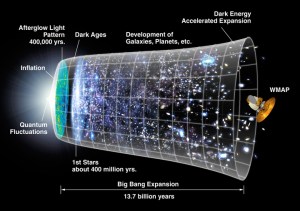
The history of the universe from the beginning of time according to those who reject the Bible and the God of the Bible is often told as follows:
- About 15 billion years ago – there was a “big bang” and stars like the sun formed from the exploding gases
- Then about 4.6 billion years ago – planets like earth formed around the stars
- 3.5 billion years ago – the first life appeared in deep water when molecules combined to form single-celled organisms
- 1 billion years ago – multi-cellar organisms evolved
- 600 million years ago – invertebrate animals and fish evolved
- 475 million years ago – land plants evolved
- 360 million years ago – amphibians and then the first land animals evolved
- 250 million years ago – reptiles ruled
- 200 million years ago – birds and mammals ruled
- 90 million years ago – flowering plants evolved
- 200 thousand years ago – the first humans evolved
Bill Gates is funding a project to present this information online for high school students. Let’s look at what the Bible says about such “big history”.
According to Jesus
When Jesus was discussing divorce and marriage He went back to Genesis and quoted from Genesis 1:27 and 2:24 “But at the beginning of creation God ‘made them male and female’. ‘For this reason a man will leave his father and mother and be united to his wife …” (Mk. 10:6-7NIV). These verses refer to the first people Adam and Eve. Here He links the “beginning of creation” with the beginning of the human race.
When Jesus was condemning the Pharisees, he quoted the range of martyrs in the Old Testament, “the blood of all the prophets that has been shed since the beginning of the world, from the blood of Abel to the blood of Zechariah” (Lk. 11:50-51). Abel was in the first family (Genesis 4) and Zechariah was mentioned in 2 Chronicles 24, the last book in the Jewish Old Testament. Here He links the “beginning of the world” with the first family.
Clearly Jesus believed that early Genesis was real history, not just a story.
We can also learn something about the beginning of everything from Jesus. It is instructive to consider how Jesus demonstrated God’s power. He did many miracles; more than is recorded in the Bible (Jn. 20:30). For example:
- A storm was calmed straight away (Mk. 4:39)
- 5,000 men plus women and children were fed from five loaves and two fish (Mk. 6:30-44)
- People were healed immediately: the blind could see (Mt. 20:34); the crippled could walk (Lk. 13:13) and the dead stood up (Mk. 5:42; Jn. 11:43-44).
So Jesus could change the physical world instantly. He didn’t need time to do it in gradual steps. Likewise, God can create physical things instantly. He doesn’t need time to do it in gradual steps from the simple to the complex.
According to Paul
When looking at why people who have not heard the gospel still face God’s judgment, Paul wrote “since the creation of the world God’s invisible qualities—His eternal power and divine nature—have been clearly seen, being understood from what has been made, so that people are without excuse” (Rom. 1:21). God’s attributes have been evident to people “since the creation of the world”, not just since people have been on the earth. The implication is that people have been here since the creation of the world. This is consistent with what Jesus said about Adam, Eve and Abel.
Paul also believed in Adam and Eve (Rom. 5:12-14; 1 Cor. 15:21-22, 45; 2 Cor. 11:3; 1 Tim. 2:13-14). For example, He contrasted Adam and Jesus in three passages of the New Testament:
- “If there is a natural body, there is also a spiritual body. So it is written: “The first man Adam became a living being”; the last Adam, a life-giving spirit” (1 Cor. 15:44-45). From Adam we have physical life in a natural body, but from Jesus we can have eternal life now and a redeemed body at the resurrection.
- “sin entered the world through one man, and death through sin … through the disobedience of the one man the many were made sinners, so also through the obedience of the one man the many will be made righteous” (Rom. 5:12-21). So death entered the world because of Adam’s sin, but eternal life is possible through Jesus.
- “For since death came through a man, the resurrection of the dead comes also through a man. For as in Adam all die, so in Christ all will be made alive” (1 Cor. 15:21-22). From Adam we have physical death, but from Jesus people can be resurrected from the dead.
So Paul viewed both Adam and Jesus as true historical characters, not as mythical figures. He saw the creation and fall into sin of early Genesis as historical events that had a significant impact on our world, not as “pre-history” stories.
According to historical records
If there has been a crime or a car accident, the police determine what happened from the evidence and by interviewing witnesses. The Biblical writers witnessed what they wrote about, except for situations such as creation when God was the witness.
History is the study of past events. We don’t use operational science because it’s only reliable for present events – we can’t do experiments on the past or the future unless we make assumptions (then the finding relies on the assumptions made). Documentary evidence is the best form of historical record. Let’s look at what the historical records in the Bible meant for its original readers, the Children of Israel.
Creation
When God gave them the ten commandments, He said “in six days the LORD made the heavens and the earth, the sea, and all that is in them, but He rested on the seventh day” (Ex. 20:11). This was a model for their working week. In this context, the heavens are the stars and galaxies. God took 6 days to create the universe, but could have taken 6 hours, 6 minutes or 6 seconds. After all, God is outside the time of our finite world. He is infinite and all powerful.
God didn’t use a long process to create everything. He commanded and it was done immediately (Ps. 33:6-9; Heb. 11:3). I am not aware of any Scriptures which indicate long ages of time were involved in creation.
This is also supported by the resurrection which is described as “we will all be changed in a flash, in the twinkling of an eye” (1 Cor. 15:51-52). So our resurrection bodies will be created instantly. This is consistent with the original creation taking a short period of time and Christ’s miracles happening instantly. God doesn’t need lots of time to create something new.
The creation was finished on day 6, which was when Adam and Eve were created. So we know that people have been on earth since then.
A mature universe
On the day they were created, Adam named the animals and Adam and Eve were married (Gen. 2:19-20, 24). They were created as mature adults. The universe and the earth that God created were mature. Its complex interacting systems functioned properly from the beginning. The animals and plants lived in mature and functioning ecosystems. So the creation was mature and fully functional from the beginning. It didn’t need to develop gradually over time from simple to more complex.
This means that at that time the apparent age of things didn’t match the actual age. Scientists calculate the age of the universe by assuming that all the stars and galaxies have expanded to their positions after a big explosion. It is an assumption that is also based on using the red- shift of light and the Hubble law to calculate the expansion rates and the distances of galaxies. However, the Bible says that God placed them in their positions on day 4 of creation by stretching them out (Gen. 1:14-19; Ps. 104:2). So the difference between their apparent age of 15 billion years and the Biblical age of thousands of years represents the miracle that God did on day 4.
Genealogies

When did this happen? Is Genesis 1-11 pre-history? It is followed by Genesis 12-25 which is about Abraham. Do we know much about before this time? Yes we do. In Genesis 5 and 11 we have detailed genealogies from Adam to Abraham (Gen 5:1-32; 11:10-26). These are not just lists of ancestors and descendants. Their ages at the birth of their child in the family tree and their death are also given. Some Biblical genealogies have gaps because their purpose is to show their main ancestors (Ezra 7:1-5; Mt. 1:1-16). But these ones are worded in such a way as to exclude omissions and gaps. They are the most comprehensive genealogies in the Bible. Because they cover 19 generations, we know more about these people than our own ancestors!
Besides this, there are two other genealogies that cover this period in the Bible (1 Chron. 1:1-27; Lk. 3:33-38). There are three genealogies in the Bible covering the period back to Adam that some allege is pre-history! So it’s real history. It seems as though in recent times some people call it pre-history to explain the inconsistency with the recent extra-biblical account.
When you add up that dates given in Scripture you find that Adam lived about 6,000 years ago and the global flood was about 4,500 years ago. That’s a long time, thousands of years, but it’s not millions of years. When compared to the extra-biblical timeline, the historical timeline:
- Is documented historically instead of being calculated
- Is shorter (about 6,000 years compared to about 15 billion years)
- Has people appearing near the beginning (people have been here for 99.9998% of the time); instead of near the end (people have been here for 1.3% of the time). People have been here most of the time. After all, God made the world to be inhabited, “For this is what the LORD says—He who created the heavens, He is God; He who fashioned and made the earth, He founded it; He did not create it to be empty, but formed it to be inhabited … I, the LORD, speak the truth; I declare what is right” (Isa. 45:18-19).

Implications
The extra-biblical account is inconsistent with recorded history. As it relies on assumptions of people who were not there when it happened, clearly these assumptions are wrong. What are these incorrect assumptions?
- They rule out a God of miracles. This means they have to rely on current physical processes and forces to explain the past.
- Consequently, they believe that the present is the key to the past, but according to the Bible the past is the key to the present – after all history goes forwards, not backwards!
- They believe that given enough time everything can create itself and organisms always evolve or build up gradually over time from simple to complex. Therefore the biological world has become more complex with time.
- They believe simple organisms are primitive and developed earlier than more complex organisms.
Does it matter if the extra-biblical explanation of the past history of the world is wrong? Yes, because it destroys the gospel message. It destroys the source of sin and death, removes the need for a Savior, and ruins the possibility of future restoration of the earth when Christ reigns (Acts 3:21). That’s what happens if the first three chapters of Genesis are not historical, but a story that isn’t necessarily true. This means removing creation, the Garden of Eden and the fall into sin as real events in real places.
This explanation moves the source of sin, disease, decay and death from Adam and Eve’s disobedience to making it be a part of our world (which Christians call God’s creation). In this case disease, decay and death have always been a part of our world. They are the normal situation; and not viewed as being abnormal. It takes away the lack of disease and death before the fall. It puts death before sin, not after it. It puts evil before sin, not after it. It means that the created world, which God said was “very good” (Gen. 1:31), was marred by disease and death. It takes away the fact that the original sin affected all of God’s creation (Rom. 8:19-23). It takes away the promise that all creation will be liberated from its “bondage to decay” when Christ returns to rule over it.
Lessons for us
As believers, our thoughts and opinions should be controlled by God, not by the views of those who reject God. This means that our thoughts and opinions should be controlled by the Bible, not by the extra-biblical theories which rule out the possibility of divine intervention in the natural world, such as miracles. The Bible says that God has intervened in our big history and He will intervene again. We ignore that at our peril.
Sin, death and salvation are important aspects of the Bible and Christianity. Let’s be aware of the implications of ideas such as extra-biblical big history which are inconsistent with the Biblical record.
Finally, the Bible is not a science book; but it is a history book. It is the best record of ancient history we have today; a supreme example of ancient history; and a big history book. It contains documentary evidence by eyewitnesses which has been accurately preserved over the years. So we can trust the Bible on big history.
Written, June 2012
Also see – Big history or little history?
– Using history and science to investigate ancient times
Share this:

Evolution is theomorphic
 Are animals smarter than people?
Sometimes in movies or children’s stories there are talking animals. This is an example of anthropomorphism where something is given human attributes. The word comes from the Greek word for human (anthropos) and form (morphos). A recent television show titled “Making stuff smarter” described how nature inspired scientists to develop new inventions. For example:
- As sharkskin seems to prevent the growth of algae, material with a similar micro structure may inhibit the spread of bacteria.
- As geckos adhere to a vertical wall by microscopic hairs on their toes, material can mimic this to enable other things to adhere to walls.
- As birds use a flexible, shape-changing wing, this may be mimicked in future aircraft.
These abilities of nature were explained in the television show as follows:
- “In each case, nature has come up with something new just by manipulating the surface of a material on a very small scale”.
- “For billions of years, Mother Nature’s been experimenting, and that’s given living things amazing abilities, like healing, flight and camouflage. What can we learn from nature’s ingenuity?”
- “With all our technology and materials, it’s easy to think we’re the planet’s best inventors, but life has been experimenting with the raw materials of earth for far longer. Billions of years of evolution have created a vast array of plants and animals with amazing abilities of their own. As our understanding of biology and our materials deepens, a new world has opened up, one where nature’s ingenuity and human ingenuity can combine.”
So animals amazing abilities are attributed to: “nature”, “Mother Nature”, and “evolution”. This creative ability is assumed to be an inherent characteristic of animals. Does the fact that scientists are imitating these abilities mean that animals are smarter than people? The answer to this question depends on how the animals were created. If they created themselves, then they developed these characteristics first and so in this aspect they are smarter than the scientists who are investigating them! On the other hand, if the animals didn’t create themselves, then they are not necessarily smarter than people.
Why is “Mother Mature” capitalised? This looks like theomorphism, where something is given the attributes of God or a deity. The word comes from the Greek word for god (theos) and form (morphos). In this case the idea of evolution replaces the need for a creative God. It is theomorphic.
God says …
What does God say about this topic in the Bible?
- God made the original animals and people (Gen. 1:20-27). This means that He invented the amazing abilities of animals and people. So nature is ingenious because God is ingenious, not because of the idea of evolution. Also, scientists are ingenious because God is ingenious. So animals didn’t create themselves, but they do reproduce themselves, as God planned.
- God made people to “rule over the fish in the sea and the birds in the sky, over the livestock and all the wild animals, and over all the creatures that move along the ground” (Gen. 1:26). In this sense, people are smarter than animals and not vice-versa.
So, don’t believe everything you hear and read. Instead test it against what God says.
Written, April 2012
Also see: The idol of evolution: Part 1 (in a new window)
The idol of evolution: Part 2 (in a new window)
Clever nature!
Share this:

How the universe is held together
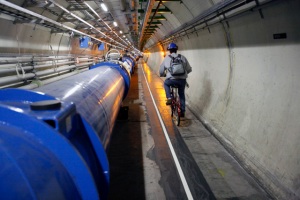 Recently the Large Hadron Collider near Geneva in Switzerland has been used to discover a new sub-atomic particle. The collider directs streams of protons around a 27 km circular tunnel so they collide head-on and records the sub-atomic debris that results.
A researcher reported, “Our new measurements are a great way to test theoretical calculations of the forces that act on fundamental particles, and will move us a step closer to understanding how the universe is held together”. So scientists are seeking to understand how the universe is held together. According to the Bible, what they discover will be secondary causes and not primary ones.
Primary and secondary causes
The Bible says that everything in the universe is held together by the powerful word of the Lord Jesus Christ. He is “sustaining all things by His powerful word” (Heb. 1:3) and “in Him all things hold together” (Col. 1 :17). God’s divine power sustains the mass, energy, space and time of our universe. It the primary reason the universe is held together.
The Bible also teaches that God spoke the universe into existence.
- “the universe was formed at God’s command” (Heb. 11:3).
- “By the word of the LORD the heavens were made, their starry host by the breath of His mouth … Let all the earth fear the LORD; let all the people of the world revere Him. For He spoke, and it came to be; He commanded, and it stood firm” (Ps. 33:6-9).
- With regard to the whole universe (visible and invisible, living and inanimate); “at His command they were created” (Ps. 148:5)
- “God said” is mentioned ten times in the description of the creation of the universe (Gen 1:1-31).
The orderly mechanisms and models of science reflect God’s nature. These mechanisms and models are secondary causes which describe how the universe operates. They are part of the creation over which God has dominion (Job 25:2; 38:33). The eternal omnipotent God who has massive intelligence is the original and ultimate cause because He determined how the universe operates.
Summary
God not only designed and created the universe, He continues to sustain it by His divine powerful word. He is both a Creator and a Sustainer.
Written, December 2011
Also see: Complex creation
Share this:

The awe of God
 The heavens declare the glory of God!
These notes were prepared for a presentation to be shown to High School students in New South Wales, Australia.
Academic qualifications
I have a Bachelor of Science with first class honours (BSc Hons) in Physics from the University of Sydney, and a Doctor of Philosophy (PhD) in Environmental Science from Macquarie University.
What is the meaning of the word “creation”?
According to the Macquarie Dictionary, the word “creation” is a noun meaning “that which is created”; or more specifically “the world”; or “the universe”. It describes something that has been created or made or an original work. In this presentation, we will use the word “creation” to describe “nature” or “the world” or “the universe”.
The word “creation” was used in the Bible by Paul to mean the universe: “Against its will, all creation was subjected to God’s curse. But with eager hope, the creation looks forward to the day when it will join God’s children in glorious freedom from death and decay. For we know that all creation has been groaning as in the pains of childbirth right up to the present time” (Rom. 8:20-22NLT).
We live in a creative world. People are very creative. For example, artists create works of art, architects create buildings, inventors create inventions, engineers create machines, and authors create novels. Here the creations are works of art, buildings, machines, and novels. Even animals are creative. They make sounds to communicate with each other and make homes such as nests and holes in the ground.
The creative process involves two nouns and one verb:
- The creator – someone or something who creates
- The creation – what has been brought into existence. It’s something new. Something that had a beginning.
- To create – is the action to bring something into existence.
In this process, the creator is the cause and the creation is the effect. Did you know that we live in a cause and effect universe? For every effect there is a cause. Likewise, for every creation there is a creator. The creation begins in the mind of the creator. As illustrated by the examples given above, the creator is always more intelligent than the creation (except in the case of biological offspring, where God is the real creator of a person’s DNA).
Why is it important to study creation?
As mentioned above, “creation” is “nature” or “the world” or “the universe”. We rely on creation for much of our health and well being. It is our life support system It provides the resources we use for: supplying food and water, which are essential for life; supplying energy; making buildings and transport systems, and supplying raw materials for the things we manufacture.
These resources include: animals on the land and in the water; plants, including forests; soils; and minerals and fossil fuels. We would die if all our plants and animals became extinct.
As we didn’t create any of these raw materials, we don’t know everything about them. Researchers study creation in order to understand how it works. They also study our bodies in order to keep healthy and treat injury and disease.
I hope the students watching this presentation learn more about creation in their studies. Maybe in future they can improve the knowledge of creation through research and investigations and apply it to the benefit of humanity.
As the pinnacle of God’s creation, people are given the responsibility to care for the rest of creation – the first man was told to:
- “Reign over the fish in the sea, the birds in the sky, the livestock, all the wild animals on the earth, and the small animals that scurry along the ground” (Gen 1:26), and
- “to tend and watch over” the Garden of Eden (Gen. 2:15).
This involves the management of earth’s resources for the benefit of everyone.
Couldn’t the universe have been created by chance?
Could Windows7 have been created by chance? Obviously no! As the universe is more complex than Windows7, it couldn’t have been created by chance either.
Everything which has a beginning has a cause. As the universe has a beginning, it has a cause. As the universe is a creation, it has a creator. What sort of creator is required? Could it have been due to chance such as a random event or random process?
Our world is made up of physical and non-physical components. The physical components (matter and energy) cannot produce the non-physical components. For example, information, such as the code stored in the DNA and RNA of all forms of life, is a non-physical message. The only source of such information is an intelligent creator. How much intelligence is required?
For the following reasons, the creator of the universe is more intelligent than modern scientists!
- Plants make food and oxygen from sunlight and water in the process of photosynthesis. But scientists are unable to do this (Sarfati, p. 125). So the creator of plant life is more intelligent than modern scientists!
- The information in the human genome is wonderfully complex. The DNA sequence in each cell of our bodies is made up of about 3 billion pairs of molecules. Scientists certainly can’t make life. They can’t even manufacture a single living cell such as an amoeba. That’s why they use stem cells in their research. So the Creator of life on earth is more intelligent than modern scientists!
The complex design of our world requires a Designer. The information in the genetic code requires a source. Complex creation, design and information can’t occur by chance. That would be like a computer that occurred by chance and we all know that doesn’t happen. Instead what happens is that computers break down, they devolve. Likewise instead of getting more complex with time, the natural world is devolving, extinction is evident, not evolution. Did you now that most mutations involve a loss or corruption of genetic information? They are malfunctions that can cause illness such as cystic fibrosis.
This means the answer to the question is “no”, the universe could not have been created by chance. Chance cannot produce the complexity of our world. By the way, nothing can create itself, because that would mean that it existed before it came into existence, which is nonsense!
So the creation demonstrates that there must be a powerful creator, who we call God. David knew this 3,000 years ago when he sang, “The heavens proclaim the glory of God. The skies display his craftsmanship.” (Ps. 19:1). This means that God’s existence can be inferred from nature, which is His creation.
How would you describe the creativity of God in creation?
The creativity shown in creation is enormous. Think of:
- The vastness of the galaxies.
- The grandeur of mountains
- The structure of the atom
- The enormous range in types of animals and plants.
- The enormous diversity within each type of animal and plant.
- The complexity of the design of each animal and plant
- The range of the behaviour of each plant and animal
- The range of ecological habitats across the world
- The coordination between the plants and animals in every habitat
- The complexity of a single living cell
- The coordination between all the organs of the body
- The beauty of a flower
- Even the range of colours.
Creation is loaded with creativity. The Creator is a supreme architect, engineer and computer programmer in one being.
God is so creative that inventors copy things they see in creation. For example:
- Aircraft were developed by copying the flight of birds.
- The design of the human eye has been copied in the design of the optics of cameras (Sarfati, p. 31).
- The iridescent blues in butterflies & birds are due to a natural diffraction grating, which has been copied to design for brighter and deeper colours (Sarfati, p. 53).
However, we need to realise that the creation has been corrupted since it was created. We can learn about this from the Bible which has been given to us by God who told its authors what to write. The Bible says that the original creation was perfect (“very good”), but this was spoilt when people rebelled against God. At this time, suffering, crime, disease, death and tragedy were introduced. When people say, “how could a loving God create such a world?”, they show their ignorance of the history of our world. He didn’t create it that way in the beginning.
So although God’s creativity is still evident, creation is marred by natural disasters, mismanagement, pollution and extinction.
Does religion fear science?
Christians believe that God the Creator has revealed Himself to us in the words of the Bible. The bible contains the history and destiny of humanity. It is a unique book.
As Christianity inspired and fostered the development of science, it does not fear true science. During the Reformation people interpreted Scripture in a historical-grammatical fashion. They believed that a rational God ruled the universe and realised that Adam had been told to “tend” or “take care” of creation (Gen. 2:15), which lead to scientific research, exploration and discovery.
Operational science studies the creation in order to understand how it works. If science stays within the bounds of the experimental method, there is no conflict with Scripture. However, if scientists extrapolate outside the range of their observations, their predictions become more speculative. Such predictions are not robust. For example, when scientists make statements about the origin of life many years ago, these cannot be proved because they are in the area of history, not operational science. How can you do an experiment about something that cannot be observed?
The facts of science do not change, but the theories proposed to explain these do change. This is because human knowledge is not perfect. In this sense, scientific theories are tentative.
Each year scientists reveal more detail about creation; but each discovery just leads to more questions and things to investigate. So science can reveal more about God’s creativity. As the existence of God is revealed in a general way in creation, by studying the wonders of creation, science can help to demonstrate His immense intelligence and power.
However, Christians do not agree with the philosophy of materialism/naturalism (that nature is all there is). Note, information is not material. This belief is contrary to Scripture – it ignores the Creator: “They traded the truth about God for a lie. So they worshiped and served the things God created (creation) instead of the Creator himself, who is worthy of eternal praise!” (Rom. 1:25).
Does creation reveal God’s perfect love for humanity?
As people care about what happens to their creations, so God cares for His creation. For example:
- He has provided all the resources we need for survival. Creation is our life support system.
- He saw that it was “very good” (Gen. 1:31). The original creation showed God’s perfect love for humanity.
- He continues to sustain the creation: “You care for people and animals alike, O Lord” (Ps. 36:6). He cares for people, animals, birds and fish.
Furthermore:
- “He gives His sunlight to both the evil and the good, and he sends rain on the just and the unjust alike” (Mt. 5:45).
- “He sends you rain and good crops and gives you food and joyful hearts” (Acts 14:17).
- “All the animals of the forest are mine, and I own the cattle on a thousand hills. I know every bird on the mountains, and all the animals of the field are mine” (Ps. 50:10-11).
- “What is the price of two sparrows—one copper coin? But not a single sparrow can fall to the ground without your Father knowing it. And the very hairs on your head are all numbered. So don’t be afraid; you are more valuable to God than a whole flock of sparrows” (Mt. 10:29-31). The God cares for the sparrows, and He cares more for people.
So the powerful, loving and personal Creator God is engaged with His creation.
However, we also need to take into account the fact that creation has been impacted by people’s rebellion against God. Creation can be cruel. Balance the perfect and the corrupted. “Against its will, all creation was subjected to God’s curse. But with eager hope, the creation looks forward to the day when it will join God’s children in glorious freedom from death and decay. For we know that all creation has been groaning as in the pains of childbirth right up to the present time” (Rom. 8:20-22). In this passage Creation is personified. Like a pregnant mother, it looks forward to being delivered from suffering, disease and death.
Does God take pleasure in His creation? And if so, why does He?
As people take pleasure in their creations, so God takes pleasure in His creation.
During the week of creation God paused five times and noted that “it was good” (Gen. 1:4, 12, 18, 21, 25). Then when it was finished: “God looked over all He had made, and he saw that it was very good!” (Gen. 1:31). It sounds like He was pleased with what He had made.
Psalm 104 is about the God of creation. It says, “The Lord takes pleasure in all He has made!” (Ps. 104:31). A reason for being pleased is that the creation shows God’s power and wisdom: “The heavens proclaim the glory of God. The skies display His craftsmanship” (Ps. 19:1).
Reference
Jonathan Sarfati (2008) “By Design – Evidence of nature’s Intelligent Designer – the God of the Bible”, Creation Book Publishers.
Written, November 2009
Share this:

God’s Creation
 We live in a creative world. People are very creative. For example, artists create works of art, architects create buildings, inventors create inventions, engineers create hardware and software, and authors create novels. Even animals are creative. They make sounds to communicate with each other and make homes including nests and holes in the ground.
The creative process involves two nouns and one verb:
- The creator – someone or something who creates
- The creation – what has been brought into existence. It’s something new.
- To create – is to bring something into existence. It’s an action.
The creator is always more intelligent than the creation (except biological offspring). This should be obvious from the examples given above.
Creation is a major theme of the Bible. It begins with God creating everything and ends with God remaking everything in a new heaven and a new earth (Gen. 1:1-2:3; Rev. 21:1-5).
This article is based on Bible passages that use the words “create”, “creation, or “creator”.
Creation’s Revelation
God has revealed Himself to everyone in His creation. Isaiah wrote, “Look up into the heavens. Who created all the stars?” (Is. 40:26NLT). This is a good question. When we look at creation we should be reminded of their Creator. Science today misses the main point of God’s revelation through the creation, which is that the creation requires a Creator.
 We live in an amazingly complex world. Each year scientists reveal more detail; but each discovery just leads to more questions and things to investigate. Look at all the information in the human genome; it’s wonderfully complex. The DNA sequence in each cell of our bodies is made up of about 3 billion pairs of molecules. Scientists certainly can’t make life. They can’t even manufacture a single living cell. That’s why they use stem cells in their research. So the Creator of life on earth is more intelligent than modern scientists!
The complex design of our world requires a Designer. The information in the genetic code requires a source. Complex creation, design and information can’t occur by chance. That would be like a computer that occurred by chance and we all know that doesn’t happen. Instead what happens is that computers break down, they devolve. Likewise, instead of getting more complex with time, the natural world is devolving; extinction is evident, not evolution. Did you know that most mutations involve a loss or corruption of genetic information? They are malfunctions that can cause illness, such as cystic fibrosis.
Also, nothing can create itself, because that would mean that it existed before it came into existence, which is nonsense! Instead, the logic is that everything which has a beginning has a cause. As the universe has a beginning, it has a cause, which is that it was created by God. So, we live in a cause and effect universe.
David knew this 3,000 years ago when he sang, “The heavens proclaim the glory of God. The skies display His craftsmanship” (Ps. 19:1). This means that God’s existence can be inferred from nature, which is His creation. Because the universe is awesome and immense, God must be immensely powerful. That’s what omnipotent means. Paul said that His eternal power and divine nature are evident in all we see, “The truth about God is known instinctively. God has put this knowledge in their hearts. From the time the world was created, people have seen the earth and sky and all that God made. They can clearly see His invisible qualities—His eternal power and divine nature. So they have no excuse whatsoever for not knowing God” (Rom. 1:19-20). “Eternal power” means there is no limit on what God can do.
The Supreme Creator
Our knowledge of God’s nature and how He created everything comes from the revelation of Scripture, as it is the only clear revelation from God – it has not been tainted by sin. God was the only One who was there and He tells us how it happened. We are told, “By faith we understand that the entire universe was formed at God’s command, that what we now see did not come from anything that can be seen” (Heb. 11:3). Here we see that in the beginning God spoke and created what can be seen from what was invisible. In Genesis 1:3 we read “Then God said, ‘Let there be light, and there was light’”. In Genesis 1, “God said” is mentioned 8 times before something new was created.
Paul gives more information, “Christ is the visible image of the invisible God. He existed before anything was created and is supreme over all creation, for through Him God created everything in the heavenly realms and on earth. He made the things we can see and the things we can’t see—such as thrones, kingdoms, rulers, and authorities in the unseen world. Everything was created through Him and for Him. He existed before anything else, and He holds all creation together” (Col. 1:15-17). So God created an invisible spiritual world as well as the visible physical world. Because He made everything in the universe, He is supreme over all creation (Jn. 1:3; Col. 1:15; Heb. 1:3). God continues to sustain the creation by holding it all together.
God also created time. He created our ancestors Adam and Eve “in His own image” so He could have a special relationship with humanity (Gen. 1:27). He is the “author of life” (Acts 3:15). So, God is certainly creative.
Another of David’s songs says, “When I look at the night sky and see the work of your fingers—the moon and the stars you set in place—what are mere mortals that you should think about them, human beings that you should care for them?” (Ps. 8:3-4). Looking at creation should cause us to feel humble as we recognize the greatness of the God who chose to create us in His image.
However, the truth of the greatness of God is suppressed today as it was when Paul wrote; “God shows His anger from heaven against all sinful, wicked people who suppress the truth by their wickedness” (Rom. 1:18). Paul explains how this truth is suppressed: “they knew God, but they wouldn’t worship Him as God or even give Him thanks. And they began to think up foolish ideas of what God was like. As a result, their minds became dark and confused. Claiming to be wise, they instead became utter fools. And instead of worshiping the glorious, ever-living God, they worshiped idols made to look like mere people and birds and animals and reptiles” (Rom. 1:21-23).
First, they ignore God. They don’t glorify Him as the great Creator or thank Him for sustaining them by His creation. Instead of acknowledging what should be obvious, people act as though there is no God. In this sense they are ignorant. God is replaced by nature; they say that nature does this and nature does that. Paul says that ignoring God leads to futile thinking and darkened hearts. Their plans come to nothing and there is no compassion.
Second, they claim to be wise. They claim to know everything and are able to handle all the problems of life. They act like God. But in this they become fools.
Third, they worship the creation. Because people are instinctively religious, when they reject this revelation of the true God through His creation they worship idols. Paul repeats, “They traded the truth about God for a lie. So they worshiped and served the things God created instead of the Creator Himself, who is worthy of eternal praise!” (Rom. 1:25).
Godlessness results in wickedness. The consequence of suppressing the truth of the greatness of God is sexual immorality and all kinds of sinful behaviour (Rom. 1:24-32). That’s why the wicked are condemned by God and under His judgement and why there is a universal need for the gospel.
Isaiah wrote, “For the Lord is God, and He created the heavens and earth and put everything in place. He made the world to be lived in, not to be a place of empty chaos. “I am the Lord,” He says, “and there is no other” (Is 45:18). So, the Creator is unique.
Because God had no beginning, He doesn’t need a cause (Dt. 33:27; 1 Tim. 1:17; Heb. 7:3; Rev.1:8; 22:13). In fact God has no beginning, no end or limits; He is infinite, eternal, omnipotent, omnipresent and omniscient. God is omni (from the Latin word meaning “all”)! God’s power was demonstrated to Job though the wonders of creation (Job 38-41).This caused Job to realise that God could do anything (Job. 42:2).
Because God is perfect, His creation was perfect. The Bible says that it was “very good” (Gen. 1:31). But it didn’t stay that way.
Creation’s Suffering & Redemption
God told Adam “Since you listened to your wife and ate from the tree whose fruit I commanded you not to eat, the ground is cursed because of you. All your life you will struggle to scratch a living from it. It will grow thorns and thistles for you, though you will eat of its grains” (Gen. 3:17-18). So Adam’s fall into sin affected the world around him.
Although the original creation was “very good”, because of people’s rebellion against God, the universe has been cursed with suffering, disease and death. It has been spoilt, although we see shattered remains of the original creation. “Against its will, all creation was subjected to God’s curse … For we know that all creation has been groaning as in the pains of childbirth right up to the present time” (Rom. 8:20, 22). When people say, “how could a loving God create such a world?”, they show their ignorance of the history of our world. He didn’t create it that way in the beginning. We are reaping what Adam sowed. Today, life is a struggle for all creation and there is much suffering. This affects Christians as well as the rest of God’s creation. We “groan inwardly as we wait eagerly for our adoption, the redemption of our bodies” (Rom. 8:23).
However, together with the rest of God’s creation, we can look forward to the Lord’s coming reign over the earth: “Yet what we suffer now is nothing compared to the glory he will reveal to us later. For all creation is waiting eagerly for that future day when God will reveal who His children really are” (Rom. 8:18-19). When the Lord returns to set up His kingdom, the creation will be redeemed from the affects of the curse and re-created to be “very good” once again. The Garden of Eden will be restored (Acts 3:21). This is when: “the wolf and the lamb will live together; the leopard will lie down with the baby goat. … as the waters fill the sea, so the earth will be filled with people who know the Lord” (Isa. 11:6-9).
Creation Evangelism
An understanding of creation is the foundation of the gospel message. When he spoke to Gentile audiences at Lystra and Athens who were ignorant of the Old Testament, Paul appealed to God’s handiwork in nature as evidence of the existence of the Creator (Acts 14:15b-17; 17:24-27). He was the one they should be worshiping, not worthless idols.
The grand message of the Bible is that in the beginning God created everything, then when Adam and Eve disobeyed God the creation came under God’s curse and evil, sickness, suffering and death became prevalent. In this sense the whole creation is suffering. But Jesus came to die on the cross and was resurrected back to life so that those who trust in His work can have a new spiritual life and look forward to living in His new creation. After He returns believers will receive new bodies and will leave the suffering world to eventually reign with Him in His kingdom of the restored world.
What about someone who has never heard the gospel message? The Bible says, “it is impossible to please God without faith. Anyone who wants to come to Him must believe that God exists and that He rewards those who sincerely seek Him” (Heb. 11:6). Two steps are necessary: to believe that God exists, and the creation tells us that, and to earnestly seek Him. If they seek Him, He will led them to a knowledge of Jesus Christ (Acts 4:12).
Creation Praise
Psalm 95 is a song of praise that the Jews sang to God for being a great Creator. When Christ returns to set up His kingdom, all creation will praise Him (Ps.98:4-9). That’s what the song “Shout to the Lord” is about. In Psalm 104, the God of creation is praised for His work as the great Creator and Sustainer. All creation praises God in Psalm 148, which includes “Let every created thing give praise to the Lord, for He issued His command, and they came into being” (Ps 148:5). All creation is to praise the Lord because He spoke the universe into existence.
In heaven the redeemed bow down before God on His throne and praise Him because He created everything: “You are worthy, O Lord our God, to receive glory and honor and power. For you created all things, and they exist because you created what you pleased” (Rev. 4:11). Finally, at the end of time, after God has dealt with people’s sin and rebellion, every creature praises God (Rev. 5:13).
Lessons for us
Do we appreciate the grandeur, majesty, power, wisdom and beauty of the creation? Do we realise that because it didn’t make itself, it requires an awesome Creator who continues to uphold and maintain it? He rules over all creation. Let’s keep aware of God’s greatness, power and sovereignty. Are we humble before Him? Do we thank Him for sustaining us by His creation? Do we acknowledge His work of creation in songs of praise?
Do we realise that, like humanity, the whole universe has been cursed with suffering, disease and death? Are we looking forward to the day when the curse is removed?
Are we worshiping the Creator or the creation? Who are our heroes? What images are occupying us on the movies, TV, and internet? Are we ambitious or greedy? Are we chasing the good comfortable life or always seeking good health?
Creation is a major theme of the Bible. The sequence is creation, fall into sin, release from the penalty of sin (redemption) through Jesus Christ, and creation of the new heavens & the new earth. Do we begin at the beginning of the gospel message, particularly for those who are not familiar with the Bible?
The fact that God has created the universe is fundamental to the Christian faith because it leads to:
- Christ’s resurrection and the resurrection of all believers. If God couldn’t create life in the beginning, how could He bring the dead back to life?
- The ultimate restoration of the fallen creation. If God couldn’t create life in the beginning, how can He create life in a new creation?
Written, November 2009
Share this:

Keep eternity in mind
 The wisest man of ancient times wrote, “He (God) has planted eternity in the human heart, but … people cannot see the whole scope of God’s work from beginning to end” (Eccl. 3:11NLT). What is eternity? It’s an endless period of time. This suggests that there is more to life than what we see. Our world is big, yet its satisfactions are small. We don’t understand what’s going on. Solomon summarised it from a human viewpoint; “everything is meaningless” (Eccl. 3:19NIV).
Since we were made for eternity, the things of time cannot fully and permanently satisfy. After the ipod, the iphone and the ipad, we look for the next technology.
Creation
We live in an amazingly complex world which has much beauty that scientists are still exploring. It is loaded with information and design. Design demands a designer and creation demands a Creator. By looking at our universe, anyone can know that there is a creator God. Creation shows that He is a clever and powerful God. The Bible’s message to those who reject this knowledge is “The truth about God is known instinctively. God has put this knowledge in their hearts. From the time the world was created, people have seen the earth and sky and all that God made. They can clearly see His invisible qualities—His eternal power and divine nature. So they have no excuse whatsoever for not knowing God” (Rom. 1:19-20NLT). The eternal God is the source of our eternal future.
Conscience
But there is more information in our world than the atoms and molecules of our physical world. Everyone is born with a conscience, which is part of our eternal soul. We all have an instinctive knowledge of right and wrong. It is like an inbuilt alarm. For example, most people know it is wrong to lie, steal, and commit adultery and murder. But in this world where people often reject God’s revelation it can be programmed wrongly.
The Bible gives God’s standards for humanity. But for those who are ignorant of this it says: “They demonstrate that God’s law is written in their hearts, for their conscience and thoughts either accuse them or tell them they are doing right” (Rom. 2:15). Anyone who has not heard about what the Bible says will be judged according to their conscience. So the Creator made us with a mind that is able to make choices, not one that is driven by instinct. Unfortunately, we often choose to disobey our conscience. Then we have a guilty conscience which we may try to ignore. But the Creator has provided an answer to our selfish and rebellious ways.
The Bible
Eternity is a continual reality in the Bible, which is God’s special message for mankind. It tells us all we need to know about history and about humanity. About the moral choices made throughout history from the times of our original parents Adam and Eve. About how we have all rebelled against God and gone our own way. How we all have a guilty conscience, whether we acknowledge it or not. How this selfish and rebellious (sinful) attitude has lead to suffering, disease, decay, death and eternal punishment. How God’s solution to our problems was to send Jesus to take the punishment that we deserve. He was executed and then resurrected back to life, which we remember at Easter time. He offers each of us the opportunity to be reconciled back to God and have our conscience fixed: “Sin pays off with death. But God’s gift is eternal life given by Jesus Christ our Lord” (Rom. 6:23CEV).
Firstly we need to realise our hopeless situation and then we need to accept the gift of forgiveness. Jesus shows that He is a compassionate and loving God. He is waiting for people to accept His offer to give them a new life and an inheritance with Him in the life to come.
Lessons for us
As we all live on the edge of eternity, keep eternity in mind (Lk. 12:16-20). God has revealed Himself to us all through His creation and our conscience. But the clearest revelation is through Jesus Christ who is made known through the Bible. This is why the Bible is the most important book ever written. It is life changing. Through it we can be part of God’s eternity. His new eternal creation; His eternal life.
Written, June 2009





 George's Journal
RECENT COMMENTS