
God is good

 In a world of evil, pain and suffering, some question whether God is good. Instead they claim that the God described in the Bible is cruel and definitely not good. But how do we define “good”? Is it what makes me happy? Is it what only happens in the short-term? It is being nice and politically correct? Or is it different to these?
What does the Bible reveal about God’s attributes, characteristics, nature or qualities? In this case we are looking at who God is, not what He does. Erickson (2013) divides these attributes into two categories: God’s greatness, and God’s goodness. My previous blogpost summarized aspects of God’s greatness.
This blogpost summarizes eight aspects of God’s goodness. They may be grouped into purity (holy, righteousness, and just), integrity (genuineness, honesty and faithfulness), and love (benevolent, gracious, merciful, and persistent).
God is Holy
The Bible says that God is holy (Ex. 15:11; 1 Sam. 2;2; Ps. 99:3). He is “high and exalted” (Is. 6:1; 57:15). In this context, the Hebrew word qadosh (Strongs #6918) means that God is separate from all of creation. The proper reaction to God’s holiness is awe and reverence (Ps. 99:3). Also, God is not wicked or evil. He “cannot be tempted by evil” (Jas. 1:13NIV). This means that God is absolutely pure and He is untouched by the evil in the world. So God is holy.
God is Righteous
David says, “The Lord is righteousness in all His ways” (Ps. 145:17). He always does what is right. Nothing He does is wrong. There is no sin or wickedness in Him (Ps. 92:15). In fact, He defines what’s right and what’s wrong. He’s the source of morality. God sets the standard of righteousness. And He commands only what is right (Ps. 19:7-9). So God is righteous.
God is Just
Isaiah says, “the Lord is a God of justice” (Isa. 30:18). Justice is when God requires others to follow His moral laws. The Bible says that sin has consequences and that God will punish sin. For example, although the wicked may prosper (Ps. 73:3-12), they will be ultimately destroyed (Ps: 73:17-20, 27). Although this justice may not be evident in the short-term, it is certain in the long-term. So God is just.
God has Integrity
Integrity includes genuineness (being true), honesty (telling the truth), and faithfulness (proving true). Jeremiah says “But the Lord is the true God; He is the living God, the eternal King” (Jer. 10:10). God is real, unlike many other gods. And His attributes are true. So God is genuine.
What God says is accurate. God cannot lie (Tit. 1:2; Heb. 6:18). God “does not lie or change His mind; for He is not a human being, that He should change His mind” (1 Sam. 15:29). Because of this and His omniscience, He can always be trusted. So God is honest.
God keeps all His promises; “God is not human, that He should lie, not a human being, that He should change His mind. Does He speak and then not act? Does He promise and not fulfil?” (Num. 23:19). So God is faithful.
God is Benevolent
God is loving and caring. Jesus said, “For God so loved the world that He gave His one and only Son, that whoever believes in Him shall not perish but have eternal life” (Jn. 3:16). This is a sacrificial, unselfish love, that seeks the good of others and which is called agape in Greek (Strongs #25). He died for His enemies, “God demonstrates His own love for us in this: While we were still sinners, Christ died for us … while we were God’s enemies, we were reconciled to Him through the death of His Son” (Rom. 5:8-10). God’s benevolence extents to all humanity and to animals (Mt. 5:45; 6:26, 30; 10:29). So God is benevolent.
God is Gracious
God deals with us according to our need; not according to our merit, worthiness or what we deserve as sinners. He supplies underserved and unmerited favors. God told the Israelites, “The Lord, the compassionate and gracious God, slow to anger, abounding in love and faithfulness, maintaining love to thousands, and forgiving wickedness, rebellion and sin” (Ex. 34:6-7). And Paul said, “In Him (Jesus) we have redemption through His blood (death), the forgiveness of sins, in accordance with the riches of God’s grace that He lavished on us” (Eph. 1:7-8). Our salvation comes through God’s grace: “For it is by grace you have been saved, through faith—and this is not from yourselves, it is the gift of God— not by works, so that no one can boast” (Eph. 2:8-9). This is God’s response to the fact that we have rebelled against Him and so deserve to be banished from His presence forever. So God is gracious.
God is Merciful
God is also compassionate; “As a father has compassion on his children, so the Lord has compassion on those who fear Him (His faithful followers)” (Ps. 103:13). For example, when God rescued the Israelites from Egypt He said, “I have indeed seen the misery of my people in Egypt. I have heard them crying out because of their slave drivers, and I am concerned about their suffering” (Ex. 3:7). Jesus also felt compassion for the physical and spiritual condition of the people He met; “When He saw the crowds, He had compassion on them, because they were harassed and helpless, like sheep without a shepherd” (Mt. 9:36). In response He “went through all the towns and villages, teaching in their synagogues, proclaiming the good news of the kingdom and healing every disease and sickness” (Mt. 9:35). So God is merciful.
God is Persistent
Another aspect of God’s love is persistence. He withholds judgment and offers salvation and grace over long periods of time. David said, “But you, Lord, are a compassionate and gracious God, slow to anger, abounding in love and faithfulness” (Ps. 86:15). God often delays judgment so that people will repent and turn to Him (Rom. 2:4; 2 Pt. 3:15). It seems that God warned Noah’s generation for 120 years about the coming flood (Gen. 6:3; 1 Pt. 3:20). Also, He was patient with Israel even though they repeatedly rebelled against Him. And Christ’s second coming is delayed because God doesn’t want “anyone to perish, but everyone to come to repentance” (2 Pt. 3:9). So God is persistent in His love.
God’s goodness in Scripture
The Bible refers repeatedly to God’s goodness. The Father, Son and Holy Spirit are each said to be good (Neh. 9:20; Mt. 7:11; Jn. 10:11). God is inherently good and His actions are good – “You are good and what you do is good” (Ps. 119:68). The Hebrew word towb (Strongs #2896) means good and kind (Brown-Driver-Briggs).
The Israelites praised God with thanksgiving saying “He is good” because His love to them endures forever. (1 Chron. 16:34; Ps. 136:1, Jer. 33:11; Ezra 3:11). Reasons to praise God include being good, loving, and faithful – “the Lord is good and His love endures forever; His faithfulness continues through all generations” (Ps. 100:5; 135:3). David gives reasons to praise God – “They celebrate your abundant goodness and joyfully sing of your righteousness” (Ps. 145:7). According to the parallelism of Hebrew poetry, His righteousness is said to be equivalent to His abundant goodness.
David appeals to God’s goodness when he prays for forgiveness – “you, Lord, are good” (Ps. 25:7). He mentions God’s goodness in association with His guidance of those who fear Him – “Good and upright is the Lord” (Ps. 25:8). David is confident that God will answer his prayer for deliverance from his enemies – “the goodness of the Lord” (Ps. 27:13). When he was being pursued by his enemies, David used a figure of speech urging people to trust and experience God – “taste and see that the Lord is good” (Ps. 34:8; 1 Pt. 2:3). The context is the Lord delivering the righteous in their sufferings. And when David prayed for deliverance from enemies, he praised God for being forgiving and good – “You, Lord, are forgiving and good” (Ps. 86:5).
Moses saw that God’s goodness included His mercy, forbearance, love, faithfulness, forgiveness, and judgment (Ex. 33:19; 34:6-7). And Hezekiah appealed to God’s goodness when he prayed for forgiveness of those who ate the Passover without purifying themselves – “the Lord, who is good” (2 Chron. 30:18).
Jesus reminded the rich ruler that only God is intrinsically good – “No one is good—except God alone” (Mt. 19:17; Mk. 10:18; Lk. 18:19). The Greek word agathos (Strongs #18) means inherently good (Thayer’s Greek Lexion). It describes what originates from God.
Peter alludes to Psalm 34:8 – “now that you have tasted that the Lord is good” (1 Pt. 2:3). Since they have personally experienced God’s goodness, they should lay aside the sins mentioned in verse 1. This shows that we must personally experience God to know His goodness.
The kindness (goodness), love and grace of God is why He acted to save fallen humanity (Tit. 2:11; 3:4). The Greek word chrestotes (Strongs #5544) is translated goodness, or kindness (Thayer’s Greek Lexion).
God and humanity
These are all positive moral attributes because God has no negative moral attributes (sin). And God exercises these attributes all the time, they are part of His character. Because God is good, everything He does is good. For example, “in all things God works for the good of those who love Him” (Rom. 8:28).
The attributes listed above can also be found in humanity, but not on a continuous basis. They are part of humanity being created in the image and likeness of God (Gen. 1:27). People can be holy, righteous and just, but not when they are sinful. People can be genuine, honest and faithful, but not when they are sinful. People can be benevolent, gracious, merciful and persistent in love, but not when they are sinful. This means that people don’t exercise these attributes all the time like God does.
The fact that we can share these attributes with God would help Christians to represent Him on earth. Through them we can “participate in the divine nature” (2 Pt. 1:4). For example, our new self is righteous and holy (Heb. 12:10; Eph. 4:24). And Christians and churches are urged to be holy (2 Cor. 7:1; Eph. 5:25-27). Although they are already positionally holy through Christ, they are to become holy in practice.
Lessons for us
Our God is good because He is pure, trustworthy and loving. His purity is evident as holiness, righteousness and justice. His trustworthiness is evident as genuineness, honesty and faithfulness. And His love is evident as benevolence, grace, mercy and persistence. In this respect God is unique, being far above humanity and any other deity. He’s greater than all other gods. So He deserves our praise and thanks!
That’s how the Bible defines what is “good”. Because God is pure, He deserves our respect. Because God is trustworthy, let’s trust His message in the Bible. Because God is loving, let’s accept His love shown in Christ’s sacrifice. And because God is good, let’s follow and serve Him.
References
Millard J. Erickson (2013) “Christian theology”. Third edition. Baker Academic, Grand Rapids, MI, USA.
Written, April 2017
Also see: Good is great
What God does
Share this:

God is great

 The Islamic call to prayer begins with “Allahu akbar”, which means “God is great” or “God is greater”. This phrase is recited by Muslims in many different situations.
There are lots of ideas about God. Some think God’s like a harsh judge or policeman. Others think God’s like an indulgent grandfather. Is God close or distant? Is God involved in our world or disinterested? Is God separate from creation (nature) or a part of it? Is God fixed or changeable?
Job’s friends were rebuked for misrepresenting God (Job. 42:7). And the Israelites were commanded not to worship false gods (Ex. 20:3-5). God has revealed Himself to humanity in creation, the Bible and Jesus Christ. As all we know about Jesus is from the Bible, the Bible is the best way to know what God is like and what He is not like.
What does the Bible reveal about God’s attributes, characteristics, nature or qualities? In this case we are looking at who God is, not what He does. Erickson (2013) divides these attributes into two categories: God’s greatness, and God’s goodness. This blogpost summarizes eleven aspects of God’s greatness.
God is Spiritual
Jesus said, “God is spirit, and His worshipers must worship in the Spirit and in truth” (Jn. 4:24NIV). This means that God’s not part of our physical world. It’s like He is in a different dimension or realm of reality. He is not composed of physical matter and is not restricted by the limitations of our physical universe. So God is invisible (1 Tim. 1:17; 6:15-16). But Jesus did reveal some of God’s attributes when He took on a human form (Jn. 1:18; Col. 1:15). So, let’s study the Bible to find out more about the unseen God and how He wants us to live.
God is Alive
Jesus said, “as the Father has life in Himself, so He has granted the Son (Jesus) also to have life in Himself” (Jn. 5:26). God is self-existent and the source of all life (Acts 17:25). In contrast to dead idols, He is a living God (Jer.10:10; 1 Th. 1:9). Because God is alive, He can think, act, communicate, and answer our prayers. And He can give spiritual life to those who seek Him. So, let’s bring our cares and needs to the living God in prayer.
God is Personal
The Bible teaches that God is personal, with self-consciousness, intelligence to reason and design, a will, capable of feeling, and choosing and having a relationship with people. Personal names and pronouns are applied to God. In the beginning, God communicated with Adam and Eve. And later, Jesus visited earth as a human being. God is not an impersonal force. So, let’s interact with the personal God as we read the Bible.
God is Triune
It is evident from Scripture that there is one true God who is in the form of three persons. When dismissing idols as gods, Paul said that “There is no God but one” (1 Cor. 8:4). And in a discussion on faith and deeds James said “You believe that there is one God. Good!” (Jas. 2:19). So Christianity is monotheistic. But it is a different monotheism to that of Islam.
Jesus told His disciples, “go and make disciples of all nations, baptizing them in the name of the Father and of the Son (Jesus Christ) and of the Holy Spirit” (Mt. 28:19). Here the singular name of God is said to be “the Father … the Son and … the Holy Spirit”, which is three persons. Jesus was God (Jn. 1:1). He was “in very nature God” and equal with God (Phil. 2:6). Jesus was also “the exact representation of His (God’s) being” and called “God” and “Lord” (Heb. 1: 3, 8, 10). Also, the Bible uses the “Holy Spirit” and “God” as interchangeable expressions” (Acts. 5:3-4; 1 Cor. 3:16-17; 6:19). So let’s praise God for sending Jesus as part of His plan of salvation. And pray to Him in Jesus name because Jesus is our mediator (Jn. 16:23). And realize that the Holy Spirit is always available to help us because He lives within us.
God is Infinite
As God created everything, He can’t be limited by anything. This includes: time, space, knowledge, power, and anything else we can think of. He is outside time and space (or in a different dimension or realm of being). So He can’t be limited by any of the constraints in the universe. God’s greatness can’t be measured. So, let’s respond with awe to the infinite God. As this attribute is beyond our understanding, it is considered in more detail in the next four attributes.
God is Eternal
Because God existed before there was time, He isn’t limited in time. He’s not located at a particular time in history because He created time. This means that He doesn’t have a time clock like us. He always is, always was and always will be. God is eternal – He is “the eternal God” (Gen. 21:33; Dt., 33:27; Rom. 16:26). As God existed before anything else came into being (Gen. 1:1), He can continue to exist independently of everything else. Because He had no beginning (or cause), God has no birthday or age. He also has no end – He is immortal. Moses prayed, “from everlasting to everlasting you are God” (Ps. 90:2). This means that God is always present. He has access to creation at all times. Although God isn’t bound by time, He is aware of the succession of events within the history of the universe. And because God is eternal, He doesn’t get taken by surprise. So, let’s appreciate the eternal life we have though the eternal God.
God is Everywhere (omnipresent)
Because God existed before there was space, He isn’t limited in space. He’s not located at a particular point because He created space. This means that He doesn’t have any GPS coordinates like us. Conversely, there is no point in space where it can be said that God isn’t present. David wrote, “Where can I go from your Spirit? Where can I flee from your presence? If I go up to the heavens (up), you are there; if I make my bed in the depths (down), you are there. If I rise on the wings of the dawn (east), if I settle on the far side of the sea (west), even there your hand will guide me, your right hand will hold me fast” (Ps. 139:7-10). David couldn’t hide from God’s presence. This means that God is accessible at any point in His creation. And God can access all the universe. So God is omnipresent. But this doesn’t mean that He is everything. So, let’s be aware of God’s presence at all times.
God is All-knowing (omniscient)
Because God existed before knowledge came into being, He knows everything. David wrote, “You know when I sit and when I rise; you perceive my thoughts from afar. You discern my going out and my lying down; you are familiar with all my ways. Before a word is on my tongue you, Lord, know it completely. You hem me in behind and before, and you lay your hand upon me. Such knowledge is too wonderful for me, too lofty for me to attain” (Ps. 139:2-6). And the writer of Hebrews says, “Nothing in all creation is hidden from God’s sight. Everything is uncovered and laid bare before the eyes of Him (God) to whom we must give account” (Heb. 4:13). God sees and knows everything! Nothing is hidden from Him. Nothing is a mystery to Him. So God is omniscient. Since He knows everything, His justice will always be administered fairly. So, let’s trust the all-knowing God to know what is best for us.
God is All-powerful (omnipotent)
Because God created and sustains everything, He has unlimited power. From Genesis to Revelation, He is referred to as “God Almighty”. God told Abram, “I am God Almighty” (Gen. 17:1). And John saw “the Lord God Almighty” in his vison of the heavenly city (Rev. 21:22). God’s power over nature is illustrated in the Bible by many miracles such as the birth of Isaac, the plagues in Egypt, the crossing of the Red Sea, and Christ’s miracles including the stilling of the storm. Of course God cannot act contrary to His nature or fail to fulfil His promises. So, let’s trust the all-powerful God to keep His promises.
God is Constant (unchanging)
God’s attributes don’t change with time. Although the Jews repeatedly broke their covenant with God, God kept His part of the covenant in accordance with the statement that “I the Lord do not change” (Mal. 3:6). And James says that God “does not change like shifting shadows” (Jas. 1:17). There is no reason for God to change because He is perfect. So He is constant, consistent, reliable and trustworthy. He’s perpetually the same. That’s why God is said to be like a rock (Dt. 32:4). This means that God is dependable and will fulfil His promises. So, let’s rely on the constant God.
God is All-sufficient (sustainer)
When Jacob blessed his son Joseph, he said that God Almighty blesses “with blessings of the skies above, blessings of the deep springs below, blessings of the breast and womb” (Gen. 49:25). So God nourishes and sustains His people like a mother breastfeeds her infant. Because God is self-sufficient, He needs nothing from anyone. He is able to supply all the needs of His people; “my God will meet all your needs according to the riches of His glory in Christ Jesus” (Phil. 4:19). God has addressed all our problems, doubts and difficulties, in the gospel of His Son, Jesus Christ. So, let’s rely on the all-sufficient God to get through the trials of life.
God’s greatness in Scripture
The Bible refers repeatedly to God’s greatness. He is “the great God” (Dt. 10:17; Ezra 5:8; Neh. 8:6; 9:32; Ps. 95:3; Dan. 2:45) and “great and awesome” (Dt. 7:21; Dan. 9:4). Also, Jesus is said to be “our great God and Savior” (Titus 2:13). The Hebrew word is gadol (Strongs #1419), which in this context means great in importance (Brown-Driver-Briggs). The Greek word is megas (Strongs #3173), which in this context means a person of great rank because of their ability, virtue and power (Thayer’s Greek Lexion). In these passages, this greatness relates to the triune God: Father, Son and Holy Spirit.
The magnitude of His greatness is described as:
– “God is greater than any mortal” (Job 33:12)
– “How great is God—beyond our understanding!” (Job 36:26)
– God is “very great” (Ps. 96:4)
– God is “greater than all” (Jn. 10:29)
God’s greatness demands a response:
– “praise the greatness of our God!” (Dt. 32:3)
– “great is the Lord and most worthy of praise” (1 Chron. 16:25; Ps. 104:1)
– “And they were all amazed at the greatness of God” (Lk. 9:43)
God and humanity
The only attributes listed above that are shared by humanity are spirit, life and personality. But there are also differences. While on earth, our spirits are linked with our bodies, whereas God the Father and the Holy Spirit are spirits without bodies and Jesus Christ is a spirit linked to a resurrected (heavenly) body. Although we are alive, we are not self-existent or the source of all life. And although we can know, feel, will and act, we can’t do this as three persons! But because we are both personal, we can have a relationship with God.
Lessons for us
Our God is great because He is an infinite, eternal, omnipresent, omniscient, omnipotent, living and personal triune spirit, who is reliable (constant) and all-sufficient. God is mega! He is unique, being far above humanity and any other deity. He’s greater than Allah and all other gods. So He deserves our praise and worship!
References
Millard J. Erickson (2013) “Christian theology”. Third edition. Baker Academic, Grand Rapids, MI, USA.
Written, April 2017
Also see: God is good
What God does
Share this:

Jesus: history or myth?

 I don’t believe in the Tooth Fairy. I don’t believe in the Easter Bunny. I don’t believe in Santa Claus. You could say, I’m a skeptic! But what if I don’t believe that Babe Ruth, Mark Twain, and Christopher Columbus were real people? That they were myths as well.
Also, what if I don’t believe that people who lived longer ago like William Shakespeare (AD 1600) and Muhammad (AD 600) were real people? And what if I don’t believe that Jesus (AD 30) existed? That He’s a myth made up by Christians.
According to a survey in 2015, 22% of people in England thought that Jesus was a mythical or fictional character, while another 17% were unsure whether He was real or not. The remaining 61 % said Jesus was a real person who actually lived. It was found that younger people are the most skeptical about Jesus’s existence.
What is a “myth”?
In everyday language, the term “myth” is given to stories, ideas or beliefs that are false and not true. They are unreal or imaginary stories that may be called “legend”, “fiction”, “fairy tale”, “folklore”, or “fable”. But academic scholars use “myth” as a synonym for a story with a symbolic message that used to be believed as true, but now there are no implications on the truthfulness of the story. In this post I’m using the everyday usage of the word “myth”, not the academic one.
Let’s look at two skeptical views about Jesus.
Skeptical views about Jesus
Christ myth theory.
Some people claim that Jesus is a mythical character, and not a historical person. He never existed. He was made up by the early church which wrote the New Testament. They conclude this from the following beliefs:
– Jesus left no writings or other archaeological evidence.
– We don’t have any original manuscripts of the New Testament.
– The genre of the gospels may be legendary fiction instead of ancient biography.
– The Gospels and other early Christian writings cannot be verified as independent sources, and may have all stemmed from a single original fictional account.
– All documents about Jesus came well after the life of the alleged Jesus – so it’s all unreliable hearsay. No eyewitness accounts survive.
Mainstream historical view
Others say that Jesus of Nazareth did exist but He had virtually nothing to do with the founding of Christianity and the accounts in the gospels. They believe that Jesus was an extraordinary man, but He didn’t do miracles. The miracles were made up by Christians afterwards and written in the Bible. The life of Jesus was embellished like St Nicholas became Santa Claus.
We will now evaluate these two skeptical views about Jesus. Do they match the evidence or not?
Historical evidence for the existence of Jesus
Most of what is known of the ancient world comes from written accounts by ancient historians. But these only record a sample of human events and only a few of these documents have survived. Few people could write such histories as illiteracy was widespread in ancient times. And the reliability of the surviving accounts needs to be considered. But the existence of someone in history is often easily established on the basis of small textual samples, sometimes even a single name in a list or sentence. For example, my great grandfather Richard Hawke is in a list of people living on the goldfields at Hill End near Bathurst in New South Wales in 1867. This is listed in a book that was published 109 years later in 1976 (“Valleys of gold” by Brian Hodge).
Jesus was a Jew (a minor race) who lived in Galilee, which was a part of Palestine (not the capital, Jerusalem). And Palestine was an outpost of the Roman Empire (a tiny part of a vast empire). He was a long way away from the local center of power and from Rome (the capital of the empire). So the fact that we can find any written record of Jesus outside the New Testament is significant. Based on this, the best place to look for evidence of Jesus that is independent of the Bible is in ancient Roman and Jewish literature.
Roman literature
About 80 years after Christ’s death, the Roman historian Tacitus wrote (“Annals”, 15, 44, AD 115-117): “They (Christians) got their name from Christ, who was executed by sentence of the procurator Pontius Pilate in the reign of Tiberius. That checked the pernicious superstition (Christianity) for a short time, but it broke out afresh not only in Judea, where the plague first arose, but in Rome itself, where all horrible and shameful things in the world collect and find a home”.
The Annals is a history of the Roman Empire from the reign of Tiberius to that of Nero (AD 14–68). The context of this passage is the 6-day fire that burned much of Rome in July AD 64. It indicates the manner and time period of Christ’s death. Emperor Nero (AD 37-68) accused the Christians of starting the fire and he persecuted them.
Jewish literature
Josephus is the best known Jewish historian. He was born in Jerusalem and went to Rome in AD 71 where he wrote his histories under Roman patronage. Jesus Christ is mentioned twice in his “Antiquities of the Jews” (a history of Israel from Genesis to the first century AD) published around AD 93 (about 60 years after the death of Jesus).
A passage in Book 18, 63-64 of the “Antiquities of the Jews” says:
“Now, there was about this time (a source of further trouble) Jesus, for he was a doer of surprising works, a teacher of such men as receive the truth with pleasure (men who welcome strange things). He drew over to him both many of the Jews, and many of the Gentiles. And when Pilate, at the suggestion of principal men among us, had condemned him to the cross, those that loved him at the first did not forsake him (cease to cause trouble). And the tribe of Christians, so named for him are not extinct to this day”.
The context of this passage is the political disturbances that the Roman rulers dealt with during this period.
A passage in Book 20, Chapter 9, 1 of the “Antiquities of the Jews” says,
“he (Ananus the high priest) assembled the Sanhedrin of judges, and brought before them the brother of Jesus, who was called Christ, whose name was James, and some others; and when he had formed an accusation against them as breakers of the law, he delivered them to be stoned”.
This event is dated at AD 62. The Bible also says that James was the brother of Jesus (Gal. 1:19). This passage assumes you already know about Jesus, which is true because Josephus has already mentioned him two books earlier.
Summary of Roman and Jewish literature
These two non-Christian historians are independent historical sources, one Roman and one Jewish. What do they say about Jesus?
– He was a Jewish man named Jesus and Christ (in Greek) who lived in Judea.
– He had a brother named James.
– He had a reputation for doing unusual works (possibly miracles)
– He won over both Jews and Greeks (but most of this happened after His death).
– He was sentenced by Pilate to be executed by crucifixion during Tiberius’s reign. The Jewish leadership pressured Pilate to condemn Jesus in this way.
– Christianity and Christians came out of Christ’s ministry.
– Both Jewish and Roman leaders were hostile towards Jesus and Christians.
 So, hostile Jewish and Roman witnesses show that Jesus is a historical figure, and not a myth. This means that the first skeptical view that Jesus never existed is debunked. It is a myth itself!
Calendar
In 2013 Time magazine had an article on “the 100 most significant figures in history”. They ranked them like Google ranks web pages. They said that historically significant people leave evidence of their presence behind. The top rank went to Jesus, followed by Napoleon, Muhammad, William Shakespeare and Abraham Lincoln. So Jesus left an impact in our world. One indication of this is that the years in our calendar are dated from when He was born. Mythical figures don’t leave such an impact. Another indication is the growth of the church despite persecution.
We will now evaluate the second skeptical view that doesn’t believe Jesus did miracles.
Historical evidence for Jesus’ miracles
Now we’ve established that Jesus existed, the question is “did He do miracles?”. Is the only evidence of these in the New Testament that was written by Christians? No! The Christian message was offensive to both the Jews and the Romans. They attacked Christianity by saying that Jesus was a real wonder-worker who made blasphemous claims to divine authority.
Jesus was regarded by the Jews of His day as a person who possessed supernatural powers. According to Justin Martyr, they said that Christ’s miracles “was a display of magic art, for they (Jews) even dared to say that he (Jesus) was a magician and a deceiver of the people” (Justin Martyr, AD 160). They executed Him for sorcery and said His power to do miracles was Satanic.
According to Celsus, an anti-Christian Greek Philosopher, “Jesus performed His miracles by sorcery” (“The true word”, about AD 180). And, “because (Jesus) was poor he hired himself out as a workman in Egypt, and there tried his hand at certain magical powers on which the Egyptians pride themselves; he returned full of conceit because of those powers, and on account of them gave himself the title of God…”.
“These were the actions of one hated by God and a wicked sorcerer…”
Celsus treated Jesus as a person who was a dangerous con-artist like a conjuror or illusionist. He considered Jesus to be a magician who made exorbitant claims.
So both hostile Jews and Greeks acknowledged that Jesus had miraculous powers. And they said that these were magical, Satanic and deceptive.
Were the gospels fabricated?
Some skeptics claim that the gospels were fabricated after Christ’s death and aren’t reliable accounts of what actually happened. But you wouldn’t expect the following in the gospels if they were fabricated:
– Mathew was written by a tax collector and Jews hated these.
– A key event, the resurrection of Christ, was revealed first to women who had low status in society at that time. A woman’s testimony was not accepted in court during those days.
– No Jew would invent a story of a crucified Messiah, and Christians wouldn’t invent such a horrific ending for their leader.
– There are multiple accounts of the life of Jesus in the gospels with variations between them.
– The embarrassing parts would probably have been deleted: Jesus’ baptism by John (Mk. 1:4-11), His family believing He was out of His mind (Mk. 3:21), His ignorance of the time of His own return (Mk. 13:32), His not doing miracles in some places (Mt. 13:58), and Jesus calling Peter Satan (Mt. 16:23).
– Why would two of the leaders in the early church reject Jesus when He was on earth? His brother James was a skeptic (Mk. 3:21; 6:2-4; Jn. 7:5) and Paul persecuted Christians (Acts 7:58, 60).
– Why would the apostles invent so many miracle stories, when most Jews expected a political deliverer as Messiah, not a wonder-worker?
– Why would the writers say that some people doubted that Jesus rose from the dead (Mt. 28:17; Mk. 16:11-13; Lk. 24:11, 38; Jn. 20:24-27)?
– Why would the apostles invent a religion that caused them painful humiliating deaths?
Time gaps
The New Testament was written by the apostles and their associates. The apostles were eyewitnesses to the events they described and the associates would have obtained information from eyewitnesses. Scholars think that the “memory gap” between the events described in the gospels and their documentation is about 30-55 years. There are variations between the gospels. This is because there are multiple witnesses and multiple writers. And like in real life, there are variations between the accounts (each records different aspects and details) but they have the same core message and they are consistent with each other. It’s a bit like children recalling events from their childhood for a parent’s eulogy.
Let’s look at the “copy gap” (between the original document and the oldest manuscript available today) for some historical documents. For the works of Josephus in their original language of Greek, the copy gap was about 800 years and for the Annals of Tacitus it was about 1,000 years. On the other hand, for the New Testament, the copy gap was about 300 years – Codex Vaticanus was copied in AD 300-325 and Codex Sinaiticus in AD 330-360. So the gap is significantly shorter for the New Testament. A longer gap means more copies of copies, which means more potential for copy errors to appear in the text. So the version of the New Testament we have today should be a more accurate copy of the original than is the case for these other Roman and Jewish historical documents. In this way, the evidence for the existence of Jesus is stronger than that for most other people of the ancient world.
Do we have an open mind?
I’ve presented some evidence, but whether you believe it depends whether you have an open mind or not. Our presuppositions can override the evidence in order to inevitably conclude what was presupposed from the start. That’s circular reasoning! In such cases our assumptions and beliefs largely determine our findings and interpretation of these. If we have already made up our minds, no evidence will change them.
Let’s look at some people who investigated Jesus with an open mind.
CS Lewis
CS Lewis was Irish and became an atheist in his early teenage years. He graduated from Oxford University with triple First Class Honors in Classics, Philosophy and English. And he wrote many books. His mother died when he was 10 years old, he had been unhappy at school, and he experienced trench warfare during the First World War. But after spending some years with Christian colleagues at Oxford University, at 30 years of age he became a Christian. He realized that atheists don’t have an open mind because they deny the supernatural and therefore the existence of God. They don’t even consider this possibility. But if God exists, then surely the Creator can intervene in His creation. He can alter the natural environment, reverse the progression of disease, or conquer death in ways we consider to be miraculous. He has written many books defending Christianity, including “Mere Christianity”.
Lee Strobel
Lee Strobel trained at Yale Law School and was an avowed atheist. He was a legal journalist for 14 years. After his wife’s conversion, he began investigating the Biblical claims about Christ. After a nearly two-year investigation, he became a Christian at the age of 29 years. He has written many books defending Christianity, including “The case for Christ”.
Jennifer Fulwiler
Jennifer Fulwiler was an atheist blogger. But she came to realize her mind was closed to ideas that didn’t fit into her atheist worldview. At the birth of her first child the only way her atheist mind could explain the love that she had for him was to assume it was the result of nothing more than chemical reactions in her brain. Then she realized that’s not true! She found that the Christian worldview had the best rational explanation for the world in which we live. She writes a blog called “Conversion Diary”.
Warner Wallace
Warner Wallace was a homicide detective. He was an atheist, but reading the gospels changed his life. After he saw that they were accurate eyewitness accounts of the life of Jesus, he became a Christian. He stresses that as detectives need to be open minded by avoiding presuppositions, so should we. And the highest standard for prosecution is “beyond a reasonable doubt”, not “beyond every possible doubt”. This is because they are dealing with history, not observational science or mathematics. Wallace writes a blog called “Cold case Christianity”.
This evidence from an author, a journalist, a blogger and a detective shows that when people investigate Jesus with an open mind, they are convinced that He did the things described in the Bible.
Lessons for us
We have seen that Jesus is a historical person and not an imaginary figure. The evidence is overwhelming. And that He wasn’t an ordinary person. He did miracles and founded Christianity that has spread across the world. Also, the gospels are based on eyewitness accounts of the life of Jesus and not something fabricated by early Christians. And people with an open mind will agree with this finding.
Do you have an open mind about Jesus? Have you read about Him in the gospels? Do you think He is a great moral teacher, but don’t accept his claim to be God? In that case, Jesus would be a liar. Why would a person willingly die under an accusation they knew wasn’t true? Or do you think He was deluded? That He had a mental illness? Then why would the apostles give up their lives for such a person? The only other option is that He was the person who He claimed to be and who He demonstrated to be by His miracles, the divine Son of God.
And if Jesus existed and did the things that history says He did and He’s alive today as the Son of God, then what must change in our lives today?
Why did Jesus come?
Jesus coming to earth is a bit like us becoming an ant in order to talk to the ants. Or us becoming an amoeba or bacteria to communicate with them. It’s amazing! It’s even more amazing because Jesus made and sustains the world He entered! The Creator and Sustainer became a creature at the same time.
Jesus came to earth so we can have spiritual life. A life connected with God now. A life that is connected with God forever. That’s called eternal life. He did it to solve the problem of our rebellion against God. Adam and Eve rebelled against God. Noah’s generation rebelled against God. The people of Babel rebelled against God. The Israelites rebelled against God. The Jews and Romans killed the Son of God. And we ignore God. He’s not in our calendar! The Bible says that we all rebel against God and that’s what separates us from Him (Rom. 3:23). We’re all guilty of wrong attitudes and wrong behavior. How do we know what’s right and what’s wrong? The Bible gives examples and our conscience can guide us (Rom. 2:15). The consequence of our guilt is to be separated from God.
Jesus solved the problem of our rebellion against God by taking our punishment when He was executed by crucifixion. He substituted for us. No one else could have done this because everyone else is a rebel and is separated from God themselves. Only Jesus could do this because He is the Son of God who is always in contact with God the Father.
Jesus asked Peter, “Who do you say I am” (Mt. 16:15-16NLT). Peter answered, “You are the Messiah (or Christ), the Son of the living God”. Can you say that as well? If we recognize that we can’t get right with God ourselves because of our rebellion, and that as the Son of God, Jesus has done all that is needed for us to get right with God, then the Bible says that the barrier between us and God comes down and we are no longer separated from Him. We come near to God. We become spiritually alive. If you want to get right with God, pray to Him about it and speak about it to a Christian today.
Eternal life
Jesus described eternal life as follows: “as Moses lifted up the bronze snake on a pole in the wilderness, so the Son of Man (Jesus) must be lifted up (be crucified), so that everyone who believes in Him will have eternal life. For this is how God loved the world: He gave His one and only Son, so that everyone who believes in Him will not perish but have eternal life. God sent His Son into the world not to judge the world, but to save the world through Him” (Jn. 3:14-17NLT).
Here we see that Jesus was on a rescue mission. Just as the Israelites could be healed of snakebite by looking at the bronze snake on a pole, which changed their status from dying to being alive, our separation from God can be removed by accepting Christ’s sacrifice for us. We become spiritually alive and our destiny changes from hell to heaven.
Jesus also said, “I have come that they may have (eternal) life, and have it to the full” (Jn. 10:10). Jesus came so we can have spiritual life. And following Jesus turns an empty spiritual life into a bountiful one. “Life, be in it!” was a program to encourage us to be more physically active. But Jesus says, “Eternal life, be in it!”. Let’s get spiritually active.
Jesus as Lord
But what if you already follow Jesus? This evidence about Jesus and the Bible supports our faith. We are Christians because of historical events, not because of mythical stories.
Peter told Cornelius that Jesus Christ “is Lord of all” (Acts 10:36). “Lord” means a person who has authority over others; a master, boss, chief, or ruler. But most people act like Jesus was a liar or a mental case. They live as though Jesus never came to earth. But if we have trusted Him to bring us close to God, the Bible says that we are to live as though He is Lord of our lives (Rom. 10:9). That means giving Him priority. How can we do that? By obeying God’s commands and principles in the New Testament. A disciple follows their leader.
Paul is also a good example to follow (1 Cor. 4:16; Phil. 3:17). He said “You should imitate me, just as I imitate Christ” (1 Cor. 11:1). Is what we say and what we do consistent with what Paul said and did? Here’s one example from Paul, “dear brothers and sisters, I plead with you to give your bodies to God because of all He has done for you. Let them be a living and holy sacrifice—the kind He will find acceptable. This is truly the way to worship Him. Don’t copy the behavior and customs of this world, but let God transform you into a new person by changing the way you think. Then you will learn to know God’s will for you, which is good and pleasing and perfect” (Rom. 12:1-2). Do we give our bodies to God? Does He influence our calendar? Do we copy the behavior and customs of this world? Or, do we let God transform our lives? Do we let Him change the way we think? Are we different from those that don’t follow Jesus? Is it evident that we are spiritually alive?
Conclusion
We have seen that because Jesus lived on earth almost 2,000 years ago, and did miracles to prove His divinity, and paid the price so we can be reconciled with God, if we turn to follow Him, He turns an empty spiritual life into a bountiful spiritual life.
Eternal life, be in it!
Written, February 2017
Also see: Extra-biblical evidence of Jesus
Share this:

Extra-biblical evidence of Jesus

 Have you ever worked on a giant jigsaw puzzle? What if some of the pieces are missing? How about piecing together the 20,000 Dead Sea Scroll fragments! Historians piece together pictures of what life was like in days gone by. They also look for patterns – what has remained the same, what has changed, and why. In their investigations, historians follow a process of historical inquiry – they ask questions, form opinions and theories, locate and analyze sources, and use evidence from these sources to develop an informed explanation about the past.
Most of what is known of the ancient world comes from written accounts by ancient historians. But these only record a sample of human events and only a few of these documents have survived. Few people could write such histories as illiteracy was widespread in ancient times. And the reliability of the surviving accounts needs to be considered.
According to Christian history, Jesus lived in Palestine about 5 BC to 33 AD. The gospels record His birth, teaching, death, burial and resurrection. But all historians are biased and selective. Christians are biased towards believing that Jesus existed as a historical person, whereas non-Christians can be biased towards doubting the existence of Jesus. Could the story of Jesus be just a Christian myth or conspiracy and He doesn’t exist outside the Bible or outside early church history? By the way, almost no early ancient historian believes this. But how robust is the historical evidence about Jesus? How confident are we that Jesus lived in history?
Jesus was a Jew (a minor race) who lived in Galilee, which was a part of Palestine (not the capital, Jerusalem), which was an outpost of the Roman Empire (a tiny part of a vast empire). He was a long way away from the local center of power and from Rome (the capital of the empire). So the fact that we can find any written record of Jesus outside the New Testament is significant. Based on this, the best place to look for extra-biblical (outside the Bible) evidence of Jesus is in ancient Roman and Jewish literature.
Roman literature
In His work “Lives of the twelve Caesars” (AD 120, about 85 years after Christ’s death), the Roman historian Suetonius (AD 69 – AD 122) says,
“He (Claudius) expelled the Jews from Rome, on account of the riots in which they were constantly indulging, at the instigation of Chrestus” (Book 5, Life of Claudius 25.4).
Claudius was the Emperor of Rome in AD 41-54. “Chrestus” may be a misspelling of Christ (this is debated by classical scholars). If Chrestus refers to Christ, the riots were about Him, rather than led by Him. Alternatively, it has been suggested that Suetonius misunderstood conflicts between Jews and Christians over “the Christ” as a conflict involving a person named Chrestus (a common slave name). This passage may refer to the expulsion of Jews from Rome in AD 49 mentioned in Acts 18:2. Or, Chrestus could have been an agitator in Rome. As the meaning of this passage is inconclusive, it’s debatable whether it refers to Jesus Christ or not.
Now we move to an earlier reference that is more conclusive. In his “Annals” (AD 115-117, about 80 years after Christ’s death), the Roman historian Tacitus (AD 56 – AD 120) says,
“They (Christians) got their name from Christ, who was executed by sentence of the procurator Pontius Pilate in the reign of Tiberius. That checked the pernicious superstition (Christianity) for a short time, but it broke out afresh not only in Judea, where the plague first arose, but in Rome itself, where all horrible and shameful things in the world collect and find a home” (15, 44).
The most recent complete copy of the Annals was copied in the 11th century AD (1,000 years after it was written). The Annals is a history of the Roman Empire from the reign of Tiberius to that of Nero (AD 14–68). The context of this passage is the 6-day fire that burned much of Rome in July 64 AD. The integrity of the passage isn’t disputed by classical scholars. It indicates the manner and time period of Christ’s death. Emperor Nero (37-68 AD) accused the Christians of starting the fire and persecuted them. This means that the Christians in Rome must have been a well-known group, with many members, and with good internal organization. Paul Barnett suggested that as a former consul in Rome, Tacitus would have had access to official archives and may have seen Pilate’s report to Tiberius about the execution of Jesus and others in Judea in AD 33.
We now move from Rome to Bithynia in Asia Minor (now Turkey). Pliny the Younger was the Roman governor of Pontus/Bithynia in 111-113 AD. We have a whole set of exchanges of his letters with the emperor Trajan on a variety of administrative political matters. Letters 10, 96-97 describe his encounter with Christianity (See Appendix A and B), where the emperor advises that Christians be punished unless they denounce Christianity by worshipping Roman gods.
Pliny said that Christians:
– Wouldn’t offer prayer with incense and wine to images of the Emperor and Roman gods.
– Wouldn’t offer sacrificial animals at temples to the Emperor and Roman gods.
– Wouldn’t curse Christ.
– Met on a fixed day before dawn and sang a hymn to Christ as to a god (worship).
– Pledged not to commit any crimes such as fraud, theft, or adultery, or be dishonest or untrustworthy.
– Assembled together to eat ordinary food (communal meal).
– Practiced depraved, excessive superstition. “Superstition” was what the Romans called religions they didn’t like.
Trajan supported Pliny’s approach, provided he acted justly and not on the basis of rumor.
Pliny’s letter supports the existence of the early Christian Church (80 years after Christ’s death) and its rapid growth and mentions aspects of its belief system. It shows that the movement had spread from Jerusalem into Asia Minor and to Rome. And it was widespread in Turkey at that time. Clearly the movement was named after its founder, Christ. This meant that Jesus existed. Because if Jesus didn’t exist, then Christianity wouldn’t exist. Furthermore, Christians worshipped Christ “as to a god”. Clearly Pliny said this because Christ was a human being, unlike their Roman gods. Also, it states that Christians died for their faith (Pliny executed Christians who refused to renounce their faith), which is unlikely to have happened if Jesus was only a mythical figure that had not existed. So this passage shows the impact of Jesus about 80 years after His death.
Jewish literature
Josephus (37 – 100 AD) is the best known Jewish historian. He was born in Jerusalem and went to Rome in 71 AD where he wrote his histories under Roman patronage. Jesus Christ is mentioned twice in his “Antiquities of the Jews” (a history of Israel from Genesis to the first century AD) published around 93 AD (about 60 years after the death of Jesus). The oldest manuscripts of the works of Josephus in their original language of Greek date to the tenth and eleventh centuries (800 years after it was written).
Book 20, Chapter 9, 1 of the “Antiquities of the Jews” says,
“he (Ananus the high priest) assembled the Sanhedrin of judges, and brought before them the brother of Jesus, who was called Christ, whose name was James, and some others; and when he had formed an accusation against them as breakers of the law, he delivered them to be stoned”.
This event is dated at 62 AD. The Bible also says that James was the brother of Jesus (Gal. 1:19). According to Dr. Chris Forbes (Senior Lecturer in Ancient History at Macquarie University), no historian suggests that this passage is forged or not authentic. This passage assumes you already know about Jesus, which is true because Josephus has already mentioned him two books earlier (see below).
The exact wording of Book 18, 63-64 of the “Antiquities of the Jews” is disputed as it comes down to us only through Christians. It has probably been edited by a Christian scribe (whose annotations have been added to the text) and it’s fairly easy to decide which parts were written by Josephus and by the scribe. Here is a likely wording of what Josephus wrote:
“Now, there was about this time (a source of further trouble) Jesus, for he was a doer of surprising works, a teacher of such men as receive the truth with pleasure (men who welcome strange things). He drew over to him both many of the Jews, and many of the Gentiles. And when Pilate, at the suggestion of principal men among us, had condemned him to the cross, those that loved him at the first did not forsake him (cease to cause trouble). And the tribe of Christians, so named for him are not extinct to this day” (D. Bock, 2016)
The context of this passage is the political disturbances that the Roman rulers dealt with during this period. It’s clear from what Josephus wrote that:
– Jesus lived during the time of Pilate.
– Jesus had a reputation for doing unusual works (miracles).
– The Jewish leadership pressured Pilate to condemn Jesus to the cross.
– Jesus died by crucifixion.
– Christianity and Christians came out of Christ’s ministry.
Does any tampering with a passage like this make it inadmissible? No, because historians always face incomplete and inconclusive evidence. It’s like a jigsaw puzzle with lots of pieces missing! In this case, the consensus is that there is a historical nucleus written by Josephus, but it was edited by a Christian scribe.
According to Justin Martyr (Apology 69.7; AD 160), the Jewish view of Jesus was “They said it (Christ’s miracles) was a display of magic art, for they even dared to say that he was a magician and a deceiver of the people” (D. Bock, 2016). So the Jews acknowledged the existence of Jesus and explained His unusual ministry by saying He was a “magician”, “deceiver” and a “false prophet”. In this context a “magician” was an appeal to spiritual forces, and not to an entertainer. Because they tried to explain the source of His power, they accepted Christ’s miracles. This is consistent with the account in the gospels where the Jews say that Jesus:
– was “subverting our nation” (Lk. 23:2).
– “stirs up the people all over Judea by His teaching” (Lk. 23:5).
– was “inciting the people to rebellion” (Lk. 23:14).
– “It is by the prince of demons that He drives out demons” (Mt. 9:34; 12:24).
– was “called Beelzebul (Satan or the prince of demons)” (Mt. 10:25). Here He was accused of being a deceiver.
Also, the Israelites were told in the Pentateuch that a prophet that urged them to follow other gods “must be put to death for inciting rebellion against the Lord your God” (Dt. 13:1-5). So false prophets were to be put to death (Dt. 18:20-22). Furthermore, during Christ’s religious trial, the high priest Caiaphas accused Him of blaspheme, which was punishable by death under the law of Moses (Lev. 24:16; Mt. 26:65-66).
Dead Sea scrolls
Is Jesus mentioned in the Dead Sea scrolls (DSS)? Scholars have dated the scrolls from approximately 200 BC to 70 AD (the date of the destruction of Jerusalem by the Romans). According to scholars most of the scrolls were written before Christ’s birth and so we wouldn’t expect Jesus to be mentioned in them. That’s why most scholars have dismissed any connection between the community that hid the scrolls in caves at Qumran about 2,000 years ago and the earliest followers of Jesus. Therefore, they assume that Jesus isn’t mentioned in the Dead Sea scrolls. And this preconceived idea may influence how they translate the text of some of the scrolls.
It has been suggested that words such as “dove”, “nail”, “cross” and “mourning” in DSS fragment “4Q451” may refer to Jesus. And “11QT54” says that a person who is a “glutton and drunkard” and a traitor is to be crucified. But it is debatable as to whether these refer to Jesus or not.
Discussion
Skeptics are biased towards doubting the existence of Jesus. Because the contents of these documents differ from their bias, they usually doubt the authenticity of these passages. But if we discard so many different passages, then we are in effect saying that any ancient document is unreliable and that we know very little about ancient history.
Because of the temporal spread of these documents, it’s unlikely that all the statements about Jesus were interpolated into the original texts. Together with the consistency between these passages, this is strong evidence of the existence of Jesus. The documents stated that:
– Jesus lived in Judea/Palestine.
– Jesus was a wise man and a teacher.
– Jesus did “surprising works” (miracles) which the Jews said was magic.
– Jesus was Jewish and had a brother called James.
– James (who was martyred in AD 62) was a contemporary of Josephus.
– Some people said Jesus was the Christ (that is, the Jewish Messiah).
– Jesus was accused by the Jews.
– Jesus was crucified under Pontius Pilate, during the reign of Tiberius.
– Jesus had followers (called Christians) who were persecuted for their faith in Christ.
– Early Christians believed Jesus was GOD.
– Early Christians upheld a high moral code.
– Early Christians met regularly to worship Jesus.
– Early Christians were persecuted and some were martyred.
– Christians were named after Christ.
– Within 85 years, Christianity spread from Judea to Asia Minor and Rome and the Christians in Rome were well-known, with many members, and with good internal organization.
So there is significant evidence outside the Bible for the existence of Jesus. This means that the story of Jesus isn’t a Christian myth or conspiracy. By the way, the mere existence of someone in history is (often) easily established on the basis of small textual samples (sometimes even a single name in a list or sentence). So, we are confident that Jesus lived in history. These historical sources rule out the option that the story of Jesus was a fabrication (it was made up).
There are no “contemporary” accounts of Jesus. But the fact is, almost no ancient historical figure has contemporary accounts of their existence, including Alexander the Great, and we don’t see anyone questioning his existence.
It’s also instructive to look at the “copy gap” (between the original autograph and the oldest manuscript) for these historical documents. For the works of Josephus in their original language of Greek, the copy gap was about 800 years and for the Annals of Tacitus it was about 1,000 years. On the other hand, for the New Testament, the copy gap was about 300 years – Codex Vaticanus was copied in 300-325 AD and Codex Sinaiticus in 330-360 AD. So the gap is significantly shorter for the New Testament. A longer gap means more copies of copies, which means more potential for copy errors to appear in the text. So the version of the New Testament we have today should be a more accurate copy of the original than is the case for these other Roman and Jewish historical documents.
Conclusion
Extracts from ancient Roman and Jewish extrabiblical literature confirm that there is a historical basis for the existence of Jesus outside the Bible and outside early church history. So the evidence that Jesus existed is conclusive. Furthermore, these independent extrabiblical sources are consistent with the biography of Jesus given in the gospels of the Bible. This means that the story of Jesus isn’t a Christian myth or conspiracy. And we are confident that the Jesus described in the Bible lived in history.
Appendix A: Pliny’s letter (AD 111)
“It is my rule, Your Majesty, to report to you anything that worries me, for I know well that you are best able to speed my hesitation or instruct me in my ignorance. I have never in the past been present at the investigations into Christians, and so I am at a loss to know the nature and extent of the normal questions and punishments.
I have also been seriously perplexed whether age should make some difference, or whether the very young should be treated in exactly the same way as the more mature. Should the penitent be pardoned, or should no mercy be shown a man who has recanted if he has really been a Christian? Should the mere name be reason enough for punishment however free from crime a man may be, or should only the sins and crimes that attend the name be punished?
Till I hear from you, I have adopted the following course towards those who have been brought before me as Christians. First, I have asked them if they were Christians. If they confessed that they were, I repeated, my question a second and a third time, accompanying it with threats of punishment. If they still persisted in their statements, I ordered them to be taken out (executed). For I was in no doubt that, whatever it was to which they were confessing, they had merited some punishment by their stubbornness and unbending obstinacy. There were others possessed by similar madness, but these I detailed to be sent to Rome, for they were Roman citizens.
Soon, as I investigated the matter, types began to multiply as so often happens, and charges started to spread. An anonymous notebook was presented with many names in it. Those who denied that they were or ever had been Christians I thought should be released, provided that they called on the gods in my presence, and offered incense and wine to your statue (which I had expressly brought in with the images of the gods for that very purpose), and, above all, if they renounced Christ, which no true Christian, I am told, can be made to do. Others informed against admitted that they were Christians but later denied it; they had been, but had given up, some three years past, some further back and one person as long as 25 years ago. All of them reverenced your statue and the images of the gods, and renounced Christ.
They stated that the sum total of their fault or error was as follows. On a fixed day they used to assemble before dawn to sing an antiphonal hymn to Christ as to a god, and to bind themselves by oath not for any criminal purpose, but to commit no fraud, no robbery or adultery, to bear no false witness, and not to deny any debt when asked to pay up. After this it was their custom to separate and to reassemble to eat a communion meal, all together and quite harmless. They claimed that they had stopped even that after my edict in which I followed your commands in banning society meetings. So I felt it all the more necessary to find out the truth under torture from two slave girls whom they called Deaconesses. But I found nothing but a depraved and groundless superstition.
So I postponed my inquiry to consult you. The matter seemed worth your attention, especially since the number of those slipping is great. Many people of all ages and classes and of both sexes are now being enticed into mortal peril and will be in the future. The superstition has spread like the plague, not only in the cities but in the villages and the countryside as well. I feel it must be stopped and checked. It is true that everyone is agreed that temples once deserted are now being attended once again, and that sacred ceremonies once neglected are again being performed. Victims for sacrifice are everywhere on sale, for which only an odd buyer could be found a short while ago. All this goes to show how many men could be saved if there is room for repentance.”
Appendix B: Emperor Trajan’s reply
“You have acted quite properly, Pliny, in examining the cases of those Christians brought before you. Nothing definite can be laid down as a general rule. They should not be hunted out. If accusations are made and they are found guilty, they must be punished.
But remember that a man may expect pardon from repentance if he denies that he is a Christian, and proves this to your satisfaction, that is by worshiping our gods, however much you may have suspected him in the past. Anonymous lists should have no part in any charge made. That is thoroughly bad practice and not in accordance with the spirit of the age.”
Written, January 2017
Also see: Jesus:history or myth?
Share this:


 I have been asked the question, “In which situations did Jesus decide or know to use His miraculous power?” The Bible records that crowds of people were amazed at His miracles. For example, after Jesus healed a paralyzed man, “Everyone was amazed and gave praise to God. They were filled with awe and said, ‘We have seen remarkable things today’” (Lk. 5:26NIV). That’s a healthy response to a miracle, like the disciples who worshipped Jesus after His resurrection (Mt. 18:17).
How did Jesus do miracles?

 I have been asked the question, “Where did Jesus’ power come from – God, Jesus Himself, and/or the Holy Spirit?” The Bible records that Jesus definitely had miraculous power. In His hometown Nazareth, the people asked, “Where did this man (Jesus) get this wisdom and these miraculous powers” (Mt. 13:54NIV)? Even king Herod said that “miraculous powers are at work in Him” (Mt. 14:2).
The miracles associated with Jesus were events that couldn’t be explained by natural occurrences. So they require supernatural explanations. That’s why they are said to confirm Christ’s divinity (Jn. 20:30-31).
As Jesus was sent to earth by God the Father, was this the source of His power?
God the Father
After Philip asked, “show us the Father”, Jesus said, “Don’t you believe that I am in the Father, and that the Father is in me? The words I say to you I do not speak on my own authority. Rather, it is the Father, living in me, who is doing His work” (Jn. 14:10). The NET translates “His work” as “His miraculous deeds”, and says that this is most likely a reference to the miracles that Jesus had performed as a manifestation of the mighty acts of God. And Luke said that God the Father did miracles through Jesus Christ and “because God was with Him” (Acts 2:22; 10:38). Finally, through His “incomparably great power” and “mighty strength”, God the Father, “raised Christ from the dead” (Eph. 1:19-20). This was the greatest miracle of all.
So, God the Father was the power behind Christ’s miracles. But as Jesus was a member of the divine trinity, was this another source of His power?
His own divine power
Jesus’ miracles demonstrated His amazing power. When Jesus walked on the Sea of Galilee during a storm and calmed the storm, the disciples said “Truly you are the Son of God” (Mt. 14:22-32). When Jesus said He could forgive a paralyzed man’s sins and heal him, the religious leaders knew that only God could do this (Mt. 9:1-8; Mk. 2:5-12; Lk. 5:18-26). Then Jesus healed the paralytic (a visible miracle) to confirm that the man’s sins had been forgiven (an invisible miracle). And when Jesus healed a paralyzed man on the Sabbath day He referred to it as His work (Jn. 5:17). As Christ’s miracles provided evidence of His divinity, they were evidence of His inherent divine power (Jn. 20:31).
Luke said “the power of the Lord was with Jesus to heal the sick” (Lk. 5:17). The Greek noun kurios translated “Lord” (Strongs #2962) in this verse, which means master and owner, is applied to Jesus in Luke 5: 8, 12 elsewhere in this passage. Therefore, according to the context, in v.17 it means that Jesus had absolute power to heal the sick (some infer that the lack of an article in the Greek text implies the reference is to God the Father, but the article is also absent in verses 8 and 12). Contrary to some teaching, Jesus didn’t empty Himself of His divine power when He became a man (Phil. 2:7). Instead, He always had this divine power, which could be used when required.
When Jesus defended His claim to be equal with God He said, “the Son (Jesus) can do nothing by Himself, He can do only what He sees His Father doing, because whatever the Father does the Son also does” (Jn. 5:19). This doesn’t mean that Jesus had no inherent ability to accomplish anything miraculous on His own. He was so closely united with God the Father that He could only do the very things which He saw His Father doing. Jesus also said, “By myself I can do nothing; I judge only as I hear, and my judgment is just, for I seek not to please myself but Him (God the Father) who sent me” (Jn. 5:30). Jesus is so closely united with God the Father that He could not act by Himself. He could not do anything that was independent or inconsistent with His Father’s will. Instead, He was obedient to His Father and always in fellowship and harmony with Him. Finally, Jesus raised Himself from death (Jn. 2:19; 10:17-18). As already mentioned, this was the greatest miracle of all.
So, His own divine nature was the power behind Christ’s miracles. But as Jesus was “full of the (Holy) Spirit”, was this the source of His power (Lk. 4:1)?
The Holy Spirit
From His baptism, Jesus was indwelt by the Holy Spirit (Mt. 3:16; Lk. 4:18). During this period, the Holy Spirit led Jesus into the wilderness to be tempted by the devil (Mt. 4:1); empowered Jesus’ return to Galilee (Lk. 4:14); empowered Jesus to drive out demons (Mt. 12:28); and empowered Jesus to instruct the apostles (Acts 1:2). When the 72 disciples returned with joy from a missionary trip, Jesus was “full of joy through the Holy Spirit” (Lk. 10:21). The sin of blasphemy against the Spirit was attributing Christ’s power over demons to Satan’s power rather than the Holy Spirit (Mt. 12:31-32; Mk. 3:29).
According to Scripture, the main miracle associated with the Holy Spirit seems to be driving out demons. So, the Holy Spirit was the power behind some of Christ’s miracles.
Summary
We have seen that the Bible says Jesus had miraculous power and that the source of this power was God the Father, Christ’s divine nature and the Holy Spirit. So, the whole divine trinity provided the power for Christ’s miracles.
Written, November 2016
Also see: Why did Jesus do miracles?
Share this:

Who raised Jesus from death?

 Christ’s resurrection and the feeding of the 5,000 are the only miracles recorded in each of Mathew, Mark, Luke and John of the Bible. According to the Bible, Jesus was the first person to be raised from death to eternal life, never to die again (Rom. 6:9; 1 Cor. 15:23). But who raised Jesus back to life from death? The Bible gives various answers to this question.
God did it
The most frequent explanation is that God raised Jesus from death (Acts 2:24, 32; 3:15, 26; 4:10; 5:30; 10:40; 13:30, 33, 34, 37; 17:31; Rom. 4:24; 10:9; 1 Cor. 6:14; 15:15; Col. 2:12; Heb. 13:20; 1 Pt. 1:21). “God raised Him (Jesus) from the dead so that He (Jesus) will never be subject to decay” (Acts 13:34NIV). As Jesus was both a physical human being and the spiritual Son of God, the death and “decay” refer to His physical body, and not to His divine nature. Only people die, not spirits. His earthly body wasn’t eternal but was subject to death just as ours is.
Righteousness is promised “for us who believe in Him (God) who raised Jesus our Lord from the dead. He (Jesus) was delivered over to death for our sins and was raised to life for our justification” (Rom. 4:24-25). So Christ’s death dealt with the problem of our sins and the fact that He rose confirms that the price has been paid to make us right with God. As Paul says, ‘‘If you declare with your mouth, “Jesus is Lord,” and believe in your heart that God raised Him (Jesus) from the dead, you will be saved’ (Rom. 10:9).
Also, “by His power God raised the Lord (Jesus) from the dead, and He (God) will raise us also” (1 Cor. 6:14). So because God raised Jesus from death, in the future He will also raise the bodies of believers from death. Resurrection is the opposite of death. Death separates the body from the soul and spirit, while resurrection reunites them. But as noted above, it didn’t affect the divine part of Jesus.
God the Father did it
The Bible also says that God the Father raised Jesus from death (Rom. 6:4; Gal. 1:1; Eph. 1:19-21; 1 Pt. 1:3). Paul said that through His “incomparably great power” and “mighty strength”, God the Father, “raised Christ from the dead and seated Him (Jesus) at His (God the Father’s) right hand in the heavenly realms” (Eph. 1:19-20). So Jesus was raised and given the place of highest honor and authority (the right hand) in God’s dwelling place (the heavenly realms).
It should be noted that some of the instances of the word “God” used in the context of Christ’s resurrection actually refer to God the Father (1 Th. 1:9-10).
Jesus did it
The Bible also says that Jesus raised Himself from death (Jn. 2:19; 10:17-18). Jesus told the Jews, “Destroy this temple, and I will raise it again in three days” (Jn. 2:19-21). In this instance, the temple was a metaphor for His body. So to “destroy this temple” was a figurative way to predict His death and to “raise it again” was a figurative way to predict His resurrection. When Jesus said that He had the power to raise Himself back to life, it shows that He had divine power, because this is impossible for a human being to do.
When Jesus predicted that faithful Jews and faithful Gentiles would be united in the Christian church, He described how this would be made possible: “The reason my Father loves me is that I lay down my life—only to take it up again. No one takes it from me, but I lay it down of my own accord. I have authority to lay it down and authority to take it up again. This command I received from my Father (Jn. 10:17-18)”. To “lay down” one’s life is to die willingly and to “take it up again” is to resurrect back to life. So He willingly died and rose again for those who trust in the saving power of His death and resurrection. This passage says that Jesus used His divine power to rise from death in obedience to the command (instruction or plan) of God the Father. This was possible because His divine power wasn’t affected by His death – it wasn’t destroyed.
Did the Holy Spirit do it?
Some think that the Bible also says that the Holy Spirit raised Jesus from death (Rom. 8:11; 1 Pt. 3:18). Romans 3:18 says:
NIV: “And if (since) the Spirit of Him who raised Jesus from the dead is living in you, He who raised Christ from the dead will also give life to your mortal bodies because of His Spirit who lives in you”.
ESV: “If the Spirit of Him who raised Jesus from the dead dwells in you, He who raised Christ Jesus from the dead will also give life to your mortal bodies through His Spirit who dwells in you”.
HCSB: “And if the Spirit of Him who raised Jesus from the dead lives in you, then He who raised Christ from the dead will also bring your mortal bodies to life through His Spirit who lives in you”.
NET: “Moreover if the Spirit of the one who raised Jesus from the dead lives in you, the one who raised Christ from the dead will also make your mortal bodies alive through His Spirit who lives in you”. And according to the NET Bible “the one who raised Jesus from the dead” and “the one who raised Christ from the death” refer to God. So this verse belongs to the first category. “God did it”.
Another possibility is that the term “Spirit of Him” could be a title of the Holy Spirit like “Spirit of God” (Rom. 8:9). According to this interpretation, the Holy Spirit raised Jesus from death. But according to its context, this verse is saying that the Spirit of God within us is stronger than the sin that is in our bodies. Which is similar to “The one who is in you is greater than the one who is in the world” (1 Jn. 4:4). So this verse doesn’t definitely say that the Holy Spirit raised Jesus from death – it is only a debatable inference.
1 Peter 3:18 says that Christ was:
NIV: “made alive in the Spirit”.
ESV: “made alive in the spirit”.
HCSB: “made alive in the spiritual realm”.
NET: “made alive in the spirit”. And according to the NET Bible “The reference may not be to the Holy Spirit directly, but indirectly, since the Spirit permeates and characterizes the spiritual mode of existence”.
As most of these contemporary translations don’t capitalize “spiritual”, there is no conclusive evidence in 1 Peter 3:18 that the Holy Spirit raised Jesus from death.
Summary
The Bible definitely teaches that Jesus was raised from the dead by God, God the Father and by Himself. Is this a contradiction? No, because God the Father and Jesus Christ are referred to as “God” in the Bible and they can do what God alone can do (Heb. 1:8).
None of the verses say that God the Father alone raised Jesus from the dead, or that Jesus by Himself without the aid of the Father raised Himself, or that Jesus didn’t have the power to raise Himself. Paul called Jesus “the author of life” (Acts 3:15) and Jesus certainly had the power to resurrect Lazarus back to life (Jn. 11:11-44). Furthermore, Jesus told Martha “I am the resurrection and the life” (Jn. 11:25).
Also, it doesn’t follow that the Father and the Son must be one and the same person in order for all these statements to be correct, since all that is required is for them to have the same ability and power to raise the dead. After all, Jesus said that He could do everything that the Father does (Jn. 5:19-24).
Whether the Holy Spirit, who is also referred to as “God” (Acts 5:3-4), was involved in the Resurrection of Christ is a debatable matter as the Bible doesn’t seem to provide conclusive evidence of this.
Written, October 2016
Share this:

Symbols of Christ’s death

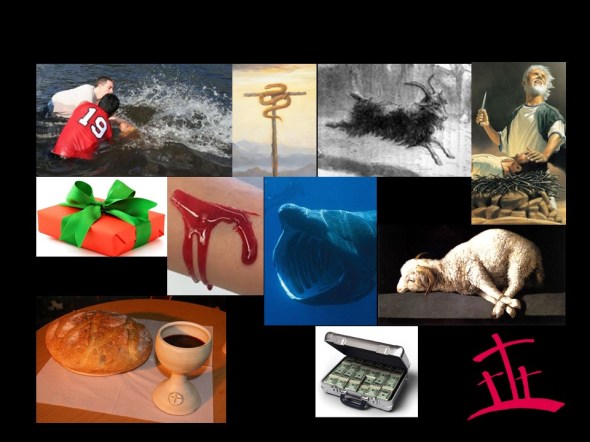
12 images of Christ’s death

Earlier this year consumer advocate Choice found that dried oregano is being padded with substitute olive and sumac leaves. One product contained less than 10% of the real thing, while other brands had just 11-50%. Dried olive and sumac leaves were a cheaper substitute that looked similar to oregano. Some of the suspect samples came from Turkey.
Other food scandals include imitation honey, horsemeat marketed as beef, mislabelled seafood, and peanuts being mixed into ground cumin. These are examples of bad substitution. Today we are looking at a good substitution by God.
Every good drama, movie or story has at least one climax. The climax is the turning point of the story when the main problem is addressed. Today we are looking at the climax of the bible.
In the introduction of the Bible it describes how our earliest ancestors Adam and Eve rebelled against the God who made them and this resulted in all the problems we experience today like evil, pain, suffering, disease and death.
The climax is when God solves the problem of people’s sinfulness. He does this by coming to the earth and taking the punishment that we all deserve – that’s the substitution. The Bible’s climax has two twists. Firstly, Jesus’ followers believe He is the Messiah, but their hopes are dashed when instead of setting up His kingdom on earth, He is executed as a criminal. So their great expectations are replaced by grief and loss. Secondly, a few days after His burial Jesus miraculously resurrects back to life and the grief and loss is replaced with joy! What a dramatic fluctuation in emotions!
There is a movie called “God’s not dead!”. Well today we are looking at when God died. That’s amazing! How could the God with the power to create and sustain the universe die like a human being? We will see that multiple images and symbols are required to convey the message of Christ’s death and its impact.
The symbols of Christ’s death are categorized below as: people, animals, inanimate things, and religious ceremonies.
People
Abraham sacrificing Isaac
Hebrews 11 says, “By faith Abraham, when God tested him, offered Isaac as a sacrifice. He who had embraced the promises was about to sacrifice his one and only son” (Heb. 11:17NIV). When God tested Abraham’s faith about 4,000 years ago, he told him to sacrifice Isaac his only son. At the last minute, God provided a ram to take Isaac’s place. That’s another substitution. This climax in Abraham’s life happened on Mount Moriah, which was also near the place where Christ later died, in Jerusalem (Gen 22:1-14; 2 Chron. 3:1).
Isaac is like Jesus: they were only sons loved by their fathers, and willing to do their father’s will (Gen. 22:2; Mt. 4:17). But there is a difference: Isaac didn’t die as a sacrifice but Jesus did; and Abraham was spared the grief but God wasn’t.
If the death of Jesus is like Isaac bound on the altar, it reminds us of the role of God the Father and God the Son. This symbol also reminds us of how the death of Jesus was God’s plan which depended on Christ’s obedience. It’s all about God.
Jonah swallowed by the big fish
Jesus said, “as Jonah was three days and three nights in the belly of a huge fish, so the Son of Man (Jesus) will be three days and three nights in the heart of the earth” (Mt. 12:40). When Jonah was thrown overboard in a Mediterranean storm in about 760 BC, he was swallowed by a huge fish and he was in the belly of the fish for three days (Jon. 1:17). After this he was vomited onto dry land (Jon. 2:10). Then Jonah preached in Nineveh and when they turned to follow God, the Israelites were relieved of the Assyrian threat.
The Bible says that Jonah is like Jesus: being swallowed by the fish was like Christ’s death, being in the fish for three days was like Christ buried in the tomb and being vomited out was like Christ’s resurrection back to life. It says that “God provided a huge fish to swallow Jonah” (Jon. 1:17). It was God provision. Likewise, God provided Christ’s death for us.
The Bible also says that Jesus rose on “the third day” after His death and burial (Mt. 16:21; 17:23; 20:19; Mk. 9:31; 10:34; Lk. 9:22; 18:33; 24:7, 21, 46; Jn. 2:19; Acts 10:40; 1 Cor. 15:4). The third day means the day after tomorrow (Lk. 13-31-33). Apparently the Jews counted parts of days as whole days.
If the death of Jesus is like Jonah being swallowed by the fish, it reminds us that the death of Jesus was God’s plan. He provided it. This symbol also reminds us that Christ was only dead for three days and then He rose back to new life.
Animals
Animal sacrifices
Animal sacrifices in Old Testament times were also symbols of Christ’s death. For example, the ram that replaced Isaac on Mount Moriah was like Jesus. An innocent animal died as a substitute instead of Isaac. Likewise, although He was sinless, Jesus took our punishment. He died in our place. Paul said, “God demonstrates His own love for us in this: While we were still sinners, Christ died for us”. He died for us. And “Christ loved us and gave Himself up for us as a … sacrifice to God” (Rom. 5:8; Eph. 5:2).
And during the Passover, a lamb was killed and its blood put on the door frames of their houses. The lamb had to be “without defect” (Ex. 12:5). This is like Jesus because Peter said, He was “a lamb without blemish or defect” (1 Pt. 1:19). That’s a metaphor saying He’s like a lamb without blemish or defect. God said, “when I see the blood (on the door frames), I will pass over you” (Ex. 12:13). In this way the Israelites were saved from the death of their firstborn. None of the Israelites died because a lamb had died instead of them. They benefited from the animal’s death. They received mercy instead of judgment. They were protected from God’s judgment. On the next day, in the exodus they were delivered and rescued from slavery in Egypt. After this, the Passover was celebrated annually in remembrance of this great deliverance from slavery.
It’s interesting that Jesus celebrated the Passover on the evening before He died, and He was crucified on the day of the Passover (14 Aviv) – a Jewish day is comprised of a night followed by the daylight hours. Also Paul said, “Christ, our Passover lamb, has been sacrificed” (1 Cor. 5:7). Another metaphor. So the Passover lamb is like Jesus. It died to save the household from God’s judgment.
John the Baptist called Jesus, “the Lamb of God, who takes away the sin of the world” (Jn. 1:29). The lamb was a sacrificial animal among the Jews. It was killed as a substitute and its blood was sprinkled around. Here all humanity benefits from Christ’s death (it’s for “the world”), not just the Jews.
Jewish animal sacrifices (like the burnt, fellowship and guilt offerings, and the day of atonement) that were required under the law of Moses are symbols of the death of Jesus. In all these cases, innocent animal life was given up to protect human life. The judgment and penalty for their sins were carried out through a transfer of the sin of the people to the animal sacrifice. Forgiveness is possible because the penalty of sin (death) is transferred to a sacrificial animal. The animal was a substitute for the people. The Bible says, “without the shedding of blood there is no forgiveness” (Heb. 9:22). The shedding of blood means death.
A major difference between the animal sacrifices and Christ’s death is that the sacrifices continued daily, weekly, and annually, whereas Christ only needed to die once (Heb. 9:26; 10:1, 11-12). His single death fulfilled the animal sacrifices of the old covenant (Heb. 9:7-28; 13:11-12). So there is no need for animal sacrifices anymore (Heb. 10:18). His death was “once for all”. For all time and for all people.
If the death of Jesus is like an animal sacrifice, it reminds us that Jesus died for us. God died for us! The Creator died for His creation! His creatures! This symbol also reminds us that through the death of Jesus we can receive mercy instead of judgment. This symbol will endure because in heaven we will proclaim, “Worthy is the Lamb, who was slain” (Rev. 5:12).
The scapegoat
On the day of atonement, the Jewish High Priest put both his hands on the head of a goat and confessed all the sins of the Israelites and “put them on the goat’s head” (Lev. 16:7-10, 20-22). Their sins were symbolically placed on the goat. And the goat was taken away and released in the wilderness to carry all their sins to a remote place. Symbolically it carried away the sins of the people.
This is similar to what happened at Christ’s death. The sins of the whole world were placed on Jesus Christ. Peter said, ‘“He himself bore our sins” in His body on the cross’ (1 Pt. 2:24). And when He died He took the penalty for them – the wages of sin is death. So they were taken away for ever. Aaron laying his hands on the goat symbolizes the placing of our sins on Christ, to be taken away forever. As the goat substituted for the Israelites, Jesus substituted for us.
If the death of Jesus is like the scapegoat, it reminds us that Jesus died for us. This symbol also reminds us that through the death of Jesus our sins are taken away forever.
The heartbroken wife of Alice Springs man Kevin Reid, shot dead in Georgia US recently, has told of how he died protecting her during a robbery attempt. He moved her out of the way and probably saved her life. She said her husband died a hero. That’s an example of sacrifice.
Inanimate things
The bronze snake
When Jesus taught Nicodemus about the source of spiritual life, He said “Just as Moses lifted up the snake in the wilderness, so the Son of Man (Jesus) must be lifted up, that everyone who believes may have eternal life in Him” (Jn. 3:14-15). So He referred to an incident when the Israelites were travelling through the wilderness towards Canaan in about 1400 BC (Num. 21:5-9). When they complained about God and Moses causing their poor living conditions, God sent venomous snakes and many died. After Moses prayed for the people, God told him to make a bronze snake and put it up on a pole and “anyone who is bitten can look at it and live”. If they looked, they were delivered and healed of the snakebite. God provided a way to save them from death.
Jesus was saying that He must be lifted up on a pole (the cross) like the bronze snake, so that sinners looking to Him by faith might have everlasting life. The next verse says “For God so loved the world that he gave His one and only Son, that whoever believes in Him shall not perish but have eternal life” (Jn. 3:16). That’s the context of this famous verse. It’s all about how God used the crucifixion to provide a way to save people from spiritual death. The death of Christ was how God loved the world and how He gave His only Son. Like the bronze snake, God has done His part. But we need to do something as well. Just as the Israelites needed to look at the snake on the pole to live, belief, acceptance and trust in God’s act of love is the only way to change our destiny from eternal death to eternal life.
If the death of Jesus is like the bronze snake, it reminds us that His death is the only way to eternal spiritual life. This symbol also reminds us that if we don’t accept that the death of Christ paid the penalty for our sins, we are doomed to eternal spiritual death.
The cross
As Christ was crucified on a Roman cross, the word “cross” can be used as a figure of speech for Christ’s death. For example, Hebrews says, “For the joy set before Him He (Jesus) endured the cross, scorning its shame, and sat down at the right hand of the throne of God” (Heb. 12:2).
As Christ’s crucifixion resulted in the good news of salvation, the word “cross” is also used as an extended figure of speech for the Christian gospel. For example, Paul said, “the message of the cross is foolishness to those who are perishing, but to us who are being saved it is the power of God” (1 Cor. 12:18). The “message of the cross” is the good news (gospel) about the death of Christ. It’s belief in Christ’s death, burial, and resurrection to forgive sins. This is nonsense to unbelievers. But for believers it’s the power of God because God is at work in proclaiming the message and convicting sinners to come to faith in Christ. So both the word “cross” (Gal. 1; Eph. 2:16; Col. 2:13-14), and the phrase the “cross of Christ” (1 Cor. 1:17; Gal. 6:12, 14; Phil. 3:18;) are used to mean the gospel of Christ and all its benefits.
If the death of Jesus is symbolized by the cross, I’m reminded that there were three crosses. This symbol also reminds us of the impact of Christ’s death. The man on one cross believed that the death of Christ paid the penalty for his sins, while the other man rejected this opportunity.
Blood
The word “blood” is often used as a symbol of death in the Old Testament. And “shedding blood” means murder. Also, blood had a special role in animal sacrifices. The animal’s blood was evidence that the penalty (of death) had been paid. This is summarized in the New Testament, “the law requires that nearly everything be cleansed (ceremonially purified) with blood, and without the shedding of blood there is no forgiveness” (Heb. 9:22). And covenants were confirmed by blood from animal sacrifices (Ex. 24:6-8).
In the New Testament, blood is often a symbol of Christ’s death. For example, Pilate told the Jews, “I am innocent of this man’s blood” (Mt 27:24-25). And the people replied “His blood is on us and on our children!”. Paul said, “In Him we have redemption through His blood, the forgiveness of sins” (Eph. 1:7). And John said, “the blood of Jesus … purifies us from all sin” (1 Jn. 1:7). Here the word “blood” means Christ’s death. By the way, Christ’s physical blood had no miraculous power or properties, but was just like that of any other person.
Jesus didn’t bleed to death, but the terms used in the Bible for Christ’s death include: the blood of Jesus, the blood of Christ, the blood of the Lamb, His own blood, His blood, my blood, and your blood. This symbol occurs so often, that it can be called a motif, which is a recurring element in a story that has symbolic significance. In their repetition, motifs emphasize what’s most important about a story. For example, in his most famous speech, Martin Luther King Jr. used “I have a dream” as a motif to tie together different ideas such as a quote from the US Declaration of Independence and people who once were at odds sitting down together.
The noun “blood”, is also used as an extended figure of speech for the Christian gospel and all the benefits of Christ’s death. These benefits associated with the figurative “blood of Christ” include:
- Redemption (Eph. 1:7; 1 Pt. 1:18-19), like being released from slavery.
- Salvation, like being delivered from danger.
- Forgiveness (Eph. 1:7), like cancelling debts.
- Reconciliation, like restoring a broken relationship, and having peace with God (Rom. 1:20).
- Justification (Rom. 5:9), like acquittal from condemnation and guilt.
- Adoption, like an orphan finding a new family.
- Sanctification (Heb. 10:10; 13:12; 1 Jn. 1:7), like gaining Christ’s righteousness, being holy and set apart for God. And cleansing from sin, like “takes away the sin of the world” (Jn. 1:29); “the blood of Jesus, His Son, purifies us from all sin (1 Jn. 1:7); “has freed us from our sins by His blood” (Rev. 1:5); and “they have washed their robes and made them white in the blood of the Lamb” (Rev. 7:14).
All of these benefits are associated with the term, the “blood of Christ”.
If the death of Jesus is symbolized by blood, it reminds us of all the animal sacrifices in the Old Testament. This symbol also reminds us of all the benefits of Christ’s death.
The torn curtain
When Jesus died, the heavy curtain that separated the Jewish temple in Jerusalem into two rooms (Ex. 26:31-33) was torn in half from the top to the bottom (Mt. 27:51; Mk. 15:38; Lk. 23:45). As the ark of the covenant symbolized God’s throne and presence in the Most Holy Place, the curtain separated sinful humanity from a holy God. The only person who was allowed into the inner room (the Most Holy Place), was the High Priest who could only enter once per year on the Day of Atonement after the necessary animal sacrifices had been offered.
As the curtain symbolized Christ’s body, its tearing symbolized His death (Heb. 6:19-20; 10:19-20). The tearing of the curtain signified that through Christ’s death believers have direct access to God (Heb. 9:11-14; 10:19-22). It symbolized a new era of access to God for all nationalities, not just the Jews.
If the death of Jesus is symbolized by the torn curtain, it reminds us of the beginning of a new relationship with God. This symbol also reminds us that Christ’s death is the only way for people to approach God the Father.
A ransom
Jesus came to “give His life as a ransom for many” and He “gave Himself as a ransom for all people” (Mt. 20:28; Mk. 10:45; 1 Ti. 2:6). A ransom was the price paid to free a slave. Similarly, Christ paid the ransom price of His own life to free us from spiritual death and the slavery of sin. He died on behalf of us all, but not all will accept this offer of freedom.
If the death of Jesus is like a ransom, it reminds us that a cost was involved and God the Father and Jesus made that payment. This image also reminds us of the benefits of Christ’s death for believers – it’s like being freed from slavery.
A gift
John 3:16 says “For God so loved the world that He gave His one and only Son (as a gift), that whoever believes in Him shall not perish but have eternal life”. And God “did not spare His own Son, but gave Him (as a gift) up for us all” (Rom. 8:32). And Paul says that Jesus “gave Himself (as a gift) for our sins” as “a sacrifice to God” (Gal. 1:4; 2:20; Eph. 5:2).
A gift involves a giver and a receiver. Here the gift is salvation through Christ’s death and resurrection. The givers are God the Father and His only Son, Jesus. And the receivers are those who accept God’s supreme gift.
If the death of Jesus is like a gift, it reminds us of the love and generosity of the divine givers. This image also reminds us that we need to accept the gift in order to receive its benefits.
In March this year, Ryan Martin drowned just minutes after saving the life of a young girl near Coolangatta. He was one of a number of people who went to the girl’s aid. He didn’t know the girl, he just saw her in trouble and went to help. She was carried safely to shore but moments later Mr Martin began to struggle against the rough current. Surf lifesavers pulled him from the water but were unable to revive him. A friend said “He sacrificed himself to save the life of a young girl. The act of a true hero”. He gave her the gift of life, when she faced death.
Religious ceremonies
Water baptism
Christian baptism is a public identification with the death, burial, and resurrection of Christ (Rom. 6:3-11). People are baptised by being immersed in water. It’s like a short version of Jonah being swallowed by the big fish. But they are under the water for a few seconds rather than three days! Going into the water is like death by drowning. Staying under the water is like burial, and coming up out of the water is like resurrection. It’s a drama that shows we are united with Christ’s death and should no longer be slaves to sin. And instead of being raised like Christ, we have a new spiritual life. Paul said “if anyone is in Christ, the new creation has come: The old has gone, the new is here!” (1 Cor. 5:17).
Paul summarized the gospel message as: “what I received I passed on to you as of first importance: that Christ died for our sins according to the Scriptures, that He was buried, that He was raised on the third day according to the Scriptures” (1 Cor. 15:3-4). Christ’s death was the payment for sin. His burial was the proof of His death. And His resurrection was the proof of God the Father’s acceptance of the sacrifice of Christ, and that death is conquered.
If the death of Jesus is symbolized by baptism, it reminds us of its power over sin and Satan. This symbol also reminds us of how the death of Jesus can bring a new spiritual life.
The Lord’s supper
At His last Passover, Jesus told His disciples to remember Him regularly like the Jews had remembered the Passover associated with the exodus from Egypt. They were to do it by communally eating bread and drinking wine. The bread and wine were metaphors of Christ’s death. When Jesus said “This is my body given for you; do this in remembrance of me” (Mt. 26:26; Lk. 22:19; 1 Cor. 11:24), He meant that the broken bread represented His broken body. When Jesus said, “This is my blood of the covenant, which is poured out for many for the forgiveness of sins” (Mt. 26:28; Lk. 22:20; 1 Cor. 11:25). He meant that the wine represented blood, which was a symbol of His death.
As the old Mosaic covenant between God and the Israelites was confirmed by blood from animal sacrifices (Ex. 24:6-8), the new covenant was confirmed by Christ’s death.
If the death of Jesus is symbolized by the Lord’s Supper (the bread and wine), it reminds us that His death is the source of our spiritual life. This symbol also reminds us that the new covenant is superior to the old one and to all other religions.
Summary
 We have looked at several symbols of Christ’s death from the Bible. They show that: It depends on God the Father and God the Son like Abraham sacrificing Isaac. It’s followed by resurrection like when Jonah was swallowed and vomited out by the big fish. In it Jesus was our substitute like an animal sacrifice – He took our punishment so we could receive God’s forgiveness and mercy. Through it, a believer’s sins are taken away forever like the scapegoat. It’s the only way from spiritual death to spiritual life like the bronze snake. It offers a choice to accept or reject like the choices made by those on the other two crosses. It has many benefits associated with the motif of blood. It began a new relationship with God like the torn curtain. It results in freedom like a ransom. It needs to be accepted like a gift. It gives power over sin and Satan like baptism. And it’s superior to the old Jewish covenant and all other religions like the Lord’s supper.
So multiple images and symbols are required to convey the message of Christ’s death and its impact.
In response, have you accepted God’s gift of forgiveness and salvation? Have you entered into the new relationship with God? Have you transformed from spiritual death to spiritual life? It’s the most important thing we can do. If not, confess your sinfulness like that criminal on the cross, who turned (repented) to trust that through Christ’s sacrificial death he could be reconciled with God.
If we are believers: When we realize what they have done for us, how often do we thank God the Father and Jesus for this great sacrifice? Do we keep meeting collectively to obey the Lord’s command to “do this in remembrance of me” (Lk. 22:19; 1 Cor. 11:24-25). Do we appreciate the exchange: Jesus took our punishment so we could receive God’s forgiveness and mercy? Are we assured that our sins are taken away forever? Are we free of the slavery of sin? Do we realize the implications of Christ’s resurrection and our new spiritual life? Is our spiritual life evident? And do we appreciate all the benefits associated with salvation?
Written, September 2016
Also see: Blood as a symbol of death in the Old Testament
Share this:

The greatest

 Muhammad Ali, former world heavyweight boxing champion, died recently.
The greatest boxer
Born in Louisville, Kentucky as Cassius Clay, he won an Olympic gold medal at Rome in 1960. At the turn of the millennium, Ali was voted man of the century, sportsman of the century, and personality of the century. In 1999 Ali was named Sportsman of the Century by Sports Illustrated and Sports Personality of the Century by the BBC.
After beating Sonny Liston in 1964 to become the world heavyweight boxing champion, Clay boasted, “I am the greatest!” Then he changed his name to Muhammed Ali. Ali dominated boxing in the 1960s and 1970s and held the heavyweight title three times. His fights were among the most memorable and spectacular in history, but he quickly became at least as well known for his colorful personality and his showy antics in the ring.
“Float like a butterfly, sting like a bee,” was one of many phrases Ali used to describe what he could do in the ring, while “I am the greatest” was a common catchcry. He was a charismatic boxer with a flair for showmanship. His courage inside and outside the ring and his verbal taunting of opponents were legendary, as were his commitment to justice and his efforts for the sick and underprivileged.
Muhammad Ali was an entertainer. He leaves behind a legacy of thrilling fights, trash talk poetry and taking a stand against racism, inequality and war.
Bill Clinton praised his stunning gifts: his strength and speed in the ring, his wit and way with words and managing the public and his mind and heart. And he said that Ali was smart.
Although Ali received many accolades, he wasn’t the greatest man to have lived. Here’s what the Bible says about Jesus Christ.
The greatest ever
“Christ is the visible image of the invisible God.
He existed before anything was created and is supreme over all creation, for through Him God created everything in the heavenly realms and on earth.
He made the things we can see and the things we can’t see—such as thrones, kingdoms, rulers, and authorities in the unseen world.
Everything was created through Him and for Him.
He existed before anything else, and He holds all creation together.
Christ is also the head of the church, which is His body.
He is the beginning, supreme over all who rise from the dead.
So He is first in everything.
For God in all His fullness was pleased to live in Christ, and through Him God reconciled everything to Himself.
He made peace with everything in heaven and on earth by means of Christ’s blood on the cross” (Col. 1:15-20NLT).
Because He is “first in everything” and “supreme over all creation”, Jesus Christ is indeed “The Greatest!”. He is supreme in creation (He created everything and holds it all together) and in redemption (He died to enable us to be reconciled and have peace with God).
Jesus Christ is not only supreme in the physical world, but also in the spiritual world. He’s the source of spiritual life, the first to be resurrected with a glorified body and the leader of a new creation.
So, Jesus is supreme and unique in greatness.
Lessons for us
Although Ali was called “A man of faith” who was “deeply religious and spiritual”, he wasn’t spiritually smart. Everyone has some kind of faith, but it’s what we are trusting in that counts. At his Muslim funeral service (jenazah), there were prayers for his sins to be forgiven, for him to be “surrounded by light”, and for him to be accepted into heaven. Unfortunately, it’s too late to pray for these after someone’s death. These are matters to be decided during one’s life, not afterwards. It seems that Ali rejected the strong spiritual foundation of the Bible which he knew about as a youth and accepted a weaker one instead.

Although Muhammad Ali was a great boxer, his achievements are insignificant compared to those of Jesus Christ. While, Ali’s body rests in Cave Hill Cemetery, Jesus sits at the right hand of God. Ali was praised in eulogy, but Jesus Christ will be praised universally: “To Him … be praise and honor and glory and power, for ever and ever!” (Rev. 5:13). Over time Ali will be forgotten, but Jesus will be praised eternally.
Jesus said, “And what do you benefit if you gain the whole world but lose your own soul? Is anything worth more than your soul?” (Mt. 16:26). So, wealth doesn’t help our eternal destiny. Fame doesn’t help our eternal destiny. Religious observance doesn’t help our eternal destiny. And good works (and it seems as though this was how Ali thought he would get to heaven) don’t help our eternal destiny. All these can take so much of our time and energy that we can miss the central purpose of our life (eternal life and following Christ) and spend eternity in hell. In the big picture nothing matters without faith in Christ.
Let’s be spiritually smart and trust in Jesus Christ. He’s the greatest of all, not Muhammad Ali.
Written, June 2016
Share this:

What’s the Holy Spirit like?


11 Biblical images of the Holy Spirit
 It’s Australia’s State of Origin match for rugby league football today. Can the Blues (New South Wales, also called the cockroaches) win or will it be the Maroons (Queensland, also called the canetoads)? It will be a tough game. Defence is vital. The big men will run at the smaller ones. And there will be big collisions and hits. Life can be a struggle like that. How can we get though? Satan can attack us like an opposition footballer. In this post we will see how God helps Christians in daily life.
In particular, we will look at what the Holy Spirit is like from the images given in the Bible.
The big picture
The Bible says that there are three aspects of God: Father, Son and Holy Spirit. That’s where the word “Trinity” comes from. God the Holy Spirit is invisible because He is spirit and not part of the physical world. So, He doesn’t have a body like us.
Spirits, such as angels and demons, are invisible beings. When the Greek adjective hagios, which is translated “holy” (Strongs #40), is used with the word “spirit” it refers to a spirit that is divine, which is the Holy Spirit. The core meaning for “holy” is “different”. In the New Testament it often means set apart by God or set apart for God. It’s also used to describe things or people associated with God and the attribute of purity and sinlessness.
God the Father sent Jesus to earth to be our Savior by sacrificing His life. He came as a baby (which is called the incarnation) who grew up to be a man. After this, Jesus returned to heaven and God sent the Holy Spirit to earth to live in all those who repent of their sin and trust in Christ’s sacrifice. The Holy Spirit was sent to earth on the day of Pentecost (Acts 2; 1 Pt. 1:12). Since then He lives in believers from the time of their conversion (Rom. 8:9; Eph. 1:13-14). And He will be with them forever (Jn.14:16). Jesus said, “I am with you always, to the very end of the age (Mt. 28:20NIV). But Jesus is in heaven, seated at the right hand of the Father. Instead He’s with us spiritually by the Holy Spirit. One of the names of the Holy Spirit is “Spirit of Christ” (Rom. 8:9; 1 Pt. 1:11). This is different to Old Testament times, when the Holy Spirit came on people for a while and then left them (1 Sam. 16:14; Ps. 51:11).
The Holy Spirit’s mission is to testify about Jesus (Jn. 15:26). He guided those who wrote the New Testament (Jn. 16:13). He also convicts people of sin (Jn. 16:8-11). He empowers Christians to live by the Spirit and “not gratify the desires of the sinful flesh” (Galatians 5:16). Then the Holy Spirit can produce His fruit in our lives (Galatians 5:22–23). The Holy Spirit also supports good (1 Cor. 12:3) and restrains evil (Gen. 6:3; 2 Th.2:5-8).
We will see that the Bible uses figures of speech to describe the Holy Spirit. That’s one way of describing someone who is invisible.
Metaphors as images of the Holy Spirit
The best way to know what the Holy Spirit is like is to look at what the Bible says about Him because it’s a message from God. In particular, we’re looking at images of the Holy Spirit in the Bible. These are mainly metaphors which are powerful images that show what the Holy Spirit does.
Lawyer
The Holy Spirit is like a lawyer. A lawyer (or advocate or intercessor) helps defend people who are accused of breaking a law. They give evidence that stands up in court.
Jesus asked the Father to give His disciples “another advocate to help you and be with you forever” (Jn. 14:16, 26; 15:26; 16:7). An advocate supports a position or viewpoint and this is what the Holy Spirit did for the preaching of the disciples. Paul said, “the Spirit helps us in our weakness” (Rom 8:26-27). He intercedes for us with God the Father by praying for us. So the Holy Spirit is on our side.
Jesus is also like a lawyer (or advocate or intercessor) – He represents Christians to God the Father (1 Jn. 2:1). He is the “other advocate” (Jn. 14:16). When we sin, Jesus pleads with God the Father for a pardon. He pleads our case on the basis of His death, by which forgiveness of sins was made possible. He is our mediator with God the Father (1 Tim. 2:5). He’s at God’s right hand, interceding for us (Rom. 8:34; Heb. 7:25). So Jesus is also on our side.
So we have the best defence team, Jesus and the Holy Spirit. They can also defend us against accusations by Satan. Paul says, “If God is for us, who can stand against us?” (Rom. 8:31). The answer is, no-one.
If the Holy Spirit is like our lawyer, then we have the best possible helper. This image reminds us of how the Holy Spirit helps us get through the trials and troubles of life and supports our witnessing.
Dove
The Holy Spirit is also like a dove. A dove is a symbol of peace, love and innocence. When Jesus was baptized, “the Holy Spirit descended on Him in bodily form like a dove” (Mt. 3:16; Mk. 1:10; Lk. 3:22; Jn. 1:32).
After the flood, Noah sent out a dove that returned with an olive leaf (Gen. 8:11), which symbolized peace with God. The dove announced deliverance from the flood, and at Christ’s baptism, the Holy Spirit in the form of a dove announced deliverance from sins.
Because of their courtship, their joint care of young, and the tender loving care between the parents, doves were symbols of romantic love in the ancient Near East. For example, “my dove” was used as a term of endearment between lovers (Song. 2:14; 5:2; 6:9).
When Jesus sent His disciples to preach to the Jews, He told them to be “as shrewd as snakes and as innocent as doves” (Mt. 10:16).
If the Holy Spirit is like a dove, then He is associated with peace, love and innocence. This image reminds us of the love, peace and goodness in the fruit of the Spirit which the Holy Spirit produces in the life of the believer (Gal. 5:22-23).
Next, the Holy Spirit is like certain inanimate objects.
Inanimate objects
Wind
The Holy Spirit is like wind, which is the movement of air from a region of high pressure to one of lower pressure. The wind moves and is invisible but we can see its effect on clouds, flags and leaves. And we can feel wind, particularly when it’s very hot or very cold.
Jesus told Nicodemus that “no one can see the kingdom of God unless they are born again” spiritually (Jn. 3:3). He is saying that just as the first (physical) birth is necessary for physical life, so a second (spiritual) birth is necessary for spiritual life. Christ’s kingdom can only be entered by those whose lives have been changed. Since His reign will be a righteous one, His subjects must be righteous also. He couldn’t reign over people who were going on in their sins. This spiritual birth is produced by the Holy Spirit when a person believes in the Lord Jesus Christ (Jn. 3:6, 8). When a person is born again through the Spirit, they receive a new nature, and so are fit for the kingdom of God. Then Jesus gave an illustration, “The wind blows wherever it pleases. You hear its sound, but you cannot tell where it comes from or where it is going. So it is with everyone born of the Spirit” (Jn. 3:8). The Greek noun for “Spirit” is the same as for “wind” (Strongs #4151). The word can mean spirit, Spirit, wind or breath, depending on the context. The same applies to the Hebrew word for these nouns in the Old Testament (Strongs #7307). Jesus is saying that the Holy Spirit and spiritual birth are like the wind. He’s using the physical to illustrate the spiritual. We can’t control or fully understand the invisible origin and movement of the wind or the Holy Spirit. Both the wind and spiritual birth are unpredictable. We don’t know just when and where it will take place.
On the day of Pentecost when the Holy Spirit came to live in the disciples, “a sound like the blowing of a violent wind came from heaven” (Acts 2:2). So there was an audible sign of this event.
If the Holy Spirit is like wind, then although He’s invisible, He’s life-giving (we need air) and powerful. This image reminds us of the Holy Spirit’s role in giving us spiritual life.
Running water
The Holy Spirit is also like running water, which like air is a dynamic fluid that’s essential for physical life. In ancient times settlements were near wells and waterways. Water also washes, purifies and refreshes (Ps.51:7).
When Jesus preached to the Jews during the Festival of Tabernacles He said, ‘“Let anyone who is thirsty come to me and drink. Whoever believes in me, as Scripture has said, rivers of living water will flow from within them”. By this He meant the Spirit, whom those who believed in Him were later to receive. Up to that time the Spirit had not been given, since Jesus had not yet been glorified’ (Jn. 7:37-39). He is quoting from Isaiah where there is a gospel invitation to those who are thirsty (who sense their need) to “come to the waters” (Isa. 55:1). If they do this and live godly lives, they are promised “The Lord will guide you always; He will satisfy your needs in a sun-scorched land and will strengthen your frame. You will be like a well-watered garden; like a spring whose waters never fail” (Isa. 58:11). John explains that the “rivers of living water” was a metaphor for the Holy Spirit “whom those who believed in Him were later to receive” at Pentecost. A river channels water. This water can be used to irrigate crops, which bring a harvest. So if you are spiritually thirsty, accept Jesus as your Savior and the Holy Spirit will immediately come and empower your life and produce the fruit of the Spirit.
This happened on the last day of the Festival. So they had been celebrating for 7 days before Jesus said “Let anyone who is thirsty come to me and drink”. Obviously, their religious observance hadn’t met their spiritual needs. So He invited them to come to Him for spiritual satisfaction by trusting Him as Savior. The same principle applies today. If you have a spiritual need because the gods of this world don’t satisfy or because you are aware of our sinfulness, then learn about what Jesus has done for us.
If the Holy Spirit is like a running water, then He is life-giving (we need water) and He satisfies our spiritual needs. This image reminds us that the impact of the Holy Spirit leads to spiritual growth and the fruit of the Spirit.
Olive oil
The Holy Spirit is also like olive oil, which was used in Old Testament times to anoint prophets, priests and kings for ministry to their offices (Ex. 29:7; 30:30; 1 Sam. 16:13; 2 Sam. 5:3; 1 Ki. 19:16; Isa. 61:1). In this case anointing with olive oil symbolized the coming of the Holy Spirit. The words “Messiah” and “Christ” mean “anointed one”. Also, it was courtesy, honoring and respectful to anoint the head of a guest with oil (Ps. 23:5; Lk. 7:46). And in those days the oil lamp was their only source of light at night (Mt. 25:3-4).
Jesus quoted from Isaiah when He said “The Spirit of the Lord is on me, because He has anointed me to proclaim good news to the poor” (Isa. 61:1; Lk. 4:18). The phrase “He has anointed me” refers back to Jesus’ baptism (Lk. 3:21-22). So He was anointed with the Holy Spirit, not with oil.
Peter told Cornelius that “God anointed Jesus of Nazareth with the Holy Spirit and power” (Acts 10:38). Paul wrote, “God has anointed us” and then mentions the Holy Spirit (2 Cor. 1:21). So Christians are also anointed with the Holy Spirit.
In the context of discerning truth from the error of false teachers, John wrote “you have an anointing from the Holy One (Jesus), and all of you know the truth” (1 Jn. 2:20). The anointing refers to the Holy Spirit. So the Holy Spirit helps believers to discern between truth and error. The Holy Spirit exposes false teachers when we test them against Scripture (1 Jn. 2:26-27). In His warning against false teachers, John says that because we received the Holy Spirit, we don’t need any spiritual teaching apart from what is found in the Bible. The Holy Spirit will help us understand what we need to know about salvation and Christian living.
If the Holy Spirit is like olive oil, then He empowers us for ministry and service. This image reminds us that the Holy Spirit will help us understand the Bible and apply it to our daily lives.
Fire
The Holy Spirit is also like fire. In ancient times, fires satisfied many human needs by producing heat and light. It was also used to purify precious metals (Mal. 3:2-3) and was a symbol for God. God is like “a consuming fire” (Dt. 4:24; Heb. 12:29) towards those who reject Him for idolatry. He made the covenant with Abraham as a burning torch (Gen. 15:17), spoke to Moses from the burning bush (Ex. 3:2), and guided the Israelites at night with a column of fire (Ex. 13:21; Num. 9:15-16).
On the day of Pentecost when the Holy Spirit came to live in the disciples, “They saw what seemed to be tongues of fire that separated and came to rest on each of them. All of them were filled with the Holy Spirit …” (Acts 2:3-4). So there was a visual sign of this event. It doesn’t say they were tongues of fire, but that’s what they seemed to be. The tongues may refer to the miraculous gift of speaking in other languages. The fire may refer to the Holy Spirit as the source of this gift and may also describe the bold enthusiastic preaching that followed (Acts 4:31).
Paul said “Do not quench the Spirit” (1 Th. 5:19). He was warning against hindering the work of the Holy Spirit in the local church. The Greek word translated “quench” (Strongs #4570) occurs 8 times in the New Testament. In 6 of these it means extinguishing a flame or fire. Another one is metaphorically extinguishing “flaming arrows” (Eph. 6:16). Therefore, it’s reasonable to infer that this verse is also a metaphor where the Holy Spirit is taken to be like a fire.
If the Holy Spirit is like a fire, then He is divine and can enable us to be filled with His Spirit. This image reminds us that the Holy Spirit enables the local church to function harmoniously using the gifts of the Spirit.
Seal
The Holy Spirit is also like a seal, which is evidence of ownership and security. In ancient times official documents were sealed with hot wax and an imprint was made on the wax with the official seal of the person sending the document (Neh. 9:38 – 10:1; Est. 8:8). Last year I obtained an apostille for my son so a document would be accepted in France. The certificate is attached to the document being verified and they are then embossed with an official government seal so it is evident if any of the pages have been removed.
Paul said, “He (God) anointed us, set His seal of ownership on us, and put His Spirit in our hearts” (2 Cor. 1:21-22). And, “When you believed, you were marked in Him (Christ) with a seal, the promised Holy Spirit” (Eph. 1:13). The Spirit indwelling the believer is the mark that they belong to God and are eternally secure. The only visible evidence of this is a spirit-filled life. We are now God’s property. Our body is the temple of the Holy Spirit (1 Cor. 3:16; 6:19). In this sense, it’s a sacred place because it’s inhabited by a sacred person.
Paul said, “And do not grieve the Holy Spirit of God, with whom you were sealed for the day of redemption” (Eph. 4:30). We are sealed until the Rapture when our salvation is complete and our bodies are resurrected and changed. Here our ownership and security is said to be a reason why we should not sin.
If the Holy Spirit is like a seal, then we are owned by God and spiritually safe and protected. This image encourages us to care for our bodies and gives us reasons not to sin.
Deposit and first-fruits
The Holy Spirit is also like a deposit and first-fruits. A deposit is the first payment for something, with the balance being payable later. Because all of creation belongs to God, the Israelites were commanded to offer the first and best of their animals and produce to God (Lev. 23:9-14). These first-fruits were considered a promise of the coming harvest.
Paul says that God “put His Spirit in our hearts as a deposit, guaranteeing what is to come” (2 Cor. 1:22; 5:5) and the Holy Spirit is “a deposit guaranteeing our inheritance until the redemption of those who are God’s possession” (Eph. 1:14). So this deposit is like the first instalment of a sum of money that has been inherited and it comes with a guarantee that the balance will be paid later. As we receive the Holy Spirit, we will also receive the full inheritance of God. This inheritance includes our bodies being transformed to be like Christ at the Rapture and reigning with Him at the second coming (Rom. 8:17; Phil 3:21).
Paul says that believers “have the first-fruits of the Spirit” as they wait eagerly for the redemption of their bodies (Rom. 8:23). Just as the first handful of grain is a pledge of the entire harvest to follow, so the Holy Spirit is a guarantee of the full salvation that is yet to come, including the redemption of our bodies. Our spirits and souls have already been redeemed, and our bodies will be redeemed at the Rapture (1 Th. 4:13-18). By the way, Jesus is also a first-fruit of the coming resurrection (1 Cor. 15:20).
If the Holy Spirit is like a deposit and first-fruits, then our inheritance is guaranteed and protected. This image gives us assurance and confidence in the inheritance that God has promised for His people.
Power supply
The Holy Spirit is also like a power supply. A power supply like power stations and batteries enables work to be done. Our phones and tablets are useless unless their batteries are charged. And there has been a power crisis in Tasmania since the power cable from Victoria was cut in December 2015.
Jesus told His disciples to wait in Jerusalem until they were “clothed with power from on high” because when the Holy Spirit came on the Day of Pentecost, they would receive power to witness throughout their known world (Lk. 24:49; Acts 1:8). The apostles preached the gospel in the power of the Holy Spirit. And Christians today have spiritual power which enables them to obey the great commission (Mt. 28:19-20). This power comes from the Holy Spirit (Eph. 3:16, 20).
If the Holy Spirit is like a power supply, then Christians have more power to live for God than we realize. This image encourages us to be ready to share our Christian faith.
Next, the Holy Spirit is likened to an attribute.
Attribute
Voice
The Holy Spirit is also like a voice which instructs and warns. His words to the prophets and apostles are preserved for us in the Bible. I imagine it was a bit like the voice of a GPS that instructs as we drive.
Isaiah told Judah that when they repented “Whether you turn to the right or to the left, your ears will hear a voice behind you, saying, “This is the way; walk in it” (Isa. 30:21). And they will obey the instruction. Jesus told His disciples “when He, the Spirit of truth, comes, He will guide you into all the truth. He will not speak on His own; He will speak only what He hears, and He will tell you what is yet to come” (Jn. 16:13). And they wrote this truth in the New Testament. For example, in Hebrews 3:7-11 the Holy Spirit gave a warning from Psalm 95 and gives the application in verses 12-15. This shows that God speaks in Scripture, even to generations subsequent to its time of writing (Hebrews was written about 770 years after Isaiah). And the apostles were told “When they arrest you, do not worry about what to say or how to say it. At that time, you will be given what to say, for it will not be you speaking, but the Spirit of your Father speaking through you” (Mt. 10:19-20). So the Holy Spirit would give them the words to say in situations such as sudden arrest when there is no time to prepare what to say.
If the Holy Spirit is like a voice, then He can guide us today through the Bible. This image reminds us that God can use the Holy Spirit to speak to us through our conscience.
The Holy Spirit is also like a teacher, seven spirits, and seven lamps (Jn. 14:26; Rev. 1:4-6; 4:5).
Summary
 We have looked at several images (metaphors) of the Holy Spirit from the Bible.
They show that He:
Defends and helps like a lawyer.
Brings love and peace like a dove.
Is powerful like wind.
Satisfies like running water.
Empowers like olive oil and a power supply.
Sustains the church like a fire.
Protects us like a seal.
Guarantees our inheritance like a deposit and first-fruits.
And, guides like a voice.
So the Holy Spirit operates behind the scenes and not in the limelight. He helps, empowers, sustains, and guides. And He implements all of God’s plans. The Spirit is mentioned throughout the Bible: He’s there in the background making it all happen.
In response:
Is our spirituality based on the Holy Spirit and what He’s revealed to us in the Bible?
Are we aware of the Holy Spirit’s help and support?
Are we experiencing love and peace?
Do we realize His power?
Are we spiritually satisfied?
Are we empowered for ministry and service?
Is our church life sustainable?
As we assured of our spiritual protection?
Are we assured of our inheritance?
And, are we following what we learn from Scripture?
It’s amazing! God created everything in the beginning. Later He (Jesus) died for us, so we can have spiritual life. Now He (the Holy Spirit) lives in in us and helps us. He is the “power that is at work within us” (Eph. 3:20).
We have looked at two words today, “holy” and “Spirit”. May we be more holy and more spiritual by living in the power of God’s Holy Spirit as He gives us spiritual life and enables us to live the Christian life.
Written, June 2016
Also see: What’s God like?
What’s Jesus like?
Share this:

Apocalyptic imagery: Batman versus Superman in “Dawn of Justice”
 This recent Hollywood blockbuster features Superman and Batman in violent battles to save the world from destruction. They also battle each other. The whirlwind of effects-driven action is visually stunning. Devastation abounds with an atmosphere of gloom and doom.
But, although the movie features futuristic technology, ancient apocalyptic and theological themes are evident.
Heroes
Superman is a god-like figure. But he’s seen as a threat to humanity (like Jesus was viewed by the Jewish religious leaders). That’s why Batman fights Superman, even though they are both meant to be heroes.
Superman is a Jesus-like modern-day savior. A super-hero. Like Jesus, he has a human form. And like Jesus, he finishes up in a grave.
In one of the battle scenes there is a silhouette of a cross on the horizon amongst the wreckage. Is this an intentional biblical link or is it accidental?
In fact, there’s a trinity of heroes in this movie – Superman, Batman and Wonder Woman (an immortal warrior). This reminds me of the triune biblical God – the Father, Son and Holy Spirit. So there are plenty of heroes in this virtual universe.
Villains
But, a movie needs villains as well as heroes. The super-villain is Lex Luthor who frames Superman. He’s willing to do whatever it takes to bring Superman down. He also manipulates Batman and Superman to heighten their animosity toward each other. This reminds me of Satan tempting Jesus (Mt. 4:1-11).
Luthor is a Satan-like figure. At the end of the movie he is arrested and imprisoned. This reminds me that in future Satan will be imprisoned for a thousand years (Rev. 20:1-3).
Sequel
Although Superman is killed and buried at the end of the movie, a faint heartbeat echoes from his coffin and the dirt around it begins to levitate! Clearly, it’s not the end of Superman. There will be a sequel that fans can look forward to.
This reminds me that Jesus miraculously rose from the dead three days later. The Bible says that, because of this, humanity can be rescued from their world of gloom and doom into God’s world of love, joy, peace and hope. There is a future that Christians can look forward to.
Violent battles
This movie is full of violent battles. The Bible is also full of battles. In the Old Testament the Israelites battle against their enemies and in the New Testament there are several battles. Christians suffer persecution. Christians also face personal battles such as Paul struggling against his sinful desires (Rom. 8:15-25). And there are many battles in the apocalyptic world described in the book of Revelation.
In Revelation there are the four horsemen who symbolize wars, famines, plagues, and wild beasts that bring death to 25% of the population (Rev. 6). Also, natural disasters are prevalent (Rev. 6:12-14; 8:7-12). People will be tortured (Rev. 9:3-11). Four demons kill 33% of humanity (Rev. 9:14-19). God’s witnesses will be martyred (Rev. 6:9-11; 11:1-13). Satanic leaders are called beasts (Rev. 13). Then there’s more plagues and natural disasters culminating in the battle of Armageddon (Rev. 16). Finally, Jesus comes as a warrior to defeat all of those who oppose Him (Rev. 19:11-21). I wonder if anyone will make a movie about the real apocalypse?
Lessons for us
Moving from the world of Hollywood imagination back to the real world. In our universe there is good and evil. There is suffering and tragedy. There are dreams and nightmares.
What’s the reason for the evil and suffering? According to the Bible it’s because we all follow Satan (who is like Luthor) unless we turn to follow Jesus (who is like Superman). Without the saving power of Jesus in our life, we have no hope and ultimately face gloom and doom.
Let’s make Jesus our Superman!

Written, April 2016
Share this:

On what day of the week did Jesus die?
 The most common belief is that Jesus died on Good Friday and rose again on the following Sunday. But some people think that He died on Wednesday or Thursday instead of on Friday. What does the Bible say about this topic?
Jewish festivals
The Jews celebrated seven annual religious festivals. Four were in the spring (Passover, Unleavened Bread, Firstfruits, and Weeks or Pentecost) and three in the Fall (Autumn) (Trumpets, the Day of Atonement, and Tabernacles). The Passover was a celebration of the exodus from Egypt. As Jesus died near the Passover celebration, it’s instructive to list when the spring festivals were held:
– Passover – 14 Aviv (1st month)
– Unleavened bread – 15-21 Aviv
– Firstfruits – 16 Aviv or the next Sunday (see Appendix)
– Pentecost – 6 Sivan (3rd month) or the next Sunday (see Appendix)
On the first and last days of the Festival of Unleavened Bread they weren’t to do “regular (or ordinary or daily) work” (Ex. 12:16; Lev. 23:7-8NIV; Num. 28:18-25). Occupational work was prohibited on these days.
On the seventh day of the week (Sabbath day), they weren’t to do any work at all (Lev. 23:3). Whereas only occupational work was banned on the first and last days of the Festival of Unleavened Bread. This means that food could be prepared on the first day of the Festival of Unleavened Bread, but not on the seventh day of the week (Ex. 12:16; 16:5).
Sequence of events
The sequence of events associated with Christ’s death are as follows. It is noted that the Jewish day begins and ends at sunset (Gen. 1:5; Lev. 23:32). This means it is night-time followed by day-time.
Last Supper celebrated – During an evening (Mt. 26:20; Mk. 14:17). This was one night before the Passover meal (Jn. 18:28).
Prayer in the Garden of Gethsemane – In the middle of the night as the disciples fell asleep (Mt. 26:40; Mk. 14:27; Lk. 22:46).
Jesus arrested – Immediately afterwards (Mt. 26:47; Mk. 14:43; Lk. 22:47).
Religious trial of Jesus – In the darkness of the early morning. The last stage was at daybreak (Mt. 27:1; Mk. 15:1; Lk. 22:66).
Civil trial of Jesus – Began immediately afterwards in the early in the morning (Jn. 18:28).
Jesus crucified – Sometime later in the morning, between 9am and noon (Mk. 15:25, Jn. 19:14).
Jesus died – About 3pm (Mt. 27:45-50; Mk. 15:33-37).
Jesus buried – Before evening (Mt. 27:57). It was the day before the Sabbath (Mk. 16:42; Lk. 23:54). John called it a “special Sabbath” (Jn. 19:31, 42). The tomb was sealed on the next day (Mt. 27:62-66).
Jesus risen – His absence from the tomb was noticed at dawn on the morning of the first day of the week (Mt. 28:1; Mk. 16:1-6; Lk. 24:1-6; Jn. 20:1-2). The resurrection occurred during the previous night, which was the night of the Jewish first day of the week (Mt. 28:13).
The simplest explanation of these events is that the Last Supper was on Thursday evening (the evening of the Passover) and the crucifixion on Friday (the day of the Passover). This means that Christ died on the day of the Passover (1 Cor. 5:7) and rose on the day of Firstfruits (1 Cor. 15:20). And that the Sabbath in between these days was special because it was also the first day of the Festival of Unleavened Bread (when Jews weren’t to do occupational work).
However, what about:
– The day before the Last Supper seeming to be called “the first day of the Festival of Unleavened Bread” (Mt. 26:17; Mk. 14:12)? This is resolved if the conversation took place at sunset, which means it was the same day as the Last Supper. And it is a case where “Unleavened Bread” is interchanged with “Passover” (see below and Lk. 22:7-8).
– Jesus said, “For as Jonah was three days and three nights in the belly of a huge fish, so the Son of Man will be three days and three nights in the heart of the earth” (Mt 12:40)?
Which Sabbath day?
The Bible says that Jesus died about 3pm (Mt. 27:46, 50; Mk. 15:34, 37). But what day of the week was it?
The day Christ died was called the “Preparation Day (that is the day before the Sabbath)” (Mk. 15:42). And John called it “the day of Preparation of the Passover” (Jn. 19:14). This preparation is also mentioned elsewhere (Mt.27:62; Jn. 19:14, 31, 42; Lk, 23:54). And the next day was a “special Sabbath” (Jn. 19:31).
After Christ’s burial, the women “rested on the Sabbath in obedience to the commandment” (Lk. 23:56). Which commandment? The Greek noun translated commandment entole (Strongs #1785) is also used by Luke to describe, the commands in the Pentateuch (Lk. 1:6), a father’s orders to his son (Lk. 15:29), and the ten commandments (Lk. 18:20). So in this case it probably means the fourth commandment (Ex. 20:8-11). This indicates that the crucifixion was on a Friday.
“The day of Preparation of the Passover” (Jn. 19:14) was the day on which the Jews prepared to celebrate the Feast of Unleavened Bread (called the Passover here, see “Naming Jewish Festivals). They had to remove all leaven (yeast) from the house in order to be ready for the first day of the Festival of Unleavened Bread (Ex. 12:15). This meant that Friday was the annual Passover Day and Saturday was the first day of the annual Festival of Unleavened Bread. This made that Saturday a “special Sabbath” (being both a weekly Sabbath and the first day of the annual Festival of Unleavened Bread).
What about Matthew 12:40?
The following verses have been used to claim that Jesus must have been in the grave for three whole days (72 hours). Jesus said, “For as Jonah was three days and three nights in the belly of a huge fish, so the Son of Man will be three days and three nights in the heart of the earth” (Mt 12:40)? “Three days and three nights” was a Jewish expression (Jon. 1:17). He also said, “Destroy this temple (His body), and I will raise it again in three days” (Jn. 2:19). Also, He rose back to life “after three days” (Mt. 27:63; Mk. 8:31).
The Bible says that Jesus was resurrected on “the third day” after His death and burial (Mt. 16:21; 17:23; 20:19; Mk. 9:31; 10:34; Lk. 9:22; 18:33; 24:7, 21, 46; Jn. 2:19; Acts 10:40; 1 Cor. 15:4). The third day means the day after tomorrow (Lk. 13-31-33). Apparently the Jews counted parts of days as whole days. An example of this is saying “after eight days” when they mean from one Sunday to the next (i.e. “a week later”), which is 6 full days and 2 part days (Jn. 20:26).
This inclusive reckoning of time is also in the Old Testament (Gen. 40: 13, 20; 42:17-18; 1 Sam. 30:12-13; 1 Ki. 12:5, 12; 20:29; 2 Chr. 10:5, 12; Est. 4:16 – 5:1; Hos. 6:2). Two of these examples mention days and nights. “Three days and three nights” are equivalent to “three days ago” (1 Sam. 30:12-13) and “three days, night and day” are equivalent to “the third day” (Est. 4:16 – 5:1).
If it was three 24-hour periods (72 hours), then according to Jewish timing Jesus would have risen on the fourth day, instead of the third day. So Matthew 12:40 doesn’t mean that Jesus was in the grave for 72 hours. Note that the events of the three days seem to include the arrest and trial of Jesus as well (Mk. 9:31; Lk. 24:18 – 21). So, according to Jewish timing, the three days were part Friday (up to 18 hours), all Saturday and part Sunday (up to 12 hours).
Naming Jewish Festivals
The language in the gospels can be confusing because the Passover and the Festival of Unleavened Bread were so closely connected that they were often considered to be one festival. The celebrations were so close together that at times the names of both were used interchangeably. Sometimes the 8-day festival was called the Passover and on other times it’s called the Festival of Unleavened Bread (Mk. 14:12; Lk. 22:1). Also, the Passover meal was eaten on the evening of the first day of the festival of Unleavened Bread (Ex. 12:8).
What about Wednesday?
Some say that there were two separate Sabbath days. In this case they say that Christ was crucified on Wednesday (the Passover), so that Thursday was the First day of the festival of Unleaveedn Bread (a special Sabbath). According to John 19:31 the day after Christ died was a “special Sabbath” (or a high day or a special day). Although this may satisfy a literal interpretation of Matthew 12:40, it doesn’t satisfy the following:
– It would mean that Christ was resurrected on the fourth (Roman time) or fifth (Jewish timing) day after His death and burial and not “the third day”.
– It would mean that Christ rose on Saturday afternoon, and not on the first day of the week.
Some say there is a contradiction between Mark 16:1 and Luke 23:56. But what it says is that the women prepared spices and perfumes before the Sabbath day and then more were purchased after the Sabbath day. There is no need to postulate two Sabbaths. Instead the spices were prepared before the Sabbath commenced at sunset on Friday, and because more were needed these were purchased after sunset on Saturday when the Sabbath had finished.
What about Thursday?
Some say that Christ was crucified on Thursday (the Passover), and Friday was the First day of the festival of Unleavened Bread (a special Sabbath). However, this doesn’t satisfy the following:
– According to Jewish timing, it would mean that Christ was resurrected on the fourth day after His death and burial and not “the third day”.
Conclusion
The Bible seems to say that Jesus ate the Passover meal on the (Thursday) evening of the Passover. He was arrested later in the night and trialled throughout the night and early morning and crucified between 9am and noon on Friday. He died about 3pm on Friday (matching the Jewish Passover), was buried before sunset and rose again between sunset on Saturday and sunrise on Sunday (matching the Jewish Firstfruits). The day between these was Saturday (both the Jewish Sabbath and the first day of the Jewish Unleavened Bread).
The Bible says Jesus rose from the grave “on the third day” after He was arrested. According to Jewish timing, these three days were part Friday (up to 18 hours), all Saturday and part Sunday (up to 12 hours).
Appendix
The offering of the Firstfruits was on “the day after the Sabbath” during the festival of Unleavened Bread (Lev. 23:11, 15). There are two possible interpretations of this date: that it was a Sunday (after a regular Sabbath) or that it was 16 Aviv (assuming that the 15 Aviv was called a special Sabbath because they didn’t do occupational work on the first day of the Festival of Unleavened Bread). The NIV Zondervan Study Bible assumes the first interpretation and the NIV Study Bible the second one.
The first interpretation is based on the following reasoning. The Bible doesn’t specifically use the term “Sabbath” for the first and last days of the Festival of Unleavened Bread. The day of Pentecost (Festival of Weeks) is dated as follows “From the day after the Sabbath, the day you brought the sheaf of the wave offering, count off seven full weeks. Count off fifty days up to the day after the seventh Sabbath, and then present an offering of new grain to the Lord” (Lev. 23:15-16). So it occurs on the same day of the week as the offering of Firstfruits. Note that it is “the day after the seventh Sabbath”, which must be a regular Sabbath (there being seven regular Sabbaths in that seven-week period). Note, that there were no special annual Sabbaths (prohibitions of regular work) during this time period of the year. So both Pentecost and the offering of Firstfruits were on a Sunday. This is consistent with these being the only Jewish festivals that are not given specific dates in Scripture.
The second interpretation is based on the following reasoning. Occupational work was prohibited on the Festival of Trumpets, the Day of Atonement and the first and eighth days of the Festival of Tabernacles (Lev, 16:31; 23:24, 32, 39). These are all called “a day of Sabbath rest”. They are special Sabbaths which can occur on any day of the week. As occupational work was also prohibited on the first and last days of the Festival of Unleavened Bread, it is assumed that these were also called special Sabbaths and “the Sabbath” in Leviticus 23:11, 15 is one of these days. However, if the day before the Day of Pentecost can occur on any day of the week, why is it called “the seventh Sabbath” (Lev. 23:16)?
Written, April 2016
Share this:

What’s Jesus like?

20 Biblical images of Jesus
According to a survey, 40% of people in England don’t believe that Jesus was a real person. Instead they think He is a mythical figure. Some think that the characters in the Bible are metaphors for something deeper. That the Bible is a symbolic story. That the gospels are historical fiction. On the other hand, some think that Jesus was a historical figure, but His resurrection was a metaphor rather than a real event.
What do the historical records show? According to the New Testament scholar Darrell Bock (2015), “Christ’s story is just as well attested as Caesar’s. You can accept or deny claims made about Jesus in the Gospels, but you can’t pretend they were never made …
If we believe what the best sources say about Julius Caesar, then we should believe what the best sources say about Jesus Christ”.
Today we will look at what Jesus is like from the images given in the Bible. This will help us to follow Him. Paul said, “I follow the example of Christ” (1 Cor.11:1NIV). And Peter said, “Christ suffered for you, leaving you an example, that you should follow in His steps” (1 Pt. 2:21). Jesus told His followers “follow me” and “learn from me” (Mt. 11:29; 16:24).
The big picture
The Bible says that there are three aspects of God: the Father, the Son and the Holy Spirit. That’s where the word “Trinity” comes from. Today we are looking at Jesus, who is God the Son.
As a spirit, God doesn’t have a body like us. He’s invisible. But when Jesus came to earth, He took a human body. So God was visible when Jesus lived on earth. Paul wrote, “The Son (Jesus Christ) is the image of the invisible God” (Col. 1:15). He’s “the exact representation of His (God’s) being” (Heb. 1:3). And Jesus said, “Anyone who has seen me has seen the Father” (Jn. 14:9). So Jesus is the best image of God. However, He lived before cameras were invented, so the only images we have of Him are words in the Bible.
Metaphors as images of Jesus
The best way to know what Jesus is like is to look at what the Bible says about Him because it’s a message from God. In the New Testament, there’s lots of information about what Jesus said and did.
But today we’re looking at images of Jesus in the Bible. These are mainly metaphors which are powerful images which help to show who Jesus is and what our relationship with Jesus can be like.
First; Jesus is likened to certain people.
People
Son
When Jesus is described as being a “Son” it doesn’t mean a biological son, Instead, it’s a figure of speech. For example, Judas Iscariot was called the “son of destruction” (Jn. 17:12ESV). This means he was characterised by destruction. James and John were called “sons of thunder”, which meant they were like thunder (Mk. 3:17). Likewise, Jesus was called “Son of Man” and “Son of God”. So it means that Jesus was like a man and like God. In fact, He was both a man and God. He was fully human and fully divine.
The most common title that Jesus used for Himself was “Son of Man” (Mk. 8:31; 14:62). It’s used 78 times in the gospels. It had two meanings in the Old Testament. In Daniel’s vision the son of man was the heavenly Messiah who will rule over the whole earth in a kingdom that will never end (Dan. 7:13-14). This was a subtle way of saying that He was the Jewish Messiah (Mt. 26:64). But “son of man” also meant a human being (Ps. 8:4; 144:3; 146:3). God called the prophet Ezekiel “son of man” 93 times. So the title “Son of Man” indicates that Jesus is both the Messiah and a human being. In Jesus, the invisible God is revealed (Col. 1:15).
The other title “Son of God” (Lk. 1:35; Jn. 5:25; 10:36; 11:4), meant that Jesus was God in human form and that’s why the religious leaders had Him killed (Jn. 1:14; 10:33-36; 19:7). Sometimes this is abbreviated to “the Son” (Mt. 11:27).
Jesus is also called “Son of David” (Mt. 21:9; Lk. 18:38). This title is equivalent to “Messiah”. He fulfilled the Davidic covenant and with respect to His humanity, He was a descendant of king David (2 Sam. 7:11-16, Ps. 89: 4, 36-37). Jesus was the only one who was qualified to be the Jewish Messiah. And because His lives forever, His kingdom will last forever,
If Jesus is Son of Man and Son of God, then He is both human and divine. Because he was human, He could die. And because He was God, He was sinless. So He’s the only one who could take the punishment for our sin.
Lord
Jesus is like a lord or master. A lord or master had power and authority over servants, slaves, or property.
The Greek noun kurios (Strongs #2962) translated “Lord” means master or owner. One who has power, authority and control. The master rules the servant and the servant respects and submits to the master. In the Bible, the title is given to God as the ruler of the universe.
On the day of Pentecost, Peter quoted from Joel “Everyone who calls on the name of the Lord will be saved” (Joel 2:32; Acts 2:21), which the Jews would have understood as a reference to God the Father. But then he said that “God has made this Jesus, whom you crucified, both Lord and Messiah” (Acts 2:36). So, He’s giving Jesus the same title as that given to God the Father in the Old Testament. It means that Jesus is the ruler of everything in the universe. He is supreme over all creation (Col. 1:15). And we know this is true because He is both the Creator and the Redeemer (Col. 1:16, 20). Besides this, Jesus is head of the church (Eph. 1:22; 5:23).
Paul said, “If you declare with your mouth, “Jesus is Lord,” and believe in your heart that God raised him from the dead, you will be saved” (Rom. 10:9). And Jesus is “Lord of all”; both of the Jews and the Gentiles (Acts 10:36; Rom. 10:12). In future, everyone will “acknowledge that Jesus Christ is Lord” (Phil. 2:11). And John said that Jesus is “Lord of lords” (Rev. 17:14; 19:16).
This metaphor caused tension in the Roman Empire. It was declaring that there was only one God, not many. Jesus was above all their other gods. Also, it was deemed to be unpatriotic because the Emperor was treated as being divine. But Jesus was above the Emperor.
If Jesus is like our master, then it’s like we’re under His rule. This image reminds us of the need to submit to Him and obey Him.
Bridegroom
Jesus is also like a bridegroom and husband. A bridegroom loves and cares for his bride. They belong together.
The church is the bride of Christ. Christians belong to Christ, like a bride belongs to her husband (2 Cor. 11:2; Eph. 5:23-32).
Christ showed His love for the church in three ways (Eph. 5:25-27). By:
– Redemption – “He gave Himself up for her, to make her holy”. He gave up His life on the cross to make us positionally holy before God.
– Sanctification – He’s “cleansing her by the washing with water through the word”. As we hear and obey the words of Scripture, we are being made holy practically.
– Glorification – He will “present her to Himself as a radiant church, without stain or wrinkle or any other blemish, but holy and blameless”. In the future the church will be perfectly holy.
This metaphor continues after the rapture when there is rejoicing “For the wedding of the Lamb has come, and His bride has made herself ready” (Rev. 19:7-9). Jesus is like the bridegroom and the church is like the bride. And their union is like a wedding and a wedding supper.
If Jesus is like our bridegroom, then we are like His bride. We belong together. This image reminds us of His love for us.
King
Jesus is like a king. In ancient times, a king ruled a city or nation. A king has authority over all others. They have ultimate authority.
Nathaniel, the crowds, and the religious leaders called Jesus “king of Israel” (Jn. 1:49; 12:13; Mt. 27:42). This title is equivalent to “Messiah” (Mk. 15:32). The Magi came to visit “the King of the Jews” (Mt. 2:2). And the notice on His cross said that He was “The King of the Jews” (Jn. 19:19-21).
This metaphor is absent in the Scriptures that describe the period between Christ’s death and his second coming. Instead, the main title used by the early church was for Jesus was “Lord”. But Jesus comes as the “King of kings” in His second coming (Rev. 17:14; 19:16). And after this as a great “King” he will judge the Gentile nations (Mt. 25:31-46).
If Jesus is like a king, then the time will come when He will defeat all opposing powers to bring justice and peace and rule over all creation.
Judge
Jesus is also like a judge. A judge assesses the guilt of the accused and determines the penalty if they are guilty.
When John had a vision of Jesus as a judge, he was told “I hold the keys to death and Hades” (Rev. 1:12-18). This means that He controls both the body and the soul. And Jesus can raise the dead. Then Jesus judges the seven churches in Asia (Rev. 2:1 – 3:22).
After the rapture, believers will be rewarded according to their service at “the judgment seat of Christ” (Rom. 2:6; 14:10; 1 Cor. 3:12-15; 15:58; 2 Cor. 5:10). The rewards are expressed in the second coming and the millennial kingdom (Lk. 19:17-19; Mt. 17:27; Rev. 3:21).
In His second coming (Rev. 17:14; 19:16), Jesus judges those left after the rapture and after this He will judge the Gentile nations (Mt. 25:31-46).
Peter said that God appointed Jesus “as judge of the living and the dead” (Acts 10:42). This is consistent with God the Father “entrusting all judgment to the Son” (Jn. 5:22). This means that Jesus will be the judge at the Great White Throne where each unbeliever will be judged “according to what they had done” (Rev. 21:11-15). That’s when people’s secrets will be judged (Rom. 2:16).
If Jesus is like a judge, then we are like the accused. Because Jesus paid our penalty, this image reminds us of God’s love for us.
Shepherd
Jesus is like a shepherd. A shepherd cares for sheep by protecting, guiding and sustaining them.
Jesus said, “I am the good shepherd. The good shepherd lays down His life for the sheep” (Jn. 10:11). He laid down His life for both Jews and Gentiles (Jn. 10:15-16). The relationship between Jesus and His sheep is like that between Jesus and God the Father. In contrast, the religious leaders were like hired hands who abandon the sheep when there is trouble (Jn. 10:12-14). They are selfish and don’t care about the sheep.
The Bible says, “We all, like sheep, have gone astray, each of us has turned to our own way; and the Lord has laid on Him (Jesus) the iniquity of us all” (Isa. 53:6). Our sinfulness is likened to sheep going astray. But Jesus, like a Great Shepherd, gave His life for our protection (Heb. 13:20; 1 Pt. 2:25). When He returns at the rapture it will be as the Chief Shepherd (1 Pt. 5:4).
If Jesus is like a shepherd, then we are like the sheep. This image reminds us of His loving care.
High priest
Jesus is also ike a high priest. A high priest went into the Most Holy Place of the Jewish temple once a year to atone for the sins of the people of Israel.
Jesus was a great high Priest, who was tempted like us, but didn’t sin (Heb. 4:14-15). As a High Priest, when He died Jesus made atonement for the sins of the people (Heb. 2:17). Jesus was a mediator between God and humanity (1 Tim. 2:5-6; Heb. 9:15).
He was a high priest of the order of Melchizedek. Unlike other Jewish high priests he wasn’t a descendant of Aaron or from the tribe of Levi (Heb. 5:6-10; 7:1-28). “Because Jesus lives forever, He has a permanent priesthood”. His sacrifice was “once for all” and “He always lives to intercede” for us. And His new covenant is better than the old one (Heb. 8:1-13).
If Jesus is like a high priest, then we are like sinners separated from God. Because Jesus was both the sacrifice and the High Priest, this image reminds us that because of Jesus was can approach God the Father.
Servant
Jesus is like a servant. A servant serves others. It’s a humble position.
There are four servant songs about the Messiah in the book of Isaiah (Isa. 42:1-7; 49:1-7; 50:4-9; 52:13 – 53:12). The last one about the suffering righteous servant is often quoted in the New Testament in regard to Christ’s suffering. Its central verse is, “He was pierced for our transgressions, he was crushed for our iniquities; the punishment that brought us peace was on him, and by his wounds we are healed” (Isa. 53:5). Christ’s death brought spiritual healing; forgiveness and salvation; to those who trust in Him. That’s His greatest work as a servant.
Paul says that Jesus took the very nature of a servant (Phil. 2:7). Jesus told His disciples, “whoever wants to become great among you must be your servant, and whoever wants to be first must be slave of all. For even the Son of Man did not come to be served, but to serve, and to give His life as a ransom for many” (Mk. 10:44-45). He gave up the enjoyment of His rights to live a life of obedience to God the Father.
If Jesus is like God’s servant (Acts 3:26), then we can benefit from His work of salvation. If He’s our example, then serving God and others is more important than serving ourselves.
Second; Jesus is likened to some animals.
Animals
Lion
Jesus is also like a lion. A lion was a symbol of sovereignty, strength and courage.
In Revelation, Jesus is called “the Lion of the tribe of Judah” (Rev. 5:5). This title comes from Jacob’s final message to his son Judah (Gen. 49:8-10). He said, “The sceptre (of royalty) will not depart from Judah, nor the ruler’s staff from between his feet, until he to whom it belongs shall come and the obedience of the nations shall be his” (Gen. 49:10). This was initially fulfilled by David, but as it was also stated by Ezekiel, it refers to Jesus, their Messiah (Ezek. 21:27).
In this verse, Jesus is also called the “Root of David” (Rev. 5:5). This is a reference to the millennial rule of the Messiah that includes Gentiles (Isa. 11:1-10; Rom. 15:12).
If Jesus is like a lion and a great ruler, then everyone should submit to Him (Phil .2:10-11). This image reminds us of His coming reign as Prince of Peace (Isa. 9:6).
Lamb
Jesus is like a lamb. A lamb is a young sheep.
When John the Baptist saw Jesus he said, “Look, the Lamb of God, who takes away the sin of the world!” (Jn. 1:29).
The Israelites killed a lamb in the first Passover and annually since then (Ex. 12:21). Paul said, “Christ, our Passover lamb, has been sacrificed” (1 Cor. 5:7).
Lambs were also sacrificed in the fellowship offering, the sin offering, the burnt offering, and the guilt offering. (Lev. 3:7; 4:32; 9:3; 14:12). When they walked up Mount Moriah, Isaac asked his father, “where is the lamb for the burnt offering?” (Gen. 22:7-8). Abraham answered, “God Himself will provide the lamb for the burnt offering”. Isaiah wrote about the servant who was “led like a lamb to the slaughter” (Isa. 53:7; Acts 8:32). Peter said He was sinless; “a lamb without blemish or defect” (1 Pt. 1:19).
In the book of Revelation, Jesus is referred to as “the Lamb” 28 times. In John’s vision of heaven, he “saw a Lamb, looking as if it had been slain” (Rev. 5:6) who was being praised, “Worthy is the Lamb, who was slain (Rev. 5:12).
If Jesus is like a lamb, then His death was a sacrifice for our sin. This image reminds us of the need to accept His sacrifice as the only way to be reconciled with God.
Third; Jesus is likened to some inanimate objects. Now physical things are used to teach spiritual truths.
Inanimate objects
Bread
Jesus is also like bread. Bread is food that helps to sustain us physically.
Jesus said, “I am the bread of life” (Jn. 6:35). And, “I am the living bread that came down from heaven. Whoever eats this bread will live forever. This bread is my flesh, which I will give for the life of the world” (Jn. 6:51). To “eat this bread” means to believe in Him and receive eternal life (Jn. 6:47). Those who accept Him in this way satisfy their spiritual hunger forever.
If Jesus is like bread, then His death provides spiritual life to those who believe in Him. This image reminds us that without accepting Jesus, we are spiritually dead.
Light
Jesus is like a light, which is the opposite of darkness. We need light to see and to know the way to go at night.
Jesus said, “I am the light of the world. Whoever follows me will never walk in darkness, but will have the light of life” (Jn. 8:12). And, “I have come into the world as a light, so that no one who believes in me should stay in darkness” (Jn. 12:46). To follow Jesus means to believe in Him by repenting of our sin, trusting that His death paid the penalty we owe, and committing our life to Him.
Conversion involves moving from darkness into His wonderful light (1 Pt. 2:9). So darkness symbolises evil, sin and separation from God.
If Jesus is like a light, then He is the solution to the evil and sin in the world. This image reminds that without accepting Jesus, we are in spiritual darkness.
Gate
Jesus is like a gate. A farm gate keeps animals safe from danger and predators.
Jesus said that He was “the gate for the sheep” into the sheep pen (Jn.10:1-10). The sheep would be safe if they went through the gate to the protection of the sheep pen. In contrast, the religious leaders were like thieves and robbers who climb into the sheep pen by some other way so they can steal, kill and destroy the sheep.
If Jesus is like a gate to the sheep pen, then we are like sheep. If we rely on His provision for us, then we will be safe. This image reminds us of the security of Jesus’ salvation.
Vine
Jesus is also like a vine. A grape vine has branches and fruit.
On the night He was arrested Jesus told His disciples, “I am the vine; you are the branches. If you remain in me and I in you, you will bear much fruit; apart from me you can do nothing” (Jn. 15:5). If we keep in fellowship with the Lord by prayer, reading and obeying His word, and fellowshipping with His people, we can be fruitful. This fruit is associated with peace, love and joy (Jn. 14:27; 15:9-11). It’s Christ’s character, the fruit of the Spirit (Gal. 5:22-23). It’s evident as answered prayer, being aware of God’s love for us, and the joy of being used by God (Jn. 15:7, 9-11).
If Jesus is like a vine, then we are like its branches. This image reminds us of the need to stay connected with Him.
Cornerstone
Jesus is like a stone. In those days, buildings were constructed with stones.
When Peter describes the Christian’s privileges in the church he uses the illustration of a stone building (1 Pt. 2:4-8). He uses the metaphor of “the living Stone” to describe Jesus. He was rejected by people, but chosen by God. Because of His resurrection, Jesus is alive forevermore. And He gives spiritual life to those who believe in Him, who are called “living stones”. They are being built into a “spiritual house” like the Old Testament temple where God dwelt and was worshipped. Jesus is like the most important stone in the building, the foundational cornerstone (1 Cor. 3:10-11). The cornerstone was the first stone to be set in the foundation and all the other stones were placed in position with reference to it. “The stone the builders rejected has become the cornerstone”. He’s precious to believers, but rejected by unbelievers. Peter takes the stone imagery from the Old Testament and applies it to Jesus (Ps, 118:22; Isa. 8:14-15; 28:16). Before this time, Jesus quoted this verse in the parable of the wicked tenants and Peter in an address to the Jewish Sanhedrin (Mt. 21:42; Acts 4:11).
If Jesus is like a cornerstone, then we are like stones orientated with respect to the cornerstone. This image reminds us that our faith is based on Jesus and what He and the apostles taught.
Morning Star
Jesus is also like a star. A star shines in the night sky.
Jesus is called the “bright morning star”, which appears in the night sky before dawn (2 Pt 1:19; Rev. 22:16). The dawning of the day symbolizes the end of the present church age (Rom. 13:12). And the morning star symbolizes Christ coming for the church. While we wait for the rapture, the Scripture is a like a light shining in a dark place.
Just as the morning star is followed by the sunrise, the rapture is followed by the second coming and reign of Christ, which is likened to the sunrise of the “Sun of Righteousness” (Mal. 4:2; Lk.1:78-79). Once again, Jesus will be like light coming to a dark world.
If Jesus is like the morning star, we can look forward to His coming for us. This image reminds us that better days are ahead for us.
Fourth; Jesus is likened to certain attributes.
Attributes
Beginning and the end
Jesus is like the beginning and the end, which is symbolized by the first and last letters of the Greek alphabet, alpha and omega (Rev. 1:8; 22:13). As Creator of the universe, He was there when it began. He rules over history and has authority to reward the faithful and punish the wicked, “according to what they have done” (Rev. 22:11). And the Lamb is in the eternal new heaven and the new earth after the end of time (Rev. 21:1-22:5).
If Jesus is like the beginning and the end, then He is always present. This image reminds us that Jesus is eternal.
Savior
Jesus is also like a savior. A savior saves someone, like a lifeguard (or lifesaver) rescues people in danger of drowning.
The angel told the shepherds that Jesus was a Savior (Lk. 2:11). And the Samaritans said He was “the Savior of the world” (Jn. 4:42). Savior is used so much in the Bible that it is often used as a title of Jesus Christ.
A similar metaphor is that Jesus is like a redeemer who liberates and releases from a bad situation by paying a ransom. Jesus redeems believers from their sinful situation at the cost of His death (Gal. 4:5; 1 Pt. 1:18-19). The result is forgiveness of sins and being made righteous in God’s sight (Rom. 3:24; Col. 1:14).
If Jesus is like a savior, then people are like those rescued. This image reminds us that Jesus came to rescue us from the judgment we deserve for our sinfulness. Have you been rescued in this way yet?
Word
Jesus is like words. Words communicate a message.
Jesus is called “the Word” (Jn. 1:1). As He is eternal, He had no beginning. He enjoyed a personal relationship with God the Father and was fully God. The Word came to live on earth as a human being (Jn. 1:14). That’s amazing, God living as one of His creations!
Jesus is also called the “Word of God” (Rev. 19:13). Words express thoughts. We communicate our thoughts in words. Jesus expressed the thoughts of God. In this instance He executes judgment on the wicked.
So, Jesus was God’s communication or message to humanity. He showed us what God is like. For example, by His death, He showed us how much God loved us.
If Jesus is like words, then He tells us what God is like. This image reminds us of the uniqueness of Jesus.
Pathway
Finally, Jesus is like a pathway. A pathway is a route to follow to a destination.
When Jesus told the disciples about heaven, Thomas asked about the way to get there. Jesus answered, “I am the way and the truth and the life. No one comes to the Father except through me” (Jn. 14:6). He is the only way, the exclusive way, to God and heaven (Acts 4:12). The early church was called “The Way” (Acts 9:2; 19:9, 23;22:4; 24:14, 22).
He is also the truth, everything He said is true. John said He was full of truth (Jn. 1:14). He is also the life, the source of physical and spiritual life. Eternal life comes from knowing Jesus Christ (Jn. 17:3). He is also “the resurrection and the life” (Jn. 11:25-26). He has the power of resurrection and of life.
If Jesus is like a pathway, then there is no other route to God or heaven. This image reminds us to be on the right pathway.
Jesus also like a lawyer, a pioneer, and a last Adam (1 Cor. 15:45-49; Heb. 2:10; 12:2; 1 Jn. 2:1).
Summary
We have seen that the Bible uses many images to show what Jesus is like. Different images highlight different aspects of His life and character. For example, He:
Is both human and divine, as Son of Man and Son of God
 Rules like a master and a lion
Loves like a bridegroom
Reigns like a king
Sentences like a judge
Cares like a shepherd
Mediates like a high priest
Serves like a servant
Sacrifices like a lamb
Sustains like bread and fruit of the vine
Overcomes darkness like a light
Secures like a gate
Is a foundation like a cornerstone
Is coming soon like the morning star
Saves like a lifeguard (lifesaver)
Is a message that tells us what God is like
Shows us the way to God and heaven like a pathway
And, is always there.
So, that’s the example for us to follow (1 Cor. 11:1). In response, do we:
Live like He is the unique Son of God?
Follow His divine instructions in the Bible?
Feel secure in His love?
Have a close relationship with Him?
Anticipate His coming and His reign?
Realize that Jesus paid our penalty?
Care for one another?
Approach God the Father through Jesus?
Serve Him and others?
Feel thankful for His sacrifice?
Stay connected to the Lord?
Shine like a light in a dark world?
Feel safe in salvation through Christ?
Tell others about salvation through Christ?
Realize Christ’s presence with God on our behalf?
So, let’s “grow in the grace and knowledge of our Lord and Savior Jesus Christ. To Him be glory both now and forever! Amen” (2 Pet. 3:18).
Reference:
Bock D.(2015) “Sources for Jesus and Caesar compared”
Written, April 2016
Also see: What’s God like?
What’s the Holy Spirit like?
Share this:

May we go in there?
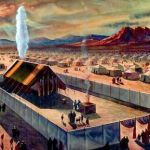
 Imagine an ancient Moabite gazing down upon the Tabernacle of Israel from a hillside. This Moabite is attracted by what he sees so he and his wife descend the hill and make their way toward the Tabernacle. They walk around this high wall of dazzling linen until they come to a gate and at the gate, they see a man.
“May we go in there?” they ask, pointing through the gate to where the bustle of activity in the Tabernacle’s outer court can be seen. “Who are You?” demands the man suspiciously. Any Israelite would know they could go in there. “We’re from Moab”, they reply. “Well, I’m very sorry, but you can’t go in there. You see, it’s not for you. The Law of Moses has barred all Moabites from any part in the worship of Israel” (Dt. 23:3).
The Moabites looked so sad and said, “Well, what would we have to do to go in there?” “You would have to be born again,” the gatekeeper replies. “You would have to be born an Israelite”. “Oh, we wish we had been born Israelites”, they say and as they look again, they see one of the priests, having offered a sacrifice at the bronze altar and cleansed himself at the bronze basin and then they see the priest enter the Tabernacle’s interior. “What’s in there?” they ask. “Inside the main building, we mean”. “Oh,” the gatekeeper says, “That’s the Tabernacle itself. Inside it contains a lampstand, a table, and an altar of gold. The man you saw was a priest. He will trim the lamp, eat of the bread upon the table and burn incense to the living God upon the golden altar”.
“Ah,” the Moabites sigh, “We wish we were Israelites so we could do that. We would so love to worship God in there and help to trim the lamp and offer Him incense and eat bread at that table”. “Oh, no”, the gatekeeper hastens to say, “even I could not do that. To worship in the Holy Place one must not only be born an Israelite, one must be born of the tribe of Levi and of the family of Aaron”. “And even if she was born of the tribe of Levi and of the family of Aaron, your wife couldn’t go in there, because only males are allowed” (Ex. 27:21). Sadly, the Moabite woman turned away. She had no hope in all the world of ever entering there!
The man from Moab sighs again, “I wish that I had been born of Israel of the tribe of Levi of the family of Aaron”, and then, as he gazes wistfully at the closed Tabernacle door, he says, “What else is in there?” “Oh, there’s a veil. It’s a beautiful veil I’m told and it divides the Tabernacle in two. Beyond the veil is what we call ‘the Most Holy Place’”. “What’s in the Most Holy Place?” the Moabite asks. “Well, there’s the sacred chest in there and it’s called the Ark of the Covenant. It contains holy memorials of our past. Its top is gold and we call that the mercy seat because God sits there between the golden cherubim. Do you see that pillar of cloud hovering over the Tabernacle? That’s God’s visible presence. It rests on the mercy seat”, said the gatekeeper.
Again, a look of longing comes over the face of the Moabite man. “Oh,” he said, “if only I were a priest! How I would love to go into the Holy of Holies and gaze upon the glory of God and worship Him there in the beauty of His holiness!’. “Oh no!” said the man at the gate. “You couldn’t do that even if you were a priest! Only the high priest can enter the Most Holy Place. Only he can go in there. Nobody else!”
The heart of the man from Moab yearns once more. “Oh,” he cried, “If only I had been born an Israelite, of the tribe of Levi, of the family of Aaron. If only I had been born a high priest! I would go in there every day! I would go in there three times a day! I would worship continually in the Most Holy Place!”. The gatekeeper looked at the man from Moab again and once more shook his head. “Oh no,” he said, “you couldn’t do that! Even the high priest of Israel can go in there only once a year, and then only after the most elaborate preparations and even then only for a little while”.
Sadly, the Moabite turned away. He had no hope in all the world of ever entering there!
That’s the old way. But it’s not the end! There’s more!
The new way
As Gentiles, the Moabites were, “excluded from citizenship in Israel and foreigners to the covenants of the promise, without hope and without God in the world” (Eph. 2:12NIV). But Jesus changed this situation. “But now in Christ Jesus you who once were far off (like the Gentile Moabites) have been brought near (like theJewish High Priest) by the blood (death) of Christ” (Eph. 2:13). The old way to God, which was exclusive to the Jews, has been replaced by the new way, which is open to everyone. Here’s how it happened.
When Christ died “the curtain of the temple was torn in two from top to bottom” by an earthquake (Mt. 27:51, 54; Mk. 15:38; Lk. 23:45). This signified that all people could now have access to God through Christ’s vicarious (substitutionary) death. And they don’t have to come via human priests.
“Therefore, brothers and sisters, since we have confidence to enter the Most Holy Place (like the High Priest) by the blood (death) of Jesus, by a new and living way opened for us through the curtain, that is, His body, and since we have a great priest (Jesus Christ) over the house of God (all true believers, Heb. 3:6), let us draw near to God (in prayer, praise and worship) with a sincere heart and with the full assurance that faith brings” (Hebrews 10:19-22). The curtain represented the body of Christ and its tearing represented His death. By this act, God indicated that all believers have access to God. They could be close to Him like the High Priest, not distant like the Moabites and the gatekeeper. This new way of approaching God is open to all who trust in Christ’s sacrificial death when they come in sincerity, assurance, salvation, and sanctification (Heb. 10:22).
So today, “there is neither Jew nor Gentile, neither slave nor free, nor is there male and female, for you are all one in Christ Jesus” (Gal. 3:28). All true Christians have the same spiritual status. “Here there is no Gentile or Jew, circumcised or uncircumcised, barbarian, Scythian, slave or free, but Christ is all, and is in all” (Col. 3:11). As far as their standing before God is concerned, all believers are on the same level. No believer is spiritually superior to anyone else.
While the old way of approaching God illustrated the new way; the new way is superior to the old way.
Reference
This blogpost is based on an illustration in “Exploring Hebrews” (p.94-96) by John Phillips (2002), which was brought to my attention by Jared Wilson.
Written, March 2016
Also see: What does Galatians 3:28 mean?
Share this:

Ten reasons why Jesus is more than a prophet

 Have you ever been to a funeral where the eulogy doesn’t seem to match your experience of the person? Sometimes our reporting is selective or biased.
How do we discover facts about someone who lived about 2,000 years ago? We examine history books written as closely as possible to their lifetime. To find out about Jesus we read parts of the Bible that were written by eyewitnesses and their contemporaries, 30-60 years after He lived. In this post we see that according to those who knew Jesus best, He was more than a prophet because He is the divine Son of God who is equal with God and is alive today.
What’s a prophet?
In the Bible, a prophet is one who speaks on behalf of someone else. For example, Aaron was Moses’ spokesman (Ex. 7:1). So he was a prophet of Moses. God’s prophets brought messages from God, which were called prophesies. They were God’s messengers to humanity who were enabled by the Holy Spirit (2 Chr. 15:1; Neh. 9:30; Mic. 3:8). So a prophet spoke God’s words. There were two kinds of prophets, those who were true and those who were false.
In the context of Christ’s coming reign on earth, Peter said that Jesus would be a prophet like Moses (Acts 3:21-23). The similarity is that both are raised up by God (Dt. 18:15, 18). Does this mean that Jesus was just a prophet like Moses, Isaiah, and John the Baptist? Indeed, after He was rejected in Nazareth, Jesus identified with the prophets by saying, “no prophet is accepted in his hometown” (Lk. 4:24-26). He also gave examples of this using Elijah and Elisha who were prophets. Jesus also predicted that He would die in Jerusalem where many prophets had been put to death (Lk. 13:33).
So, who did Jesus claim to be?
1. What Jesus said
Jesus said He was similar to God. He asserted, “If you knew me, you would know my Father also” (John 8:19); “Anyone who has seen me has seen the Father” (Jn. 14:9); “The one who looks at me is seeing the One who sent me” (John 12:45); “Whoever hates me, hates my Father as well” (John 15:23); “All may honor the Son just as they honor the Father. Whoever does not honor the Son does not honor the Father who sent Him” (John 5:23). These references certainly indicate that Jesus looked at Himself as being more than just a man; rather He was equal with God.
When Jesus said, “I and the Father are one” (Jn. 10:30), He meant that He is united with God the Father. Because of their unity, Jesus displayed God the Father (Jn. 14:9). Then He said, “the Father is in me, and I in the Father.” (Jn. 10:38; 14:10-11). They were interconnected.
The titles used by Jesus (“Son of God”, “Son of Man”, and “I am”) showed His divinity. During His trial, Jesus was cross-examined by Caiaphas the high priest “‘Are you the Messiah, the Son of the Blessed One?’ ‘I am,’ said Jesus. ‘And you will see the Son of Man sitting at the right hand of the Mighty One and coming on the clouds of heaven’. The high priest tore his clothes. ‘Why do we need any more witnesses?’ he asked. ‘You have heard the blasphemy. What do you think?’ They all condemned Him as worthy of death” (Mk. 14:61-64). So Jesus said He was the Son of God. No other prophet ever called himself the Son of God.
The Jews knew that the “Son of Man” was heir to the divine throne because “all nations and peoples of every language worshiped Him” and He will have “everlasting dominion that will never pass away” (Dan. 7:13-14). He’ll rule forever. Nations will worship Him and His kingdom will be unstoppable.
Jesus told the Jews, “Very truly I tell you, before Abraham was born, I am!” (Jn. 8:58). “I am” was a title that God used when he revealed Himself to Moses at the burning bush (Ex. 3:14). In fact, Jesus had dwelt with God the Father from all eternity, which is a long time before the time of Abraham! So Jesus claimed to be Israel’s God.
Jesus also said that He was “the First and the Last” (Rev. 1:17; 2:8; 22:13), which is another title of God (Isa. 44:6; 48:12). Also, Jesus said that He was the Jewish Messiah (the Christ) (Mt. 16:16-17; 26:63-64; Mk. 14:61-62; Jn. 4:25-26; 17:3). Furthermore, Jesus claimed to be the judge of humanity and the one who grants eternal life (Jn. 5:21-22; 10:27-28).
Jesus often showed people, by His actions, that He had divine authority. For example, He claimed to forgive sins (Mt. 9:2-8; Mk. 2:3-12; Lk. 5:18-26). While priests and prophets could mediate forgiveness by praying for people, forgiving sins committed against God was something the Jewish religious leaders believed only God had the authority to do (Mk. 2:7). Because of claims like this they tried to kill Him.
Before He ascended back to heaven, Jesus told his followers “surely I am with you always, to the very end of the age” (Mt. 28:20). This is a claim of omnipresence, which is a characteristic of God.
So in many ways, Jesus often claimed to be divine. But what did God the Father say about Jesus?
2. What God said
When Jesus was baptized, “a voice from heaven said, ‘This is my Son, whom I love; with Him I am well pleased’” (Mt. 3:17; Mk. 1:11; Lk. 3:22). Here God the Father quotes from Psalm 2:7 and Isaiah 42:1. As the context of these verses is a king and a servant, they indicate Christ’s regal rule and suffering servant roles.
At the transfiguration, Peter offered to put up three shelters, one for Jesus, one for Moses and one for Elijah. He was giving them equal status. But God the Father interrupted and told Peter, James and John, “This is my Son, whom I love; with Him I am well pleased. Listen to Him!” (Mt. 17:5; Mk. 9:7; Lk. 9:35). It’s the same message as that given at Christ’s baptism. So God says that Jesus is pre-eminent, and not just a great prophet.
When Jesus predicted His death, He prayed “Father, glorify your name!”. Then God the Father replied, “I have glorified it, and will glorify it again” (Jn. 12:28). This means that God was glorified by all that Jesus did, particularly His death, resurrection and ascension. After all, John said, “We have seen His glory, the glory of the one and only Son, who came from the Father, full of grace and truth” (Jn.1:14).
So God said that Jesus was His Son who glorified God. But what did the disciples say about Jesus?
3. What His disciples said
Immediately after Christ’s death, two of His disciples said that He was “a prophet powerful in word and deed” (Lk. 24:19). But at other times His disciples said that He was more than a prophet. For example, when they were called to follow Jesus, Andrew said He was the Messiah and Nathanael said He was the Son of God (Jn. 1:41, 49).
When Jesus asked “Who do you say that I am?”, Peter answered “You are the Messiah, the Son of the living God” (Mt 16:16-20). So Jesus was recognized as Israel’s Messiah and God the Son. Then Jesus commended Peter and told His disciples not to tell anyone that He was the Messiah. Here the Bible uses “son” metaphorically to refer to someone other than a biological son. In the ancient world, the majority of sons took up the same occupation as their father. The son was identified by his father and his occupation. For example, Jesus was known as “the carpenter’s son” (Mt. 13:55). In this case “Son” indicates the close relationship and unity between Jesus and God the Father.
Peter wrote about, “Our God and Savior Jesus Christ” (2 Pt. 1:1). He also urged Christians to “revere Christ as Lord” (1 Pt. 2:15).
After the resurrection, Thomas called Jesus “my Lord and my God!” and Jesus commended him for this (Jn. 20:28). So although the disciples were taught that Jesus was distinct from God the Father who sent Him, they also recognized that He was God.
John made many claims about Jesus:
- “the word (Jesus Christ) was God. He was with God in the beginning. Through Him all things were made; without Him nothing was made that has been made” (Jn. 1:1-2). And Jesus was God in the flesh (Jn. 1:14).
- “No one has ever seen God, but the one and only Son (Jesus Christ), who is Himself God and is in closest relationship with the Father, has made Him known” (Jn. 1:18).
- “Who is the liar? It is whoever denies that Jesus is the Christ. Such a person is the antichrist—denying the Father and the Son. No one who denies the Son has the Father; whoever acknowledges the Son has the Father also” (1 Jn. 2:22-23).
- “And this is the testimony: God has given us eternal life, and this life is in His Son. Whoever has the Son has life; whoever does not have the Son of God does not have life” (1 Jn. 5:11-12).
So the disciples said that Jesus was the Son of God. But what did the Jewish religious leaders say about Jesus?
4. What the Jewish religious leaders said
After Jesus healed a disabled man on the Sabbath day, the religious leaders accused Him of “calling God His own Father, making Himself equal with God” (Jn. 5:18-30). Then Jesus gave more reasons why He was equal with God the Father. So the Jewish leaders tried to kill Jesus because He claimed to be God and the Son of God (Jn. 10:33; 19:7).
Even His enemies could see that Jesus was presenting Himself as God. The religious leaders accused Jesus of blasphemy (Mt. 9:3; 26:65; Mk. 2:7; 14:64; Lk. 5:21; Jn. 10:33, 36). And that was the reason Jesus was crucified.
So the religious leaders had Jesus killed because He claimed to be equal with God. But what did the common people say about Jesus?
5. What the common people said
When Jesus asked, “Who do people say the Son of Man is?”, the disciples replied, “Some say John the Baptist; others say Elijah; and still others, Jeremiah or one of the prophets” (Mt. 16:14; Mk. 8:28; Lk. 9:19). And when He came to Jerusalem as King, the crowds said, “This is Jesus, the prophet from Nazareth in Galilee” (Mt. 21:11). That’s why the religious leaders found it difficult to arrest Him (Mt. 21:46).
After Jesus raised a widow’s son back to life, the crowd said He was a “great prophet” (Lk. 7:11-17). And the Samaritan woman thought Jesus was a prophet (Jn. 4:19). When Jesus healed a blind man, the man referred to Him initially as “the man”, then he said, “He is a prophet”, and finally after speaking with Jesus, He said “’Lord, I believe’, and he worshipped Him” (Jn. 9:11, 17, 38). So He came to acknowledge Him as the Son of God.
After Jesus feed 5,000 men, some thought He was the Prophet promised by Moses (Dt. 18:15, 18; Jn. 6:16; 7:40-41, 52). Others said that Jesus was Christ, the Messiah. But some thought this was impossible. They believed that Jesus came from Nazareth in Galilee, and there was no prophecy in the Old Testament that the Messaih would come out of Galilee.
Finally, the centurion who witnessed Christ’s crucifixion said “Surely this man is the Son of God!” (Mk. 15:39).
So the common people had a range of views about Jesus. But some of those who had a close encounter with Jesus recognized Him as the Son of God. What did Paul say about Jesus?
6. What Paul said
In his letters, Paul referred to Jesus as:
- “God over all” (Rom. 9:5)
- “in very nature God”, having “equality with God” (Phil. 2:5-6)
- “the image of the invisible God” (Col. 1:15)
- “in Christ all the fullness of the Deity lives in bodily form” (Col 2:9)
- “Our great God and Savior” (Ti. 2:13)
As Romans was written in AD 57, the term “God” was applied to Jesus early on in the Church’s life.
The writer of Hebrews applies a Psalm to Jesus; “Your throne, O God, will last for ever and ever” (Ps. 45:6; Heb. 1:8).
So Paul said that Jesus was God. But what did His birth show about Jesus?
7. His birth
The birth of Christ was unique in many ways. The Old Testament predicted it to be in Bethlehem (Mic. 5:2, 4; Mt. 2:6), and that His mother would be a virgin and He will be called Immanuel (Isa. 7:14; Mt. 1:23). The birth was announced by angels (Mt. 1:20-21; Lk. 1:28-38; 2:9-12). And a special star guided the Magi to where Jesus was in Bethlehem (Mt. 2:1-11).
Mary was the sole natural parent of Jesus (Mt. 1:18-25; Lk. 1:26-38). Because He was conceived by the Holy Spirit, an angel said, “the holy one to be born will be called the Son of God” (Lk. 1:35). He was called the “holy one” because He was sinless (2 Cor. 5:21; Heb. 4:15; 7:26). Jesus never sinned like the rest of the prophets.
Because of this unique birth (He was both fully human and fully divine), Christ was uniquely qualified as the sinless One to go to the cross to die as the Lamb of God. This is why the Old Testament predicted the Messiah to be a servant whose death would pay for all the sins of humanity (Isa. 53:5-6).
His names were also significant. Before His birth, Jesus was given the name Immanuel, which means “God with us” (Mt. 1:23). And He was called “Jesus, because He will save His people from their sins” (Mt. 1:21).
So His birth shows that Jesus is the unique Son of God. But what did the resurrection indicate about Jesus?
8. His resurrection
Three times Jesus told His disciples that He was going to be killed (Mk. 8:31-32; 9:30-32; 10:33-34). On each occasion He predicted that “three days later He will rise” back to life. And it happened like He said it would. The Romans sealed His tomb with a large stone and posted a guard nearby. But this didn’t stop the resurrection of Jesus Christ. The Bible says that Jesus raised Himself from the dead (Jn. 2:19-21; 10:17-18). So He had power over life and death.
After His death on the cross Jesus’ body was laid in a tomb which was visited three days later by some of the disciples and women who had followed Jesus. They expected to find a body to mourn, but instead they found that the stone had been rolled away from the tomb and the body of Jesus was no longer there. Many attempts have been made to explain away the empty tomb – from the idea that the disciples stole the body, to the idea that they went to the wrong tomb. But none of these satisfactorily explain the transformation in the lives of the disciples who were willing to face death because they believed that Jesus had risen from the dead. Besides this, after His resurrection, Jesus appeared to more than 500 people at once (1 Cor. 15:6).
Because of the resurrection, Jesus is still alive. This is different to the Biblical prophets who are all dead now. Although Enoch and Elijah went to heaven without dying, none of the Old Testament prophets resurrected never to die again.
So the resurrection shows that Jesus is alive. But what did the miracles indicate about Jesus?
9. His miraculous power
When He was on earth, Jesus healed the sick, raised the dead and controlled the forces of nature.
He instantly cured: fevers, paralysis, chronic bleeding; blindness, dumbness, chronic invalidity, withered limbs, deafness, leprosy, a severed ear, and demon possession (Mt. 8:1:30-31; 9:1-8, 27-33; 12:10-13, 22; Mk. 7:31-37; Lk. 8:43-48; 17:11-19; 22:50-51; Jn. 5:1-9). In fact, Jesus “healed all the sick” who were brought to Him, “healing every disease and sickness among the people” (Mt. 4:23; 8:16-17).
He raised back to life people who had died: Lazarus, the widow’s son, and Jairus’ daughter (Mt. 9: 18-26; Lk. 7:11-18; Jn. 11:1-46).
He calmed a storm, enabled a huge haul of fish, fed thousands of people, turned water into wine, walked on water, and withered a tree (Mt. 8:23-27; 21:18-22; Mk. 6:48-51; Lk. 5:1-11; Jn. 2:1-11)
These are called miracles because they illustrate supernatural power. So the miracles confirm that Jesus had divine power (Mt. 11:2-5; Jn. 20:30-31).
10. The parable of the wicked farmers
 After Jesus rode into Jerusalem as a king and cleared commercialism from the temple, the religious leaders asked Him who gave Him the authority to teach, to perform miracles and to cleanse the temple (Mt. 21:23; Mk. 11:28; Lk. 20:1-2).
Then Jesus told a parable which taught that He was more than a prophet (Mt. 21:33-46; Mk. 12:1-12; Lk. 20:9-19). A landowner (like God) rented a vineyard to some farmers (like the religious leaders). Whenever he sent his servants (like the Old testament prophets, Jer. 7:25; 44:4) to collect his fruit, the farmers persecuted or killed them. Finally, he sent his son (like Jesus), but they killed him as well to seize his inheritance. So the landowner rented the vineyard to other famers (like Gentile believers) instead. When the religious leaders heard this parable, they knew it was about them and that it meant that Jesus wasn’t just another prophet like John the Baptist (who was killed), but the Son of God (Mk.12:12). Like the son in the parable, Jesus claimed to own everything that belongs to the Father.
Then Jesus quoted the reason for His authority as “The stone the builders rejected has become the cornerstone” (Ps. 118:22; Mt 21:42; Mk. 12:10; Lk. 20:17). He was saying that the stone that was rejected (like Jesus was killed) would become the most important stone (like Jesus was raised back to life and given the place of pre-eminence by God). His authority came from being equal with God.
So the parable of the wicked farmers shows that Jesus is God’s Son and heir. He’s greater than a prophet, as a son is greater than a servant.
Conclusion
We have looked at ten reasons why Jesus is more than a prophet. These are all consistent with Jesus being the divine Son of God who is equal with God and is alive today.
This wasn’t always evident when He was on earth, because most of Jesus’ teaching was via parables and the meaning of these was restricted to the disciples and not the crowd because the latter would reject Him (Mt. 13:11-13). Also, people were influenced by the Jewish religious leaders who saw Jesus as a threat to their power and authority. So Jesus polarized society.
Let’s be those who accept the Biblical record about Jesus and not those who reject it. Let’s exalt Him now.
“Therefore God exalted Him to the highest place and gave Him the name that is above every name, that at the name of Jesus every knee should bow, in heaven and on earth and under the earth, and every tongue acknowledge that Jesus Christ is Lord, to the glory of God the Father” (Phil. 2:9-11).
Written, March 2016
Also see: Were prophets infallible?
Share this:

What’s God like?


19 Biblical images of God
Some things are invisible like the wind, electricity, gravity, atoms, gas, electromagnetic fields (such as X-rays, infrared, microwaves, and radio waves). We can’t see them, but we use many of them every day (such as the radio waves used by cell phones). God is also invisible (Col. 1:15; 1 Tim. 1:17).
Today we will see that multiple images are required to show us what God’s like.
Does God exist?
But some people think that God doesn’t exist. That He’s as real as Santa Claus, the Tooth Fairy or the Easter Bunny. They don’t believe the first verse of the Bible that says, “In the beginning God created the heavens and the earth” (Gen. 1:1NIV). Instead they think that science has explained what used to be attributed to God.
But science can’t explain the origin of matter and energy. How something came from nothing. The ideas of the big bang and evolution can’t explain it. And it’s outside the laws of science. Also the origin of life is a mystery to science, they can’t create it in the laboratory without using cells from living creatures.
I think that God exists because something like us and the universe exists. God is the ultimate cause of the effects that we see around us. No one has come up with a better explanation yet. And God never attempts to prove His existence because, “The heavens declare the glory of God; the skies proclaim the work of His hands” (Ps. 19:1).
The big picture
We’ll begin with some general aspects of God. As a creator is always greater than their creations, God is greater than us. More powerful and more intelligent.
The Bible says that there are three aspects of God: Father, Son and Spirit. That’s where the word “Trinity” comes from. Today we are looking at God the Father.
God doesn’t have a body like us, He’s a spirit. The Bible says “God is spirit” (Jn. 4:24). That’s why:
– God is invisible.
– God’s not limited in space and time like the physical world.
– We rely on God’s revelation in Scripture to learn about the spirit world.
– God doesn’t have a gender. God isn’t male or female, although we generally speak of God using male pronouns. Also when the Bible mentions God’s hand, ear, eyes and mouth, it’s a figure of speech (Dt. 33:27; 2 Chron. 16:9; Isa. 59:1; Mt. 4:4;). We will see that the Bible uses lots of figures of speech to describe God. That’s one way of describing someone who is invisible.
Note that I write “someone” and not “something”. God isn’t a force or a principle. God is a person. A person has “personality”, a “soul” (Hebrew and Greek). They have a mind, emotions and a will. God has these (Ps. 78:41; 139:17; 1 Cor. 1:1). They are able to think about what they are doing (unlike animals and machines). They have relationships with other persons. Although the three “persons” of the godhead are united in the one being, they also relate to one another. They are divine persons.
Method
How can we know what God is like if He’s invisible? The best way is to look at what the Bible says about God because it’s a message from Him. It uses at least four kind of words to describe God: names, adjectives, verbs and metaphors.
– Names are titles.
– Adjectives are words that describe nouns or pronouns.
– Verbs are words that describe actions.
– Metaphors are figures of speech which compare two unrelated things. Like, “You’re an angel”, “Don’t be a pig”, “It wasn’t long before their relationship turned sour”.
Today we’re looking at images of God in the Bible. These are mainly metaphors because the Bible teems with metaphors.
Metaphors as images of God
These are powerful images which help to show who God is and what our relationship with God can be like. First; God is likened to certain people.
People
Father
God’s like a father. A kind and loving father. A father was the head of the household. He protected and provided for the needs of the family. And his sons inherited his wealth.
God the Father is the supreme sovereign of the universe because He created it (Eph. 4:6). The Israelites called Him Father because He created their nation (Dt. 32:5-6; Isa. 64:7-8; Mal. 2:10) and He continued to sustain them (Jer. 3:19; 31:9) and protect them (Isa. 63:16). They were like His children.
In God’s covenant with David, God said “I will be his (Solomon’s) father, and he will be my son” (2 Sam. 7:14; 1 Chron. 17:13; 22:10). Later this verse was applied to Christ (Heb. 1:5). So the father-son relationship is a metaphor for both the relationship between God and His people, and God the Father and Jesus Christ.
As a father interacts with his children, God interacts with us. We can communicate with Him through prayer. Jesus told His disciples to pray “Father, hallowed be your name” ( Luke 11:2). In the parable of the lost son, God is like the father who welcomed his son back after he had wasted his inheritance (Lk. 15:11-32).
For Paul this fatherhood is based on the salvation He has made available in Jesus Christ. This is why Paul refers to “the God and Father of our Lord Jesus Christ” (Rom. 15:6; 2 Cor. 1:3; 11:31). It’s through the work of Christ that God invites us to call him “Father”. And through Christ grace and peace have resulted and we have become God’s children with an inheritance (Rom. 8:12-17; 1 Pt. 1:3-4; 1 Jn. 3:1).
This metaphor, Father, is used so often that it’s a title of God. It’s appropriately masculine because God has given husbands authority in the family and elders authority in the church.
If God is like our father, then we are like God’s children. Like His sons, an inheritance awaits us. This image reminds us of God’s provision for us.
Mother
God’s also like a mother. A mother brings infants into the world and cares for them. Young children spend most of their time with their mother and feel secure with her.
God “gave birth” to the Israelites when he created their nation (Dt 32:18). He cared for them like a mother eagle cared for its young (Dt. 32:11-12). His love and care can be compared to that of a concerned, caring and comforting mother (Ps. 131:2; Isa. 49:14-16; 66:13).
If God is like our mother, then we are like God’s children. As His children, we can be secure. This image reminds us of God’s care and love for us.
Lord
God’s like a lord or master. A lord or master had power and authority over servants, slaves, or property.
God’s rule and authority rests ultimately upon His creation and ownership of all things and all people. David said:
“The earth is the Lord’s, and everything in it,
the world, and all who live in it;
for He founded it on the seas
and established it on the waters” (Ps. 24:1-2)
God is the owner and governor of the whole earth (Ps. 97:5; 114:7; Isa. 1:24; Mt. 1:22; Mk. 5:19; Acts 7:33). That means He has authority over people whether they realize it or not. The psalmist uses “Lord” to honor God and express thanksgiving (Ps. 16:2; 57:9-10).
This metaphor is also used as a title of God in the both the Old Testament and the New Testament. The Hebrew noun Adonai (Strongs #136) applies to someone of higher rank in society (Gen. 18:12). The master rules the servant and the servant submits to the master. The Greek noun kurios (#2962) means master (Mt. 1:20; 7:21; 18:27). It signifies power, authority, and ownership.
What’s the modern equivalent of “lord”? Sir? Master? Manager? Ruler? Captain? Commander? Chief? Leader? Boss?
If God is like our boss, then it’s like we’re under God’s rule. This image reminds us of God’s leadership and management.
Bridegroom
God’s like a bridegroom and husband. A bridegroom loves and cares for his bride. They belong together.
The relationship between God and Israel is likened to that between a bridegroom and a bride (Isa. 54:5). Israel belonged to God. But Israel and Judah were unfaithful. This is illustrated by the unfaithfulness of Hosea’s wife.
The equivalent New Testament metaphor is that the church is the bride of Christ. Christians belong to Christ, like a bride belongs to her husband.
If Jesus is like our bridegroom, then we are like His bride. We belong together. This image reminds us of God’s love for us.
King
God’s also like a king. In ancient times, a king ruled a city or nation. A king has authority over all others. They have ultimate authority. In democratic countries like ours it’s difficult to imagine a king with absolute power and where there is no avenue for appeal.
God’s covenant with Moses was like a Suzerain-Vassal treaty. God was the Suzerain, the great king who promises to be Israel’s King and Protector. The ark of the covenant was His throne and the tabernacle/temple was His palace.
God was like Israel’s king (Ps. 5:2; 74:12; 95:3; 98:6; 145:1; Jer.10:10; Zeph. 3:15). He said, “I am the Lord, your Holy One, Israel’s Creator, your King” (Isa. 43:15).
He is also like a king over all creation (Ps. 29:10; 47:2, 6-8; Zech. 14:9; Rev. 15:3; 1 Tim. 1:17; 6:15-16). “For God is the King of all the earth” (Ps. 47:7).
In the gospels, Jesus only once (Mt. 5:35) explicitly called God king and in the parables (Mt. 18:23; 22:2, 7, 11 13) He only indirectly calls God king. In the parable of the unforgiving servant (Mt. 18:21-35), God is like the king who cancelled the servant’s debt. In the parable of the wedding banquet, God is like the king who invites people to his son’s wedding (Mt. 22:1-14). This shows God’s mercy and grace.
If God is like our king, we are like the subjects of His kingdom. This image reminds us of God’s authority and power. Eventually, God will defeat all opposing powers to bring justice and peace.
Judge
God’s like a judge. A judge assesses the guilt of the accused and determines the penalty if they are guilty.
Abraham called God “the Judge of all” (Gen. 18:25). And David said, “God is a righteous judge” (Ps. 7:11). God was Israel’s Lawgiver and Judge (Isa. 33:22). Peter said that God “judges each person’s work impartially” (1 Pt. 1:17).
There’s good news and bad news. At the exodus, the Israelites were rescued, but the Egyptians were judged. In future, Christians will be rewarded at the judgement seat of Christ for their obedience and service (1 Cor. 3:8-15; 2 Cor. 5:10). This is because Jesus has already paid the penalty for their sinfulness. But, unbelievers will be judged and sentenced as guilty at the great white throne “according to what they had done” (Rev. 20:11-15). Meanwhile God is patiently waiting for people to repent and turn to follow Him because He doesn’t want anyone to face this judgment (2 Pt. 3:7-10).
If God is like a judge, then we are like the accused. Because Jesus paid our penalty, this image reminds us of God’s love for us.
Warrior
God’s also like a warrior. A warrior defends and protects against enemies.
After the exodus, the Israelites sang “The Lord is a warrior” (Ex. 15:3). David often pictured God as a warrior who delivered him from his enemies (Ps. 18:13-14). Nehemiah said, “Our God will fight for us!” (Neh. 4:20). God also defends the weak (Dt. 10:18; Ps. 10:14; 68:5-6; 146:7-9; 147:6). He is “the Mighty Warrior who saves” (Zeph. 3:17).
One of God’s titles is “Almighty” (Gen. 17:1; Rev. 21:22). This means He is all powerful (omnipotent).
Satan is our greatest enemy. But Jesus was God’s means of defeating Satan. And Jesus is also described as a warrior (Rev. 19:11-21).
If God is like a warrior, then we are like those needing deliverance from Satan. This image reminds us of God’s power to defend and protect.
Potter
God’s like a potter. A potter makes pottery out of clay. The pottery displays the potter’s creative skill. They make a work of art from a lump of clay. Isaiah said,
“you, Lord, are our Father.
We are the clay, you are the potter;
we are all the work of your hand” (Isa. 64:8)
The potter can do what they want with the clay. For example, Jeremiah said that the fate of Judah was up to God, like the fate of the clay is in the potter’s hands (Jer. 18:1-10). As the clay doesn’t question the potter, we shouldn’t question God (Isa. 29:16; 45:9; Rom. 9:21). As the clay is at the mercy of the potter, we also rely of God’s mercy.
If God is like a potter, then we are like the clay. This image reminds us of God’s creativity and sovereignty.
Shepherd
God’s also like a shepherd. A shepherd cares for sheep.
In Old Testament times God chose a nation of people, the Israelites, to follow and obey Him. The picture that’s used is of God being their shepherd; “Hear us, Shepherd of Israel, you who lead Joseph like a flock” (Ps. 80:1; Jer:31:10). He would lead them and care for them and they were to follow where He led. The imagery of a shepherd and his flock provided a picture of the way God cared for His people
David said, “The Lord is my shepherd” (Ps. 23:1). The shepherd sustains and guides the sheep (Ps. 23:1-4; 28:9). Ezekiel contrasts selfish leaders (Ezek. 34:1-10) and God’s leadership (Ezek. 34:11-16). Isaiah described God’s deliverance of the Jews from exile as:
“He tends His flock like a shepherd:
He gathers the lambs in His arms
and carries them close to His heart;
He gently leads those that have young” (Isa. 40:11).
If God is like a shepherd, then we are like the sheep. This image reminds us of God’s loving leadership.
Gardener
God’s like a gardener. A gardener cares for plants.
In the Old Testament, Israel is pictured as God’s vineyard (Isa. 5:1-7). A failed grape harvest was a symbol of Israel’s disobedience, rebellion and idolatry. In the New Testament, Jesus is pictured as the true vine, believers are the branches and God the Father is the gardener (Jn. 15:1-8). God prunes us to be more fruitful.
If God is like a gardener, then we are like the branches of a plant. This image reminds us of God’s loving care.
Second; God is likened to some animals.
Animals
Lion
God’s like a lion. A lion is a predator that rules the land.
God’s judgement of Israel and Judah (Hos. 5:14; 13:7-8) and ungodly nations (Jer. 25:37-38; 49:19; 50:44) is likened to the devastation caused by a lion.
If God is like a lion, then His judgment should be feared. This image reminds us of God’s punishment of sin.
Eagle
God’s like an eagle. An eagle is a majestic bird that rules the sky.
After the exodus, God helped the Israelites like an eagle helps its young to fly (Dt. 32:11). God is like an eagle, He covers us, shelters us (Ps. 36:7, 63:7, 91:3-4) and hides us (Ps. 17:8).
The Psalmist wrote, “Surely He (God) will save you from the fowler’s snare and from the deadly pestilence. He will cover you with His feathers, and under His wings you will find refuge” (Ps. 91:3-4).
If God is like an eagle, then he can provide refuge. This image reminds us of God’s protection.
Third; God is likened to some inanimate things.
Inanimate things
Light
God’s like a light: “God is light; in Him is no darkness at all” (1 Jn. 1:5). Light is the opposite of darkness. In the Bible, light symbolizes purity and goodness, and darkness signifies evil and sin. So God is pure, righteous and holy.
Psalm 119 says, “Your word is a lamp for my feet, a light on my path” (Ps. 119:105). Light reveals things. It shows us what’s ahead. It this case the Bible shows God’s truth.
David said, “The Lord is my light and my salvation—whom shall I fear?” (Ps. 27:1). Here “light” is associated with deliverance from one’s enemies.
God will be the “everlasting light” in the new Jerusalem (Isa. 60:19-20). He will be the source of all truth and righteousness.
If God is like a light, then He can show us the truth and the way to go. This image also reminds us of God’s holiness.
Rock, fortress, stronghold, refuge and shield
God’s also like a rock, fortress, stronghold, refuge and shield. These are used for protection against enemies.
Ancient cities and fortresses were often built on rocky hills. David hid in these areas to avoid his enemies. When he praised God for deliverance from his enemies, David said, “The Lord is my rock, my fortress and my deliverer; my God is my rock, in whom I take refuge, my shield and the horn of my salvation, my stronghold” (Ps. 18:2).
This image is associated with safety and security (Dt. 32:4, 1 Sam. 2:2; 2 Sam. 22:2, 32, 47; Ps. 18:2; 31:3; 62:2; 71:3; 78:35; Isa. 17:10). A more direct metaphor is to say that God is like a refuge: “The eternal God is your refuge, and underneath are the everlasting arms” (Dt. 33:27; Ps. 46:1).
If God is like a rock, then he can provide a safe refuge. This image reminds us of God’s protection.
Fire
God’s like a fire. A fire burns and consumes whatever is combustible.
When the Israelites were warned against idolatry, they were told “the Lord your God is a consuming fire” (Dt. 4:24). This shows God’s righteous anger against the sin of unfaithfulness and disobedience. The same imagery is used to express how God will destroy the Canaanites because of their wickedness (Dt. 9:3). The consuming fire is a symbol of God’s judgement of sin (Isa. 29:6; 30:27, 30; 33:14). Today God is like a consuming fire to all who refuse to listen to Him and is to be worshipped with reverence and awe (Heb. 12:29).
Ezekiel had an image of God as a man full of fire surrounded by brilliant light (Ezek. 1:26-28). God’s presence is often symbolically revealed in the form of fire and light (Ex. 13:21; 19:18; 4:17; 40:34, 38; Isa. 66:15). They are symbols of God’s holiness, which can’t tolerate any sin.
If God is like a fire, then His awesome holiness means that He will judge everything that is contrary to this holiness. This image reminds us of God’s judgement of sin.
Tree
God’s like a tree. A tree has flowers and fruit.
God told Israel that “your fruitfulness comes from me”, because He was “like a flourishing juniper tree” (Hos. 14:8). This tree is evergreen, its leaves don’t fall off in winter. Its fruit is a pine cone that’s the source of nuts. As the tree provides the nuts, so God is the source of Israel’s blessings.
If God is like a tree, then Israel was like His fruit. This image reminds us that God sustains His people.
Fourth; God is likened to certain attributes.
Attributes
Beginning and the end
God’s like the beginning and the end, which is symbolized by the first and last letters of the Greek alphabet, alpha and omega (Rev. 21:6). As Creator of the universe, He was there when it began. As God will also be there at the end, He rules over all human history.
If God is like the beginning and the end, then He is always present. This image reminds us that God is eternal.
Love
God’s loving (1 Jn. 4:8, 16). In particular, He loves His people (Dt. 7:8, 13).
This kind of love is described as, “Love is patient, love is kind. It does not envy, it does not boast, it is not proud. It does not dishonor others, it is not self-seeking, it is not easily angered, it keeps no record of wrongs. Love does not delight in evil but rejoices with the truth. It always protects, always trusts, always hopes, always perseveres. Love never fails (1 Cor. 13:4-8a).
It means that God doesn’t force Himself on anyone. Instead, He has shown His love in this way, “For God so loved the world that He gave His one and only Son (Jesus), that whoever believes in Him shall not perish but have eternal life. For God did not send His Son into the world to condemn the world, but to save the world through Him” (Jn. 3:16-17).
If God is loving, then people are the objects of His love. This image reminds us that Jesus was God’s love gift to us. Have you accepted God’s gift? This kind of love drives out fear of judgment (1 Jn. 4:18).
Savior
God’s a savior. A savior saves someone, like a lifeguard (or lifesaver) rescues people in danger of drowning.
Because David was often saved from his enemies, he wrote “Our God is a God who saves” (Ps. 68:20). God sees and watches all of us (Ps. 33:13-14). Savior is used so much in the Bible that it is often used as a title of Jesus Christ.
If God is a savior, then people are the ones He rescues. This image reminds us that God sent Jesus to rescue us from the judgment we deserve for our sinfulness. Have you been rescued yet?
God’s also like an eyelid, a builder, physician and teacher (Dt. 32:10; Ps. 103:3; 119:33; 147:2; Isa. 28:26).
Summary
We have looked at several images of God from the Bible. Different images highlight different characteristics of God. If God was on Facebook, He could choose between these profile pictures because He:
 Provides like a father
Cares and loves like a mother
Manages like a boss
Loves like a bridegroom
Reigns like a king
Sentences like a judge
Defends and protects like a warrior
Creates like a potter
Leads like a shepherd
Prunes like a gardener
Punishes like a lion
Illuminates and is pure and holy like a light
Protects like an eagle and a rock
Judges sin like a fire
Sustains his people, like a tree provides fruit
Saves like a lifeguard (lifesaver)
Is always there
Loves everyone
So God can meet all our needs. In response, do we:
Live like a child of God?
Feel secure in God’s love?
Follow God’s instructions?
Have a close relationship with God?
Respect God’s reign?
Realize that Jesus paid our sentence?
Realize that Satan is defeated?
Acknowledge that God made us?
Follow God’s leading and guidance?
Accept God’s discipline?
Fear God’s punishment?
Feel safe in God’s salvation?
Recognize God’s sustenance?
Realize God’s presence?
So multiple images are required to show us what God is like. But I’ve left the best image till last. Paul wrote, “The Son (Jesus Christ) is the image of the invisible God” (Col. 1:15). He’s “the exact representation of His (God’s) being” (Heb. 1:3). And Jesus said, “Anyone who has seen me has seen the Father” (Jn. 14:9). So Jesus is the best image of God.
Written, February 2016
Also see: What’s Jesus like?
What’s the Holy Spirit like
Share this:

The greatest leaders

 According to Listovative.com the greatest leaders of all time were Mahatma Gandhi, Nelson Mandela, Martin Luther King Jr, Abraham Lincoln, Mao Zedong, Adolf Hitler, George Washington, Napoleon Bonaparte, Franklin D Roosevelt, Julius Caesar, Winston Churchill, Asoka, Alexander The Great, Che Guevara, and Fidel Castro.
But the Bible says that Adam and Jesus Christ are the greatest leaders of humanity. In this post we look at the contrast between Adam and Jesus in Romans 5:12-21, where it is evident that Adam is the leader of sinful humanity and Christ the leader of forgiven humanity. And Christ’s gift is greater than Adam’s sin.
Context
The theme of the book of Romans is the good news (gospel) that God has intervened in our history so that through faith in Christ’s sacrificial death we can be reconciled with God. It describes the universal need for this reconciliation (Rom. 1:18 – 3:20), how it can be obtained through faith in Christ (3:21-31), an example of similar faith in Old Testament times (4:1-25), and the benefits of such faith (5:1-11). Then the good news is summarized by contrasting Adam and Jesus (5:12-21), which is followed by a description of the process by which believers grow to maturity (sanctification) (6:1-23).
Contrast
The state and destiny of humanity is pictured in two men: Adam and Jesus. Adam trespassed by disobeying God (when he ate from the tree of the knowledge of good and evil). This resulted in humanity becoming sinful and God’s punishment was the death penalty (physical death and eternal spiritual death). That’s why people die. On the other hand, Jesus obeyed God (when He allowed men to execute Him). This resulted in humanity being freely offered to have the penalty of eternal spiritual death cancelled and replaced with eternal life. So Adam is the source of all our problems, suffering, pain, and God’s judgment; while Jesus is the source of our reconciliation with God and the promises this brings. Adam brought death and Christ brought life.
The major difference between Adam and Christ was their disobedience and obedience to God. This has a dramatic impact on our world and our destiny.
Adam and Jesus were both unique. Adam was the first man. Jesus was both human (a man) and divine (the Son of God). They were similar as men, but different because Adam wasn’t divine. They were also similar in that a single act (Adam eating the fruit and Jesus dying) impacted all humanity.
Adam’s sin
Romans 5:12-21 teaches that Adam is the leader of sinful humanity.
“just as sin entered the world through one man (Adam), and death through sin, and in this way death came to all people (everyone), because all sinned” (5:12NIV).
“death reigned from the time of Adam to the time of Moses, even over those who did not sin by breaking a command, as did Adam” (5:14)
“many (everyone) died by the trespass of the one man (Adam)” (5:15).
“the result of one man’s (Adam’s) sin: The judgment followed one sin and brought condemnation” (5:16).
“by the trespass of the one man (Adam), death reigned through that one man” (5:17).
“one trespass (Adam’s) resulted in condemnation for all people (everyone)” (5:18).
“through the disobedience of the one man (Adam) the many (everyone) were made sinners” (5:19).
“sin reigned in death” (5:21).
As a result of Adam’s disobedience, sin and death passed to all his descendants. Through Adam’s sin all were condemned as sinners. Death is the penalty for sin. Death shows our sinfulness. The proof that Adam’s sin affected the entire human race is that death is universal. So because of Adam all people are sinful in their nature and in their behavior. Adam’s sin altered our human nature so that it’s corrupt and rebellious. That’s the condition of humanity for you, me and everyone else. We’re habitual sinners because of Adam’s original sin. It’s the greatest problem of the human race and it’s the source of the evil in our world. That’s why the world is as it is.
Christ’s gift
This passage also teaches that Jesus Christ is the leader of forgiven humanity.
“how much more did God’s grace and the gift that came by the grace of the one man, Jesus Christ, overflow to the many (believers)!” (5:15).
“the gift of God … the gift (of Christ’s righteousness, v.17) followed many trespasses and brought justification (to believers)” (5:16).
“how much more will those who receive God’s abundant provision of grace and of the gift of righteousness (believers) reign in life through the one man, Jesus Christ!” (5:17).
“one righteous act (Christ’s) resulted in justification and life for all people (believers)” (5:18).
“through the obedience of the one man (Christ) the many (believers) will be made righteous” (5:19).
“grace might reign through righteousness to bring eternal life through Jesus Christ our Lord” (5:21).
What a contrast between Adam’s sin and Christ’s gift! Condemnation came to us through Adam’s sin, while justification comes to us through Christ’s gift of righteousness. The good news is that Christ’s gift paid the penalty for Adam’s sin, and we can be reconciled with God if we accept this gift. There’s no other way to get right with God.
Clearly Christ’s gift of salvation is superior to Adam’s sin and the judgment we deserve. It’s “much more” (5:15, 17) and is sufficient for “many trespasses” (5:16) because Christ takes our judgement and we are seen in His righteousness. Instead of being ruled by death, in a coming day we will reign with Christ (5:17; Rev. 3:21). While Adam brought eternal death, Christ brings eternal life (1 Cor. 13:19-23).
Similar
Paul also says that Adam “is a pattern of the one to come (Jesus)” (5:14). How is Jesus like Adam? He explains this:
“Adam’s one sin brings condemnation for everyone, but Christ’s one act of righteousness brings a right relationship with God and new life for everyone. Because one person disobeyed God (Adam), many became sinners. But because one other person (Christ) obeyed God, many (believers) will be made righteous” (5:18-19NLT).
As Adam’s sin is imputed to everyone (5:12), Christ’s righteousness is imputed to all who trust in Him (1 Cor. 15:21-22). So, both judgment and salvation come from one man.
Summary
Adam and Jesus had a great influence on the human race. Adam is the leader of sinful humanity and Christ the leader of forgiven humanity. But Christ’s gift is greater than Adam’s sin.
The universal problem of the human race is sin and the universal solution is the gospel. All people, no matter what they have done, can get right with God because of Christ’s obedience and His righteousness. That’s the most important thing that we can do. But like any gift, it belongs only to those who accept it. Only those who by faith receive God’s gift of justification will enjoy the benefits of Christ’s obedience (5:17). Our eternal destiny depends on which humanity we choose: that of Adam or that of Christ.
Because of our humanity, we all begin life “in Adam”. A Christian changes their allegiance from Adam to Jesus. This means they are positioned “in Christ”. If we are in Christ, our salvation is secure not because of anything in us, but because we’re in Him.
Christians have accepted Christ’s gift, but they are still influenced by Adam’s sin. They have a new identity in Christ and an old identity in Adam. Whether our new identity is shown in our everyday life depends on whether we obey God’s instructions for us in the parts of the Bible written to the church (Acts to Revelation). Do we live like Adam (who disobeyed God) or like Jesus (who obeyed God)? Let’s be like Paul and follow the example of Christ (1 Cor. 11:1).
Written, February 2016
Share this:

How to choose the best introduction to Christianity

 The Christian faith is based on teachings in the Christian Bible, which are mainly about Jesus Christ. After all, the Greek noun Christianos translated “Christian” (Strongs #5546) means a follower of Christ (Acts 11:26; 26:28; 1 Pt. 4:16). The steps to become a follower of Christ include: a preacher is sent by God, they proclaim the good news given in the Bible, a person hears this message, and they believe it (Rom. 10:14-15). Sometimes it is helpful to use experienced preachers to help proclaim the good news to others.
Over the past decade, several courses have been used to help introduce people to Christianity. The following such courses are reviewed below: “Simply Christianity” (2003), “Alpha” (2005), “LifeWorks” (2005), “Christianity Explained” (2006), “Christianity Explored” (2013), and “Introducing God” (2014). Each of these courses has several sessions which are intended to be done on a periodic basis. Some of the courses have extra sessions, which aren’t included in this review. So the review is based on the core sessions. “Towards Belief” (2013), a course which addresses the belief blockers of our time, was also viewed but isn’t discussed below.
All these courses have been developed and delivered by those with the gift of evangelism and with theological training. They are skilled and experienced presenters with appropriate demeanour, body language, and attire. The messages are encouraging and challenging with the major application being that unbelievers would trust in Christ as their Savior. In each session they keep to the subject and have a clear outline, key points, introduction and conclusion. They use appropriate illustrations and visual aids, which are generally better in more recent videos (see “Video age” below). The Scripture passages used are relevant to the message and they are interpreted and applied as in mainstream Christianity, except for in one Alpha message (see “Doctrinal aspects” below).
How can we choose which of these courses is best for us to use? To help make this decision, we will look at several categories.
Course length
Because people are often busy, it can be difficult for them to persist through a long course. Also, the time period available may be limited by other factors such as a person’s availability.
Simply Christianity is the shortest course with 5 sessions, but it requires more preparation as it doesn’t have a video version of these sessions. Of those with videos, Christianity Explained is shortest with 6 sessions, while Christianity Explored and Introducing God have 7-8 sessions. On the other hand, Alpha is the longest course with 11 core sessions.
Message length
The longer a message, the more difficult it is to maintain the audience’s interest and their recall of the content. If one’s attention span is limited, this can be an important factor.
Christianity Explored has the shortest video messages (about 15 minutes). Most of the other courses are about 30 minutes (Christianity Explained, Introducing God, and LifeWorks). On the other hand, Alpha is the longest at about 45 minutes. It is noted that a shorter version of the Alpha messages is also available (about 25 minutes).
Video age
Because of changes in technology and culture, videos tend to represent the year they were made. Generally, recent videos use more appealing graphics and visual aids. Their illustrations are also more current and less historic.
All videos except Christianity Explained were produced in 2013 -2015, while Christianity Explained was produced in 2006.

Understandability
Spoken English can be difficult to understand for those with English as a second language. For example, Chinese students who visit Australia need to do English language courses in order to improve their understanding of the English language and so be able to complete their course of study.
Christianity Explained is probably the easiest course to understand because it uses the Good News Bible, which has simple language. The level of English in the other courses is similar as they use the NIV, ESV and HCSB translations of the Bible. Also, the Alpha course includes some English church terms such as “vicar” and “church warden”, which would need to be explained.
Pre-evangelistic or post-evangelistic
Today some people don’t know much about the Christian God or the terminology used in the Bible. This means that such knowledge shouldn’t be presumed.
The course with the largest proportion of time spent on pre-evangelism is Lifeworks, which is at least 50% pre-evangelistic. On the other hand, the course that assumes the most knowledge of the Bible and church life is Alpha. Alpha also provides the most post-evangelistic content (at least 60%).
Expositional or not
As the Christian message involves the death and resurrection of Jesus, some courses are based on biographies of His life. Christianity Explained and Christianity Explored are based on the book of Mark, which is the shortest biography of Jesus. Simply Christianity is based on the book of Luke. These courses are expositional, while the other courses draw on passages across the Bible.
Doctrinal aspects
All of these courses cover the basics of the Christian faith; including the life, death and resurrection of Jesus Christ, and the good news of salvation through faith in Christ.
However, Alpha (2005 videos) deviates from mainstream Christianity in its session on “Does God heal today” where there is questionable exegesis with regard to “Words of knowledge”. It claims that Matthew 28:19 is a command for Christians to heal the sick, and endorses the Pentecostal preacher John Wimber. Also, the extra Alpha sessions on the Holy Spirit assume that the coming of the Holy Spirit to first Jewish, Samaritan and Gentile Christians, and when John the Baptist’s disciples and Paul became Christians, described in Acts 2, 8, 9, 10, 19, are all normative for today. But each of these describes the Holy Spirit coming in a different sequence of events. As today the good news is going out to all nations (Acts 15:10), the pattern for us is that the Holy Spirit indwells someone as soon as they believe in the message (Acts. 10:44). So these sessions on Healing and the Holy Spirit should be omitted if you don’t want to include Pentecostal teaching in your course.
I am not yet able to comment on the 2015 Alpha videos.

Discussion questions
Most of the sessions in these courses are designed to be a presentation followed by a discussion. Discussion questions are provided by Christianity Explored, Introducing God, and LifeWorks. The discussion questions are in the Workbook for Christianity Explored, in the video for Introducing God, and in the Group leader’s toolkit for LifeWorks. Discussion questions for the Alpha Course are available on the internet. In the other courses, the discussion questions need to come from either the audience or those facilitating the discussion.
Without video
Sometimes it may not be convenient to use a video, although this is less likely with the advent of tablet computers and smart phones. Also, you may wish to present to message yourself so it can be tailored to the audience. Someone told me they would prefer that the audience read the Bible instead of watching videos.
LifeWorks provides the most information for the presenter, including speaker’s notes and PowerPoint slides. On the other hand, for the other courses this information would need to be derived from the message summary in the Workbook and from the video messages. All the courses have Workbooks or Notes which contain a summary of the messages. The Workbook for Simply Christianity also has “Extra information” for each session.
So, what’s the best course for introducing people to Christianity?
Best of all
Which course is best for you will depend on the relative importance of each of the categories considered above. Like various translations of the Bible, they all tell us what God wants us to know about Jesus Christ and what we should do about this. They are merely tools to help people understand the most important message in the Bible.
If you want to use minimal preparation and contemporary style, the options are Christianity Explored (with shorter messages), Introducing God, and LifeWorks (after mid 2016).
Although no course is perfect, they all clearly present the good news of salvation for sinners through Jesus Christ. Let’s all communicate this message, whether we use a course or not.
Written, May 2015
Revised, February 2016
Share this:

Innocent man executed and terrorist released!

The 6 Trials of Jesus Christ
According to Amnesty International, the conviction of Mohamed Nasheed, the former president of the Maldives to 13 years in jail on terrorism charges after a deeply flawed and politically motivated trial is a travesty of justice. After his arrest in February 2015, he was denied access to a lawyer at the start of his trial, and even when he was allowed legal representation the lawyers were not given enough time to prepare his defence. Two of the three judges assigned to his case were the very ones who had acted as state witnesses against him during the investigation.
In the gospels we see that Jesus also suffered a travesty of justice when He was convicted of false accusations. Although He was innocent, Jesus was condemned to be executed. But because Jesus was executed, Barabbas (a terrorist) was freed from prison.
Context
Jesus Christ was a Jew who lived in Palestine in the first century AD under the rule of the Roman Empire. The gospels Matthew, Mark, Luke and John in the Bible are selective biographies of His life. They were compiled by eyewitnesses and their colleagues.
Because large crowds followed Jesus, the Jewish religious leaders were envious and jealous of his popularity. Furthermore, because they thought Jesus threatened their power and authority, the religious leaders planned to kill Him (Mt. 26:3-4). When Judas Iscariot offered to betray Jesus, they gave him a payment that was equivalent to five months wages (Mt. 26:14-15). Jesus was arrested by a detachment of Roman soldiers and Jewish officials when He was betrayed by Judas (Jn. 18:1-13).
Before He was executed in Jerusalem, Jesus was brought before the Jewish religious authorities and the Roman civil authorities in three religious trials and three civil trials. So He was given six trials in a period of about 16 hours. We will now look at these in turn, beginning with the religious trials.
First trial (Jn. 18:13, 19-24)
After His arrest on Thursday evening, Jesus was bound and taken to Annas, the previous high priest. Annas questioned Jesus about His disciples and His teaching as if these were a threat to the Mosaic Law and the Roman Government. Jesus replied by saying that Annas should have known what He taught because it was done in public and many Jews were present. And what He taught His disciples was consistent with His public messages. Then one of the Jewish officials slapped Him in the face. When Jesus asked the officials who were present to provide evidence of anything that He said which was wrong, they didn’t reply.
So Annas failed to prove any charges against Jesus! He appeared to be innocent. But because they wanted to kill Him, instead of releasing Jesus, Annas sent Him to Caiaphas, the high priest.
Second trial (Mt. 26:57-68; Mk. 14:53-65; Lk. 22:54-64; Jn. 18:24)
The Jewish Council (Sanhedrin) was at Caiaphas’ house on Thursday night (perhaps midnight). Their strategy was to use false evidence to put Jesus to death. But they couldn’t find any, even though many false witnesses came forward (because their evidence was contradictory).
When Caiaphas asked Jesus if He was the Messiah, the Son of God, Jesus agreed with this statement and said He was the Son of Man. Consequently, Caiaphas accused Him of blaspheme (speaking evil against God). After the high priest pronounced that He was guilty, the Council agreed that He deserved to be put to death as under the Law of Moses, the punishment for blaspheme was death (Lev. 24:16). Jesus is then mocked and beaten and kept overnight to appear once again before the Council so they could make the verdict official on the following morning.
Third trial (Mt 27:1-2; Mk. 15:1a; Lk. 22:66-71)
The Jewish Council (Sanhedrin) met early Friday morning (perhaps 5-6am) and made plans to accuse Jesus of treason against the Roman Empire. When Jesus was brought before them they asked Him once again if He was the Jewish Messiah. After Jesus confirmed this, they thought this supported their accusation of treason, so they sent Him to Pontius Pilate the Roman governor over Judea (AD 26 to AD 36) because he was the only one who could impose the death penalty (Jn. 18:31). As Pilate wouldn’t be interested in the religious charge of blaspheme, they changed it into a political charge of treason.
This is the end of the Jewish religious trials and the beginning of the Roman civil ones.
Fourth trial (Mt 27:2, 11-14; Mk. 15:1b-5; Lk. 23:1-5; Jn. 18:28-38)
Early Friday morning (perhaps 6-7am) at the Praetorium, the Jewish leaders made three charges against Jesus: that he subverted the nation, opposed paying taxes to Caesar, and claimed to be a king. They told Pilate that these threatened the Roman Empire. But Jesus didn’t reply to these accusations because they were false. Although large crowds followed Jesus, He wasn’t misleading them or turning them against the Roman Empire. He said “give back to Caesar what is Caesar’s, and to God what is God’s” (Lk. 20:25NIV). And although Jesus claimed to be the Jewish Messiah, He wasn’t a political or military king.
When Pilate asked Jesus if He was the king of the Jews, Jesus said that His kingdom was not of this world. Pilate concluded that Jesus was innocent (“I find no basis for a charge against this man” ). So Pilate wanted to set Jesus free. But the Jewish leaders wouldn’t accept this verdict.
When Pilate heard that Jesus was from Galilee, he realized that he could transfer the case to king Herod who ruled over Galilee and was Jewish. Herod was in Jerusalem at the time for the Passover Festival. So Pilate hoped that he wouldn’t need to be involved with this complicated case anymore.
Fifth trial (Lk. 23:6-12)
Herod Antipas ruled over Galilee and Perea. When Jesus was taken to Herod’s palace on Friday morning, Herod seems to be more interested in seeing a miracle than in investigating the charges against Jesus. When Jesus doesn’t answer his questions, he ridiculed and mocked Him and sent Him back to Pilate. So Pilate has to face this problem once again!
Herod found no basis for the charges that were made against Jesus (Lk. 23:14-15). He concluded that Jesus was innocent. Through their mocking of an innocent man on Good Friday, Herod and Pilate’s animosity turned in to friendship.
Sixth trial (Mt. 27:15-26; Mk. 15:6-15; Lk. 23:13-25; Jn. 18:39 – 19:16)
Jesus returns to the Praetorium later on Friday morning. Pilate said that as he and Herod agreed that Jesus was innocent, Jesus would be punished and released. But the Jewish religious leaders demanded that Jesus be put to death.
As it was the custom for a prisoner to be released for the Passover Festival, Pilate asked the crowd whether they wanted Jesus Barabbas (a terrorist who was imprisoned because of insurrection and murder) or Jesus Christ to be released for the Festival. Barabbas was probably a Jewish Zealot who rebelled against the Romans (Lk. 23:19; Jn. 18:40). Pilate was attempting to free Jesus (Jn. 19:12). He also did this because he knew that the Jewish leaders were protecting their interests by handing Jesus over to the civil authorities.
At this time, Pilate’s wife advised him that as Jesus was innocent, he should dismiss the case. Both Luke and John record that three times Pilate stated publicly that Jesus was innocent (Lk. 23:4, 14, 22; Jn. 18:38; 19:4, 6). But the Jewish leaders stirred up the crowd and they demanded that Jesus be crucified and Barabbas be released. While the Jewish leaders falsely accused Christ of treason against the Romans, they demanded the release Barabbas who was guilty of that crime!
When Pilate asked the crowd, “What crime has He committed?”, they kept shouting “Crucify Him!”. In a moment of weakness and because he wanted to please the people, Pilate let the crowd have their way. He changed his mind and said that Jesus was guilty. So he released the guilty Jesus Barabbas and condemned the innocent Jesus Christ to flogging and crucifixion.
What are the lessons for us today?
Each of these six instances were kangaroo courts and not fair trials. The trials were brief and didn’t follow proper legal procedure. The Jewish leaders persisted until they got the verdict they wanted. Consequently, the innocent One (Jesus) was condemned as guilty, and the guilty one (Barabbas) was released as innocent. An innocent man was executed so a terrorist could be released.
 In March 2015, an Afgan woman named Farkhunda was beaten to death, burned and thrown in a river for allegedly burning a copy of the Koran. But she was innocent, being a 27-year old Muslim scholar. Apparently a group of policeman did nothing to stop the attack by an angry mob of men. Hundreds marched in Kabul demanding justice over the vicious killing. 26 men have been arrested in connection to the homicide. Both Farkhunda and Jesus Christ were killed for crimes they didn’t commit.
So who is guilty of having Jesus executed? Was it the Jews or the Romans (who were Gentiles)?
It was both – The Jews brought the charges, while the Romans performed the crucifixion. Although Pilate said “I am innocent of this man’s blood”, he gave the final verdict (Mt. 27:24-25). And the Jews responded, “His blood is on us and on our children!” (Mt. 27:25). Jesus told Pilate “the one who handed me over to you is guilty of a greater sin” (Jn. 19:11). So both sinned, but Caiaphas and the Sanhedrin were more guilty than Pilate. Soon afterwards, Peter told the Jews “you, with the help of wicked men (the Romans), put Him to death by nailing Him to the cross” (Acts 2:23). During the crucifixion Jesus prayed, “Father, forgive them, for they do not know what they are doing” (Lk. 23:34). So if they confessed their sins, they could be forgiven. Likewise, if we confess our sins to God, we can be forgiven as well.
Did you know that we are like Barabbas? As Barabbas was guilty of rebellion against the Roman Empire, we are guilty of rebelling against God (sin). Because Jesus was executed, Barabbas was freed from prison. So Barabbas should have been thankful for Jesus giving up His life for him at Calvary. Likewise, because Jesus died and rose back to life, He paid the penalty for our sin and we can be seen as being innocent. If we accept this sacrifice and confess our sins, we are no longer condemned. Have we accepted Christ’s gift to us? Are we thankful for what He did for us at Calvary?
Conclusion
We have seen that Jesus suffered a travesty of justice when He was convicted of false accusations. Although He was innocent, Jesus was condemned to be executed. But because Jesus was executed, Barabbas was freed from prison and we can be freed from the penalty of our sin.
Written, April 2015
Postscript
It has come to my attention that the “three religious trials”, were examinations, not trials. The purpose of the examinations was to gather evidence for the civil trials. After they obtained the religious charge of “blaspheme” (Mk. 14:62-63), the religious leaders changed it into a political charge of treason (Mk. 15:1; Lk. 23:2).
Share this:

Did Jesus use any of His divine power when He was on earth?
 I have been asked whether Jesus Christ used any of His divine power when He was on earth. Or did He not use this power at all during this time and always function as a human being who is indwelt with the Holy Spirit? Also, as a consequence of this were the disciples able to do whatever Christ did? And does this mean that today Christians can also do whatever Christ did?
The Bible teaches that Jesus was unique. “There is one God and one mediator between God and mankind, the man Christ Jesus, who gave Himself as a ransom for all people” (1 Tim. 2:5-6NIV). He was both human and divine (Jn. 1:1, 14, 18; Rom. 9:5). Because He claimed to be equal with God, the religious leaders wanted to kill Him (Jn. 5:17-18). Biologically, He had a human mother but not a human father. He was sinless.
What do the gospels say?
Several examples of Jesus’ actions in the gospels show His divine power:
• He forgave sins so people were no longer guilty before God, and even those who opposed Him knew that only God can forgive sins in this way (Mt. 9:2-3, 6; Mk. 2:5-7, 10). He also gives eternal life (Jn. 10:28).
• Jesus knew what others were thinking (Mk. 2:8; Lk. 11:7). He knew the Samaritan woman had five husbands and knew everything she had done (Jn. 4:18-19, 29). He knew the future (Mt. 16:21) and He knew everything (Jn. 16:29-30; 21:17).
• Jesus saw Nathanael before Philip told him about Jesus (Jn. 1:48-49). This is divine omniscience.
• He is omnipresent (Mt. 28:20).
• Jesus’ power over nature was clearly divine. People were amazed when the winds and the waves obeyed Him (Mt. 8:26-27). After He walked on water and calmed a storm, the disciples said “truly you are the Son of God” (Mt. 14:25-32). Also, they were amazed when Jesus calmed another storm (Mk. 4:39-41). This is divine omnipotence.
• He had the power to raise Himself from the dead (Jn. 2:19-22; 10:17-18).
• He does what God the Father does (Jn. 5:19).
The disciples had none of these divine powers.
Because Jesus was sent to earth by God the Father, His goal was to do God’s will (Jn. 4:34; 14:24). He lived to please Him (Jn. 6:57). So, He always obeyed the Father and never acted independently (Jn. 5:19, 30; 10:18). Jesus often prayed to the Father and received daily instructions from Him (Mk. 1:35; Lk. 5:16; 6:12; 11:1). Matthew 26:39-44 and John 17 are examples of Christ’s prayers. They had a close relationship; the Father loved the Son (Jn. 10:15; 14:10; 15:10).
The Holy Spirit is mainly mentioned at Christ’s baptism, His temptation and when He visited His hometown Nazareth. It says “the Holy Spirit descended on Him” (when He was anointed with the Holy Spirit), He was “full of the Holy Spirit”, He visited Galilee “in the power of the Holy Spirit” and He drove out demons by the Spirit of God (Mt. 12:28; Lk. 3:22; 4:1, 14, 18). There is no other mention in the gospels of Jesus being empowered by the Holy Spirit. The reason for this is that it seems He did most of His miracles by His own inherent divine power, and not by the power of the Holy Spirit. For example, when two blind men told Jesus “we want our sight”, the Bible says He had compassion on them and touched their eyes and immediately they received their sight (Mt. 20:33-34). The Holy Spirit isn’t mentioned here. Maybe the three members of the trinity (Father, Son and Holy Spirit) all worked together in the life and ministry of Jesus Christ. Of course God the Son and the Holy Spirit are under the authority of God the Father (Jn. 5:19; 16:13). Jesus certainly didn’t always function as a human being who is indwelt with the Holy Spirit, because then He wouldn’t have been unique and He couldn’t reveal Himself or the Father (Jn. 14:9).
Some people “cherry pick” verses to claim that Christ gave up all His divine ability and lived on earth as a person filled with the Holy Spirit so that all He did was done by the power of the Holy Spirit (Jn. 5:19; 14:10; Acts 10:37-38). However, these verses teach that Jesus was closely united with God the Father and did what He did, which means He was omnipotent!
By the way, the purpose of Christ’s miracles was so people would repent (Mt. 11:20-24; Lk. 10:13) and many believed after they saw them (Jn. 2:23; 4:48). The miracles also revealed His divinity (Jn. 5:36; 9:9; 10:37-38) and glory (Jn. 2:11; 11:4, 40).
What does Philippians 2 say?
In Paul’s letter to the Philippians, because of disagreements amongst them he urges them to have unity (Phil. 2:1-11; 4:2-3). In particular, they should “Do nothing out of selfish ambition or vain conceit. Rather, in humility value others above yourselves, not looking to your own interests but each of you to the interests of the others” (Phil. 2:3-4). He then gives an example of humility because humility can end arguments and disunity.
“In your relationships with one another, have the same mindset as Christ Jesus: Who, being in very nature God, did not consider equality with God something to be used to His own advantage; rather, He made Himself nothing by taking the very nature of a servant, being made in human likeness. And being found in appearance as a man, He humbled himself by becoming obedient to death—even death on a cross!” (Phil. 2:5-8).
This passage says that Jesus Christ was fully God; being “in very nature God” and having “equality with God” (Phil. 2:6). This is confirmed by, “God was pleased to have all His fullness dwell in Him” (Col. 1:19), “in Christ all the fullness of the Deity lives in bodily form” (Col. 2:9) and “The Son is the radiance of God’s glory and the exact representation of His being” (Heb. 1:3).
But Jesus Christ was willing to give up His high position in heaven with all its privileges. This is described as, He “made Himself nothing” (or “emptied Himself” ESV, HCSB, NET). This means Christ laid aside aspects of His equality with God or the form of God (Thayer’s Greek Lexicon). The Greek verb here is kenoo (Strongs #2758). Paul used this word figuratively elsewhere in his writings (Rom. 4:14; 1 Cor. 1:17; 9:15; 2 Cor. 9:3). It is also used figuratively here – Jesus didn’t literally empty Himself or make Himself nothing with respect to His divinity (Phil. 2:7). Other translations say that He:
• “stripped Himself (of all privileges and rightful dignity)” AMP
• “stripped himself of all privilege” (PHILLIPS)
• “gave up everything” CEV, ERV
• “gave up His place with God and made Himself nothing” EXB, NCV
• “gave this up” WE
• “of His own free will He gave up all He had” (GNT)
• “put aside everything that belonged to Him” NLV
• “made Himself of no reputation” GNV, NKJV
• “lowed (meeked) Himself” WYC
The meaning of kenoo is given by the rest of the words in verses 7-8, which describe the period between His miraculous conception and His death and burial. This passage says, when He came to earth, Jesus:
• Acted like a slave who obeys their master, not like the ruler of the universe (v.7). He came to serve both God and humanity in God’s plan of redemption (Mt. 20:28).
• Appeared physically as a human being, not as God (v.7-8). He looked like other men and was fully human, but was different to them in that He did not have a sinful nature. He gave up the glory He had with God the Father since before the world began (Jn. 17:5, 24).
• Allowed Himself to be crucified, although He was the eternal omnipotent God (v.8).
What a change! Jesus went from a place of power and glory (ruling in heaven) to a place of humiliation (dying on earth like a criminal). He went from a high position to a low one. Paul summarised it, “For you know the grace of our Lord Jesus Christ, that though He was rich, yet for your sake He became poor, so that you through His poverty might become rich” (2 Cor. 8:9). Then after His death, God restored Jesus to the exalted place (Phil. 2:9). Some of the dazzling splendor of this place was shown at the transfiguration (Mt. 17:2; Mk. 9: 3). The lesson is that Christians are to be humble like Christ and not proud or desiring pre-eminence.
Some examples in the gospels of Jesus’ omniscience, omnipresence, and omnipotence are given above. So, He didn’t completely stop using these divine attributes. But while He was on earth He used them less often. Instead, He chose to limit the use of these unlimited powers. This is also part of what He gave up when He came to earth to live as a human being.
Because Jesus retained His divine nature and didn’t give it up or stop using it completely, He was able to perform miracles by using His divine nature alone. This means that He didn’t need to do them in the power of the Holy Spirit. There is no Scripture suggesting He solely relied on the Spirit.
Because they were human and not divine, the disciples couldn’t duplicate the examples of His divine power given above. This means that they couldn’t do whatever Christ did. Likewise, because people today are not divine we can’t do whatever Christ did.
But what about verses that have been used to claim that Christians can have unlimited power?
What about not knowing the date of the second advent?
Jesus said that “not even the angels in heaven, nor the Son, but only the Father” knows the day or the hour of the second advent (Mt. 24:36; Mk. 13:32). This doesn’t mean that Jesus was a human being with limited knowledge like us or that He emptied Himself of all the attributes of deity when He came to earth as a man. Instead He was both fully God and fully human. When the Bible says that Jesus didn’t know the date of His second advent it is referring to him as a finite human being, not as the divine Son of God. He also came as a Servant that was obedient to God the Father and said that “a servant does not know his master’s business” (Jn. 15:15). Although Jesus often spoke of His second advent, as a Servant He wasn’t given its date for the purpose of revealing it to others. But as God, He knows it.
One example is not sufficient to make a rule, but it is sufficient to disprove one. This is a principle of science. Therefore, one example of Christ’s divine power (and several are given above) disproves the claim that Christ emptied Himself of the attributes of deity when He came to earth as a man.
What about other promises?
The phrase “all things are possible with God” (Mk. 10:27) was spoken in the context of salvation. It means that everything to do with the miracle of salvation is only possible through God’s power. Salvation comes from God’s grace and mercy alone, and human achievement has no role in it. It doesn’t mean that God can do anything; because He can’t sin and He can’t deny who He is (2 Tim. 2:13). Also it has nothing to do with miracles or prayer requests (except prayers of confession and repentance).
What about God’s promises to give believers whatever they ask and move mountains for them? The “mountain” is a figure of speech for the obstacles and difficulties being faced. “You can say to this mountain, ‘Move from here to there,’ and it will move” (Mt. 17:20) means that their prayer will be answered and the obstacles removed if it was in accordance with the conditions for prayer and the commands and promises given in the Bible. It is not an unconditional promise. God’s promises to give believers whatever they ask and move mountains for them are not unconditional. They also rely on the Bible’s conditions for answered prayer being satisfied.
What are the “greater works”?
“Very truly I tell you, whoever believes in me will do the works I have been doing, and they will do even greater things than these, because I am going to the Father” (Jn. 14:12). The Greek word erga (Strongs #2041) translated “works” is mentioned in the two previous verses as well. It means an act, deed or thing done (Thayer’s Greek Lexion). In this context it means acts of Christ, to rouse people to believe in Him and to accomplish their salvation. It says that Jesus did the Father’s work and His followers will also do the Father’s work (Jn. 14:10-12). This message was spoken to the disciples and we know that their “works” are given in the book of Acts where we see more people coming to trust in God than in the gospels. So in the context of evangelism, their works were greater than Christ’s.
The reason the disciples would be able to do greater evangelistic works than Jesus is “because I am going to the Father” (Jn. 14:12c). After Jesus ascended back to heaven, believers were able to pray to the Father in Jesus’ name, and Jesus Himself promised to answer these prayers (Jn. 14:13-14).
Because John 14:12 is not addressing miracles (apart from salvation), the claim that it means we can do “greater miracles” than Jesus is obviously false.
Conclusion
There are many examples in the Bible of Jesus using His divine power when He was on earth. It appears that the three members of the trinity (Father, Son and Holy Spirit) all worked together in the life and ministry of Jesus Christ. As there is no Scripture suggesting He solely relied on the Spirit, there is no evidence that Jesus always functioned as a human being who is indwelt with the Holy Spirit.
Because they were human and not divine, the disciples couldn’t duplicate these examples of Christ’s divine power. This means that they couldn’t do whatever He did. Likewise, because people today are not divine we can’t do whatever Christ did. In particular, although Christians are indwelt by the Holy Spirit, they can’t do whatever Christ did. To claim otherwise destroys the uniqueness and deity of Jesus Christ.
Written, November 2014
Also see: What does all things are possible with God mean?
What about Gods promises to give believers whatever they ask and move mountains for them?
Why didn’t Jesus know the date of His second event?
The miraculous power of Jesus Christ: Where did it come from?
Share this:

Jesus is greater than …

 Did you watch the recent soccer World Cup? One of the close games was the semi-final between the Netherlands and Argentina which went to a penalty shoot-out. There was a great cheer when Sergio Romero stopped the first Dutch shot. Even more when he did it again. He was a hero for the Argentinians.
We all have heroes. We all admire someone and have desires that can influence our behavior. Today we are looking at the highlights of the first 10 chapters of the book of Hebrews where we see that, because Jesus is greater than all our heroes and all our desires, He’s the one to follow and live for.
Context
We don’t know who wrote the book of Hebrews, but we do know that it was written to Jews. That’s why it’s called Hebrews. These Jewish Christians were being persecuted for their faith (Heb. 12:4-13). Other Jews usually persecute those who convert to Christianity. In this instance, Jewish Christians were being tempted to go back to their Jewish customs and maybe force Gentiles to follow them as well (Gal. 2:14). The book answers the question, while the Jews have their heroes and customs, what do Christians have?
Who were the heroes of a devout first century Jew? Their earliest ancestors Abraham, Isaac, Jacob (who was also named Israel) and Joseph (Acts 7:2-16; Heb. 11:8-22). Their leaders such as Moses (Acts 7:20-41; Heb. 11:24-28 and Joshua were also heroes. Their kings such as David and Solomon. Their priests, particularly the High Priest. And their prophets who conveyed messages from God.
They also revered the Mosaic Law given at Mt Sinai which governed their life and the temple in Jerusalem because that was where God lived on earth (Acts 7:44-47).
Hebrews shows that Jesus is better than all their heroes. It’s a bit like a song by Rod Boucher that went:
God is better than football
God is better than beer
God is better than cricket
God’s there all the year!
Greater than the prophets
 The writer of Hebrews jumps straight into his topic: “In the past God spoke to our ancestors through the prophets at many times and in various ways, but in these last days He has spoken to us by His Son” (Heb. 1:1-2).
The Old Testament was written by the prophets and the New by the apostles and their associates. The revelation of God’s truth is added progressively as we move from Genesis through to Revelation. What Jesus taught is summarized in the gospels. His teachings supersede those of the Old Testament prophets. While the prophets predicted the Messiah (Acts 10:43), Jesus was the Messiah. So of course He is greater than the prophets.
Seven more reasons are given for Christ being superior to the prophets, including Jesus made the universe and sustains it. He is the divine God. Through His death, our sins can be forgiven. And after His resurrection and ascension, He now sits on a place of honor and privilege at God’s right hand. None of these apply to the prophets.
Who are equivalent to prophets today? I think that scientists could be because they speak with authority. So an updated principle is that “Jesus is greater than the scientists”.
A British geneticist has published a book titled, “The Serpent’s Promise: The Bible Retold as Science”. He claims the Bible is out of date and that science is a better way to understand the universe than through its doctrine. So he gives the scientific version of parts of the Bible.
What do we do when experts and scientists ridicule the Bible? What about when they make statements that conflict with the Bible? Do we always believe them? Or are we skeptical?
Not only is Jesus greater than the prophets and scientists, He is also greater than the angels.
Greater than the angels
 Straight after this, Hebrews says that Jesus is superior to the angels (Heb. 1:4). The Mosaic Law was given by angels (Acts 7:53; Gal. 3:19; Heb. 2:2). In the Old Testament, angels brought messages from God (Zech. 1:14-17) and protected God’s people (Dan. 6:22). Angels also told Mary and Joseph about Christ’s birth (Mt. 1:20-25; Lk. 2:26-38). That’s why the Jews revered angels.
The Jews thought that Jesus was only a man and therefore He was inferior to the angels (Ps. 8:5; Heb. 2:7). But Hebrews says that Jesus is superior to angels in two ways: as Son of God (Heb. 1:4-14) and as Son of Man (Heb. 2:5-18).
As Son of God, Jesus has a close relationship with God the Father. That’s what this metaphor means. But God never addressed an angel as His Son. The angels praised God at His birth (Lk. 2:13-14) and will worship Christ when He returns to rule over the earth (Heb. 1:6). Another contrast is that Jesus rules while angels serve. Jesus is in a position of honor and power at God’s right hand, while angels serve God’s people (Heb. 11:13-14).
Hebrews stresses “It is not to angels He has subject the world to come” (Heb. 2:5). According to Psalm 8, mankind was to have dominion over the earth, not the angels (Ps. 8:6-8). But this dominion was lost when Adam sinned. Hebrews reminds us “Yet at present we do not see everything subject to them” (Heb. 2:8). This is illustrated by the fact that some people are still killed by animals. But there is hope because he writes, “But we do see Jesus … now crowned with glory and honor”. As Son of Man, in a coming day, Jesus will rule over the earth and restore mankind’s dominion over the rest of God’s creation on earth.
Then Hebrews describes how the effects of the fall into sin are reversed. Jesus became a human being and offered His perfect life as a sacrifice for our sin. It notes that Jesus became a man, not an angel and Jesus saved people, not angels (Heb. 2:16-17). So even as a man, Jesus was greater than the angels. He did what they couldn’t do.
Who are equivalent to angels today? I think that those into dreams and visions, meditation and the new age could be because they involve spiritual experiences and the mystical. So an updated principle is that “Jesus is greater than those promoting spiritual experiences”.
How do we respond when someone claims that John the Baptist was the reincarnation of Elijah? Or if they blame demons for all their ailments and misfortunes? What if they always seek to know God’s will through dreams and visions?
Not only is Jesus greater than the angels and those promoting spiritual experiences, He is also greater than Moses and Joshua.
Greater than Moses and Joshua
 Moses was one of Israel’s greatest national heroes. He led them out of slavery in Egypt and received their law at Mt Sinai.
Next we are told. “Fix your thoughts on Jesus” (Heb. 3:1). He is our Apostle and High Priest. These are figures of speech. An apostle is sent – Jesus was sent to earth by God the Father. Whereas a high priest entered God’s presence to make atonement for the people of God (Heb. 2:17). So Jesus represents God to us and also represents us before God. He is a mediator or go-between.
Then there is another figure of speech – “God’s house” means God’s people – it is explained later as “we are His house” (Heb. 3:6). Moses was a faithful servant in all God’s house, which means that he served the Israelites (Heb. 3:5). But Jesus Christ was the builder of the house and He was God (Heb. 3:3-4. He was also faithful as the Son over God’s house (Heb. 3:6). Being a Son means that He is equal with God. So Jesus is greater than Moses.
Joshua took over from Moses and led the Israelites into Canaan, which was to be a land of rest for them. But most of them died before they reached Canaan and those that entered didn’t find that rest (Heb. 3:1-19). Instead there was conflict in Canaan, and sin, sickness, sorrow, suffering and death. While Joshua was unable to provide rest, it is available through Jesus Christ – “we who believed enter that rest” (Heb. 4:3). So Jesus is greater than Joshua.
Who are equivalent to Moses and Joshua today? I think that Presidents, Prime Ministers, kings and queens could be because they lead nations. So an updated principle is that “Jesus is greater than the leaders of nations”.
What if someone believes that a certain politician is superhuman and can solve all our problems? If they praise them and put them on a pedestal?
Not only is Jesus greater than Moses and Joshua and the leaders of nations, He is also greater than the Jewish high priests.
Greater than the Jewish high priests
 Next Jesus is called “a great high priest” (Heb. 4:14). We have already said that He represents us to God like a high priest did for the Jews. His priesthood was greater than the Jewish one because it was like that of Melchizedek in the Old Testament (Gen. 14:18-20; Heb. 7:1-3). Melchizedek was king of Salem (now called Jerusalem) in the time of Abraham. His priesthood was similar to Jesus’ priesthood because it didn’t depend on his genealogy (he was not a descendant of Aaron like in the Jewish priesthood) and his priesthood continues forever (it didn’t end when he died like in the Jewish priesthood).
Three reasons are given to show that the priesthood of Melchizedek and Jesus is greater than that of Aaron:
- The first involves tithes and blessings (Heb. 7:4-10). Abraham paid Melchizedek a tithe of 10%. The one who collects a tithe has a greater position than the one who pays it. Melchizedek blessed Abraham. The one who blesses has a greater position than the one who is blessed.
- Second, there has been a change in the priesthood (Heb. 7:11-19). The eternal priesthood of Jesus has replaced the temporary priesthood of Aaron. But the Jewish priesthood was established by the Mosaic Law. This means that the law has also changed. Because of Jesus, both the Jewish priesthood and their law have been replaced. When Jesus died this was signified by the tearing apart from top to bottom of the curtain to the Most Holy Place in the temple. (Mt. 27:51; Mk. 15:38; Lk. 23:45).
- Third, the priesthood of Melchizedek and Jesus is perpetual and permanent (Heb. 7:23-28). Jesus lives forever, whereas the Jewish high priests were replaced when they died. Also Jesus is “holy, blameless, pure, set apart from sinners, exalted above the heavens”. He didn’t need to offer sacrifices for His own sins because he was sinless. Also, “He offered Himself”, not an animal.
So the Jewish priesthood was superseded by a divine eternal priesthood.
Who are equivalent to the high priests today? I think that archbishops and popes could be because they are religious leaders. So an updated principle is that “Jesus is greater than the religious leaders”.
What if someone believes that a certain religious leader is always right and can solve all our problems? If they put them on a pedestal?
Not only is Jesus greater than the Jewish high priests and the religious leaders, He also offered a greater sacrifice.
His sacrifice is greater than the Jewish sacrifices
We now come to the writer’s main point – “Now the main point of what we are saying is this: We do have such a high priest, who sat down at the right hand of the throne of the Majesty in heaven” (Heb. 8:1). Here’s his answer to the Jews who say ‘We have the temple, the priests, the offerings, and the ceremonies; but you Christians have nothing like this’. His response is ‘We have such a high priest’ who sits at the right hand of God in heaven! Our high priest is in heaven close to God! He is greater than all your Jewish high priests. We have Jesus Christ. What you have is “a copy and shadow of what is in heaven” (Heb. 8:5). You have the model, we have the full-scale. You have a photo or illustration or copy or shadow or silhouette, we have the real thing (Heb. 8:3; 9:23).
Christ’s ministry as a high priest was superior to that of a Jewish high priest because He worked under a superior covenant (Heb. 8:6). The new covenant, which superseded the old Mosaic covenant has “better promises” because they are unconditional, not conditional on obedience like the old covenant (Heb. 7:22; 8:6b-13). “God found fault with the people” because they were unable to obey the Law of Moses. So it was replaced with the new covenant which depended on God alone. He said:
- “I will put my laws in their minds”
- “I will be their God, and they will be my people”
- “I will forgive their wickedness and will remember their sins no more”
This makes the old covenant and its priests and animal sacrifices obsolete (Heb. 8:13).
Since the writer is going to contrast the offerings of Christ and Judaism, he selects the most important offering – the Day of Atonement (Yom Kippur; Lev. 16) (Heb. 9:7). This is the most important day in the Jewish calendar. On this day the high priest sacrificed an animal to pay for his sins and the sins of the people. He entered the Most Holy place of the temple and sprinkled blood on the mercy seat of the ark. But Jesus put away sins, not merely covered them. And He gave believers a clear conscience, not an annual reminder of sins (Heb. 9:14, 26, 28; 10:3). This shows that Christ’s ministry is greater than that of the Jewish high priest on the Day of Atonement.
But Jesus was not only the high priest, He was also the sacrifice. He was a “better sacrifice” (Heb. 9:23) because He offered Himself as a sacrifice, instead of animals (Heb. 9:25-26). One sacrifice was sufficient – it was “once for all” (Heb. 7:27; 10:10), not again and again (Heb. 9:25). It gave “eternal redemption” (Heb. 9:12). Fortunately the Old Testament system of sacrifices has now been superseded by Christ’s sacrifice (Heb. 10:8-10).
The New Covenant is an unconditional agreement of grace which God will make with the Israelites when the Lord Jesus sets up His kingdom on earth (Jer. 31:33-34). Today Christians enjoy some of the blessings of the New Covenant but its complete fulfilment waits until Israel is restored and redeemed nationally.
What is equivalent to Jewish sacrifices today? I think that good works could be because that is how people generally think they will get to heaven. So an updated principle is that “Jesus’ sacrifice is greater that our good works”.
We get requests to support charities and the needy. Some do volunteer community service. How do we rate such good works against spreading the good news about Christ’s sacrifice?
Lessons for us
Are we tempted like the Jewish Christians to go back to our old heroes? To those who occupied us before we changed to follow the Lord. Those which are popular and followed by the majority.
We have seen that Jesus is greater than all the Jewish heroes like the prophets, angels, Moses and Joshua, and the priests. He is also greater than all our heroes whoever they may be including scientists, those promoting spiritual experiences, and the leaders of nations and religions. Likewise Jesus’ sacrifice is greater than the Jewish sacrifices and our good works.
What about our desires for money and what it can buy? Our desires for recognition, success and popularity? And our desires for recreation, entertainment, leisure and pleasure? Are we placing these temptations above living for Jesus? How do we use our time? How do we spend our money?
Because Jesus is greater than all our heroes and all our desires, He’s the greatest of all. So let’s follow and live for Him.
Written, July 2014
Also see the next article in this series:
Keep on running – Heb. Ch 10-12
Also see summary of the book of Hebrews:
Never give up!
Share this:

Who are we following?

 Have you noticed how many media commentators ridicule God, Christians and the Bible? Their biased comments stir up controversy and attract attention. They promote atheism and ungodly lifestyles. But we can choose to either accept their views or reject them.
When Jesus was on earth people (the Jews) also had a choice between their religious leaders (who He called thieves) and Jesus. Jesus said, “The thief comes only to steal and kill and destroy; I have come that they may have life, and have it to the full” (Jn. 10:10NIV). But what is life to the full? After looking at what this verse means we will see that following Jesus turns an empty spiritual life into a bountiful one.
Context
The book of John is a selective biography of Jesus Christ. In the previous chapter Jesus heals a man who was born blind. As this miracle was done on the Sabbath day, the Pharisees used it to criticize Jesus saying that He was “not from God” and was a sinner (Jn. 9:16, 31). Jesus replied with a figure of speech saying that they were spiritually blind (Jn. 9:39-41). Chapter 10 is a continuation of this conversation as Jesus says, “Very truly I tell you Pharisees …” (Jn. 10:1).
In John 10:1-18 Jesus uses metaphors (v.6). He is the Good Shepherd and the gate. The Pharisees are thieves, robbers and hired hands. The Jewish people are sheep. In the Old Testament kings and leaders were often called shepherds (Ezek. 34:1-10) and God is said to be like a shepherd (Ps. 23:1; Is. 40:10-11; Ezek. 34:11-16). As shepherds lead sheep, leaders lead people. So this imagery should have been familiar to the Jews.
The main point is the contrast between Jesus and the Pharisees. They are selfish and damaging like thieves and robbers and like hired hands they don’t care about the sheep (people) (v.12-13); whereas He sacrificially lays down His life for people (v.11, 15, 17-18) and saves and sustains them (v.9).
The Jews who heard this conversation were divided (Jn. 10:19-39). Some opposed Jesus saying He was demon-passed, raving mad, guilty of blasphemy and tried to seize Him and to kill Him by stoning (v. 20, 31-33, 39). They didn’t believe His words (v.25-26). Others disagreed (v.21).
Contrast
John 10:10 is an example of contrastive parallelism where the second line contrasts with the first line:
“The thief comes only to steal and kill and destroy;
I have come that they may have life, and have it to the full.”
The contrast is between the purpose of the thief and of the Shepherd. One destroys life and the other gives an abundant life. But what does “life” mean, is it physical or spiritual?
The Greek word “zoe” (Strongs #2222) means life, both physical (present) and spiritual (particularly future). It occurs 36 times in the book of John and each time seems to refer to eternal spiritual life. For example:
• Later in the same chapter, “I give them eternal life, and they shall never perish; no one will snatch them out of my hand” (Jn. 10:28), where “life” means God’s gift of spiritual life.
• Other examples of spiritual life in John are, “For God so loved the world that He gave his one and only Son, that whoever believes in Him shall not perish but have eternal life” (Jn. 3:16).
• And, “Jesus answered, ‘I am the way and the truth and the life. No one comes to the Father except through me’” (Jn. 14:6).
This life is given by God upon trust in Jesus Christ (Jn. 5:39-40; 1 Jn. 5:11-12).
So the contrast in John 10:10 is between the presence and absence of spiritual life.
Steal, kill and destroy
John 10:10 says the thief’s purpose is to steal and kill and destroy. These words graphically describe the impact of the lack of spiritual life in the Pharisees. The Greek word “apollumi” (Strongs #622) means permanent destruction or loss. It is translated “perish” in John 10:28 (in the same chapter) and John 3:16. It is eternal death, which is the opposite of eternal life.
If we ignore Jesus, we:
• Are following the thieves, robbers and hired hands of this world that don’t care about people.
• Have an empty spiritual life that leads to eternal punishment.
• Miss out on a bountiful spiritual life that leads to eternal joy.
However, Jesus said with regard to those who follow Him, “I give them eternal life, and they shall never perish; no one will snatch them out of my hand” (Jn. 10:28). Note the contrast, they get eternal life and miss perishing.
Life to the full
John 10:10 says that Jesus gives life to the full. The Greek word “perissos” (Strongs #4053) is an adjective that means over and above, more than is necessary, abundant, and greater. This is the only instance of this word in John’s writings, but he uses the verb, “perisseuo” (Strongs #4052) to describe leftover food after people had eaten (Jn. 6:12-13).
If we follow Jesus, we:
• Are following the One who sacrificially laid down His life for people and saves and sustains them.
• Have a bountiful spiritual life that leads to eternal joy. As we are spiritual-physical beings, spiritual well-being should promote physical well-being.
• Avoid an empty spiritual life that leads to eternal punishment.
So the contrast between Jesus and the Pharisees in John 10:10 is:
• They are spiritually dead and influence others to remain in this state.
• Jesus offers people spiritual life that is so abundant that it is more than people need.
The people had a choice to follow either Jesus or the Pharisees.
Lessons for us
In view of humanity’s sinfulness, John 10:10 teaches us that God is gracious, loving and merciful. From the context, we see that there is conflict when some people believe this and some don’t. As Jesus was opposed strongly, we shouldn’t be surprised when there is opposition to God, Christians and the Bible.
Some use John 10:10 to teach that Christians will be blessed abundantly in their physical lives. But we know from Scripture that this is not the case. For example, Stephen was a godly man who witnessed faithfully to the Jewish Sanhedrin, but he was martyred (Acts 6:8 – 7:60).
Jesus is not on earth today, but the Bible contains a record of His teachings. The Pharisees are not opposing Christ today, but others are, including atheistic commentators who don’t believe the words of Scripture. As there was a contrast between Jesus and the Pharisees, so there is a contrast between Christ’s teachings and those who reject Christianity. Who will you follow?
Jesus cares for our eternal welfare and has provided an abundant spiritual life for those who follow Him. Following Jesus turns an empty spiritual life into a bountiful one.
Written, May 2014
Share this:

Who is accountable to God?

 Children grow up from infancy, to childhood, to adolescence and then to adulthood. At the beginning they are totally dependent on their parents and are not held accountable for their behavior. But as they grow up, they are trained to be responsible and accountable. The Bible teaches that everyone is answerable to God (Mt. 12:36-37; Rom. 3:19; Heb. 9:27). But when are children accountable to God?
The Bible says that both Christians and non-Christians are accountable to God. At the end of their lives, Christians “must all appear before the judgment seat of Christ” (2 Cor. 5:10NIV) when “each of us will give an account of ourselves to God” (Rom. 14:12). This is used to determine their rewards in heaven (1 Cor. 3:12-15). Non-Christians are “judged according to what they had done” at the “great white throne” (Rev. 20:11-15). This is used to determine their punishment in hell.
Is this fair? God has revealed Himself to everyone in at least two ways. First the natural world demands a Creator – complicated things, like animals and plants and people, don’t make themselves (Rom. 1:19-20). Second, we all have a conscience and so can know instinctively what is right and wrong and feel guilty when we do wrong (Rom. 2:14-15). If someone hasn’t heard about how God revealed Himself in history (in the Bible), then they are judged according to their response to these more general revelations of God. So God is fair and “people are without excuse” (Rom. 1:20).
Non-accountable
The Bible teaches that we are sinful from birth (Gen. 8:21; Ps. 51:5; 58:3). We are all sinners (Rom. 3:10, 23). So children are never innocent in the sense of being sinless. This is serious because spiritual death leads to eternal separation from God (Jn. 3:16; Rom 6:23).
The Bible also teaches that because they do not yet know the difference between right and wrong or good and evil, infants are not accountable for their sin (Dt. 1:39; Num. 14:31; Isa. 7:14-16; Jon. 4:11). They are not yet aware of their sinful condition or God’s cure.
So very young children are not accountable for their sin. Their minds are not developed well enough to understand that things don’t make themselves or to feel guilty when they do wrong. But what about when they grow past this stage of life?
Accountable
The Bible makes two types of statements about the sins of parents and children. First, with regard to the commandment given to the Israelites against idolatry, “You shall not bow down to them or worship them; for I, the Lord your God, am a jealous God, punishing the children for the sin of the parents to the third and fourth generation of those who hate me” (Ex. 20:5; 34:7; Num. 14:18; Dt. 5:9). As they lived in households that extended to three or four generations, this means that the temporal judgment for their rebellion against God was on themselves and their households. The Bible gives examples of households that experienced the consequence of God’s judgment of the sins of their patriarch (Num. 16:31-35; Josh. 7:24-25). Likewise, today the consequences of a parent’s behavior can impact others in their household.
When the Jews used this statement to say that they were suffering for their ancestors’ sins, Ezekiel corrected them writing “The one who sins is the one who will die” (Ezek. 18:4, 20). This is an example of the second type of statement, which relates to the death penalty. “Parents are not to be put to death for their children, nor children put to death for their parents; each will die for their own sin” (Dt. 24:16; 2 Ki. 14:6; 2 Chron. 25:4). So in the Israelite legal system, a penalty was to be imposed only on those who committed the crime, and not on those who were innocent. This meant that after children reached the age when they knew the difference between right and wrong, they were accountable for their behavior. Likewise, today when children are old enough to respond to their conscience they are responsible to God for their own behavior.
Conclusion
So the statement that everyone is accountable to God doesn’t apply to young children or those whose minds are not developed well enough to understand that things don’t make themselves or to feel guilty when they do wrong.
But those who have grown past this stage of life and can understand these things are accountable to God. They have no excuse. That’s why it’s important to know that our sinful ways separate us from God, but Jesus died to take the punishment that we deserve (which is hell) and reconcile us to God. We need to take responsibility for our behavior and confess our sins, because God cannot forgive our sin until it is confessed.
Written, May 2014
Share this:

Why did Jesus tell the paralyzed man, “Your sins are forgiven”?

 Politicians often make sweeping statements. But can we trust them? Because of our doubts, the Australian ABC news features a “Fact Check” which determines the accuracy of claims by politicians, public figures, advocacy groups and institutions. Their verdict often highlights the selective use of statistics.
People often doubt politician’s promises. When Jesus was on earth, many of the Jews doubted God’s promises in the Old Testament. They didn’t live like they were God’s covenant people. We will see that they were challenged by a message from God to consider their spiritual need for the forgiveness of their sins.
The promise
Because He healed many people, crowds of people followed Jesus at Capernaum in Galilee. When He was preaching in a house that was packed full of people, four men brought a paralyzed man to Jesus by lowering him down through a hole in the roof (Mk. 2:1-5)! The preaching was interrupted and “When Jesus saw their faith, He said to the paralyzed man, ‘Son, your sins are forgiven’”. On another occasion Jesus also announced publicly that a woman’s sins were forgiven (Lk. 7:36-50). Later the man was healed instantly, took up his mat and walked home. This amazed everyone because they had never seen anything like it before.
The man and his companion’s faith may have come from the Old Testament or they may have heard the message of John the Baptist or Jesus of confessing and repenting of sins for forgiveness (Mt. 3:6; Mk 1:14-15; Lk. 3:3).
This happened before a crowd of people comprised of people with faith (like the paralytic and his friends), people with no faith (like the religious leaders who saw Jesus as a threat), and people with uncertain and doubtful faith. What did the claim of “your sins are forgiven” mean to each of these groups?
The faithful
The faithful probably knew what the Old Testament says about sin and forgiveness. That is what Jesus would have preached about. For Jews, sin was disobedience of the laws given to Moses (Exodus – Deuteronomy). Sin was serious because it resulted in God’s punishment instead of His blessing. They were given sacrifices to be offered to atone for unintentional sins such as the sin offering, the guilt offering, and the annual day of atonement (Lev. 4:1 – 5:13; 5:14 – 6:7; 16:1-34).
Sin is serious because “you may be sure that your sin will find you out” (Num. 32:23). Our sins separate us from God (Isa. 59:2). Wilful sin was to be punished by execution or banishment (Num. 15:30-31). In the case of unintentional sin, a sacrifice restored their covenant relationship with the Lord.
Sin also has other consequences, for example Moses and Aaron didn’t enter Canaan because of their sin (Num. 20:12). The Old Testament records the sins of the Israelites and their consequences. History teaches that despite their deliverance from Egypt and sustenance in the wilderness journey, “they kept on sinning” (Ps. 78:32). Their sins were listed and Daniel confessed them (Ps. 106:6-46; Dan. 9:4-15). Their persistent sin and rebellion against God resulted in their conquest by the Assyrians and Babylonians (Ps. 79:8).
Like David (Ps. 51:1-10), they were to confess their sins and pray for God’s forgiveness (Ps. 19:12-13; 32:5; Prov. 28:13). When they did this, God promised to forgive them (Ps. 32:5; 99:8; 103:3; 130:3-4). Because the faithful had confessed their sins, when these people heard “your sins are forgiven”, they took it as a message of assurance from God that their sins were forgiven. Their faith was affirmed.
The unfaithful
Like many of the religious leaders, the unfaithful Jews may still have followed the Jewish rituals and sacrifices, but they were selfish and didn’t trust in God. As the news of Jesus’ ministry spread the religious leaders became increasingly hostile. On this occasion they “had come from every village of Galilee and from Judea and Jerusalem” with the purpose of finding some accusation against Him (Lk. 5:17).
When these people heard “your sins are forgiven”, they knew that only God can forgive sins (Mk. 2:7). But they didn’t believe that Jesus had this power. Then Jesus said “But I want you to know that the Son of Man has authority on earth to forgive sins” (Lk. 2:10). His power to heal the man was a visible affirmation of His invisible power to forgive sins. But they continued in unbelief.
When these people heard “your sins are forgiven”, they used it to make accusations against Jesus. While the faithful helped the helpless man, the unfaithful hindered Jesus’ ministry. They remained in their unbelief.
The doubtful and uncertain
What about people between the two previous categories with uncertain and doubtful faith? These would have been impacted by the miraculous healing. Because Jesus linked the physical healing and the spiritual forgiveness, they should have been challenged about their spiritual need and been convicted of their sin and reminded of the Old Testament or the message of John the Baptist or Jesus of confessing and repenting of sins for their forgiveness.
These were the people that Jesus was targeting because they needed to hear this message and respond to it. Because, “everyone who believes in Him (Christ) receives forgiveness of sins through His name” (Acts 10:43).
Conclusion
Because we have the New Testament, we know much more than these people. They didn’t know that Jesus was the promised Messiah (Mt. 9:8) who would give up His life as a sacrifice so that no more sacrifices would be required for their sins. We have the Scriptural evidence that Jesus was the Son of God and not just another prophet. Because Christ died for our sins (past, present and future), God can forgive us (Mt. 26:28). His judicial forgiveness is eternal.
When we hear or read the words of God from the Bible, is our faith affirmed, our unbelief unchanged, or are we moved do something about it? Are we challenged to consider our spiritual need for the forgiveness of sins? The Bible says, “Do not merely listen to the word, and so deceive yourselves. Do what it says” (Jas. 1:22).
Written, March 2014





 George's Journal
RECENT COMMENTS